When the government fears the people, there is liberty. When the people fear the government, there is tyranny.
The line is routinely attributed to Thomas Jefferson, the third president of the United States. It is not his. The words belong to John Basil Barnhill, an anti-socialist writer, who deployed them in a 1912 debate published in 1914: “Where the people fear the government, you have tyranny. Where the government fears the people you have liberty.”
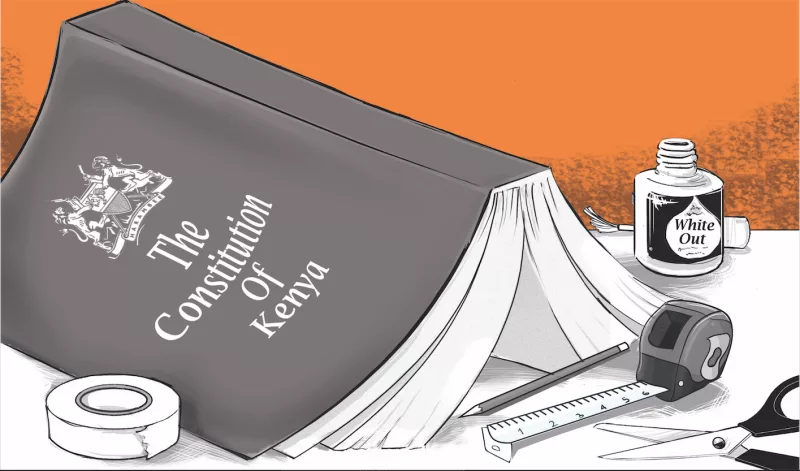
The misattribution has not diluted the force of the observation. In Kenya today, as the country edges toward the 2027 election, the distinction between fear running upward and fear running downward has become a daily reality.
Look at the evidence. An associate editor of a major media house is intercepted by armed men on a public highway, driven across counties and dumped near a dam. Political rallies are met with tear gas. Hired goons storm All Saints Cathedral during a civic budget forum. Abductions and enforced disappearances of critics have become grimly familiar since the 2024 protests.
These are not isolated excesses. They form a pattern in which the state’s capacity for coercion is demonstrated with regularity, while the capacity of citizens to organise freely is systematically constrained. In such a climate, the Barnhill test is unambiguous: when ordinary Kenyans calculate the personal cost of speaking, assembling or organising, fear is running the wrong way.
Yet the institutions that claim to stand between citizens and unchecked power have largely chosen the safer path. Civil society organisations and their funders continue to appear in televised stakeholder forums alongside cabinet secretaries, offering the appearance of engagement. At the same time, many of them shy away from sustained support for independent, citizen-led initiatives precisely because those initiatives risk rubbing the government the wrong way.
The result is a form of selective vision where formal access is preserved; the harder, riskier work of empowering citizens to hold power to account is quietly deprioritised. Neutrality of this kind is a practical decision that leaves the weaker party, the citizens, under-resourced while the stronger party retains the advantage of fear.
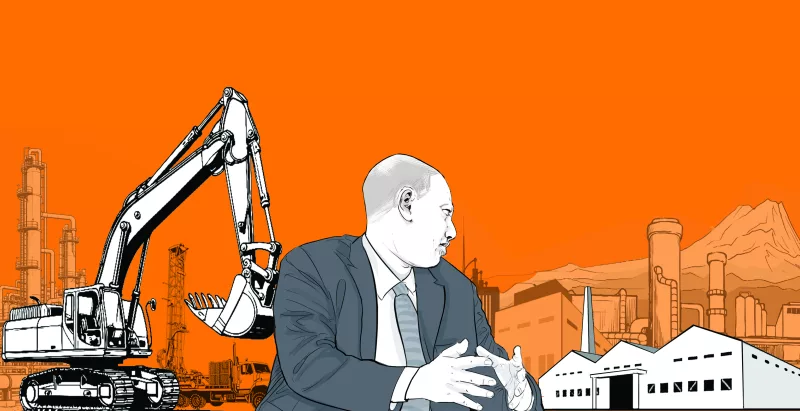
Corporate bodies have been still more consistent in their caution. Public statements are carefully balanced, stressing peace, stability and the need to protect jobs and investment. There was a time when the buzzword "the economy is hurting" was on the lips of the private sector at every media appearance at the peak of citizen-led protests.
Private channels of influence with the executive remain open and active. Rarely does a major commercial entity accept the commercial risk of aligning openly with citizens when that alignment might invite regulatory scrutiny, lost contracts or informal retaliation. One would ask why the private sector remains mum over the Controller of Budgets' alarm on government spending.
Private media houses occasionally break the pattern through critical reporting, but even they operate under the shadow of advertising leverage and licensing pressure. The broader corporate sector prefers the comfort of managed relationships over the discomfort of public solidarity.
This dual posture of public reticence versus private access has consequences that outlast any single crisis. In moments when the state’s capacity to harm exceeds citizens' capacity to resist, the decision by civil society and business to prioritise short-term institutional survival over long-term citizen capacity functions as acquiescence.
It narrows the space in which popular sovereignty can be exercised. It teaches citizens that organised power is unreliable precisely when it is most needed. And it allows the executive to operate with fewer independent counterweights.
Barnhill’s formulation is not empty rhetoric; it is a diagnosis. Liberty requires that government remain wary of the people it serves. Tyranny advances when that wariness is reversed and the people learn to fear the government. Kenya is not yet a closed autocracy; elections still approach, courts still function and some independent voices still speak. But the direction of travel is visible.
Every time civil society and corporate Kenya choose the safety of stakeholder tables over the risk of standing with citizen-led efforts, they help tilt the balance further. Fear is allowed to settle downward.
The long-term cost of that choice will not be paid by those who calculated the short-term advantage. It will be paid by the citizens of the sovereign republic left to face the state with fewer allies than they deserved.
Social impact adviser, social consciousness theorist, trainer and speaker, an agronomist consultant for golf courses and sportsfields and author of 'The Gigantomachy of Samaismela' and 'The Trouble with Kenya: McKenzian Blueprint'