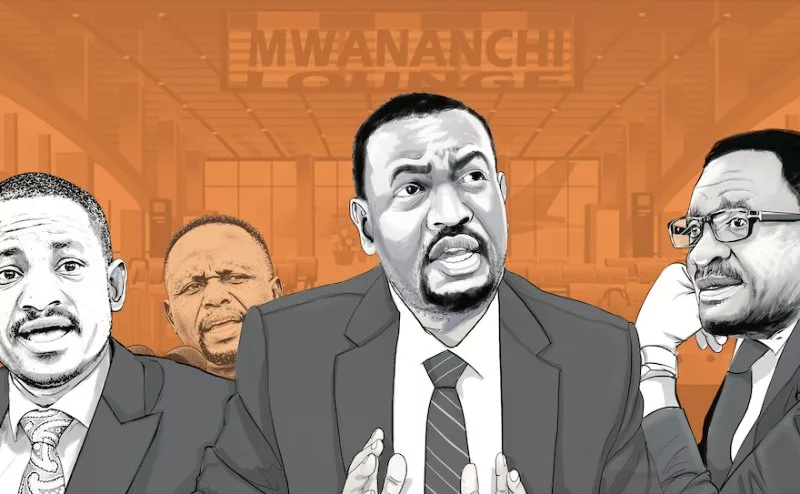
The Jacaranda grounds rally on September 13, 2026, could have been a show of force. Thousands turned out, and for a moment, Linda Mwananchi looked like the vehicle that would carry Kenyans' dreams into 2027. But it will be remembered as Linda Mwananchi’s last and biggest rally, and the fastest to be followed by the signs of internal collapse. It was not a springboard. It was a high-water mark.
For Linda Mwananchi to become a lasting political force, it needs three things: a clear ideological identity beyond ‘mimi ndio Sifuna’, an institutional grassroots structure that can outlive its founders, and the loyalty of a base willing to follow the movement through disappointment and delay. It has none.
In my steelman argument, let me be fair to the movement. Its disorganisation is not necessarily a weakness. By failing to form a single political party, Linda Mwananchi has avoided the fate of previous opposition vehicles that were absorbed and neutered. The internal competition between Sifuna, Babu, Natembeya and Orengo could be read as democratic energy rather than fragmentation. Now the rebuttal.
My political risk analysis is that visibility and attention alone will not be enough to turn Linda Mwananchi into a lasting political force. The movement has yet to define a policy platform, and it remains centred on its leading figures. This weakness is fatal to movements built on individuals rather than ideas: when those individuals fall out or fade, the movement dies with them.
The movement is facing a toxic internal struggle over who owns its popularity, and who has the authority to determine its direction ahead of the 2027 general election. Supporters of Sifuna and Babu Owino waged a “bitter online war” over who deserved credit for the crowds. If Jacaranda was the peak, the fight over its credit was the beginning of the fall.
Then came James Orengo. He declared himself “a serious presidential candidate” in August, and he has not attended a Linda Mwananchi function since. You cannot have multiple unmanaged presidential ambitions inside one movement.
The most damning indictment of Linda Mwananchi is what it has become for the politicians inside it: a holding zone. It is a waiting room where ambitious figures park themselves, harvest the movement’s crowds and brand recognition and buy time before bolting to their political outfits.
Babu Owino already has his own ‘Mwananchi Party’ and has announced he will attend fewer rallies to focus on his Nairobi gubernatorial bid. Sifuna is set to launch his own party within days.
Each principal thus keeps one foot in Linda Mwananchi and the other in their own political vehicle, ready to bolt the moment the movement stops serving their interests. A movement that is a waiting room for politicians on their way elsewhere cannot claim to be a destination. It is a transit lounge, and transit lounges are, by definition, temporary.
The external picture is grim. The Political Parties Disputes Tribunal ruled in August that the Registrar could not register any new party named 'Linda Mwananchi' or similar, pending an appeal. A movement that cannot register its own name is a brand without a legal home.
Funding is contested. On September 17, 2026, Alan Masakhalia petitioned the High Court to compel Sifuna to account for funds raised through Paybill 3033049. Masakhalia, who contributed Sh55, argues that if the political project is abandoned, transferred, or altered, citizen contributions could be diverted. The fundraiser raised Sh2.21 million within 36 hours.
Linda Mwananchi inherited a mandate it did not create. Raila Odinga carried the anti-government energy for a while, and Gen Z seized it. Linda Mwananchi arrived late to a fire others had lit. Movements do not die by their enemies; they die when their custodians mistake the crowd’s chants for their own names.
The crowds were real. But crowds are not structures. The movement has no ideology, no institutional form, no legal identity, no unified leadership, and no clean funding. It is a holding zone for politicians buying time before they bolt to their outfits. Jacaranda will be their last and biggest rally. It is a newspaper fire: bright, hot and turning to ash. The question is not whether it will fade, but how much of the opposition’s momentum it will take down.
Strategic adviser and expert in leadership and governance