 The next step is to move from being users of nuclear technologies to becoming co-creators of them
For more than seven decades, the peaceful atom has evolved from a symbol of energy and international security into a practical tool for health, agriculture, food security, environmental protection, industry and innovation.
The original 'Atoms for Peace' vision has become 'Atoms for Peace and Development', and under IAEA Director General Rafael Mariano Grossi it has been translated into high-impact initiatives that are especially relevant to Africa. It was an honour for me to attend the 70th General Conference at IAEA, where I had spent almost 10 years as Director for Africa.
I would like to reflect on some great milestones and my observations during the week. One of the most visible is Rays of Hope - Cancer Care for All. The IAEA reports that more than 70 per cent of Africa’s population lacks access to radiotherapy, while radiotherapy is required in roughly half of cancer cases. Globally, cancer accounted for about 20 million new cases and 10 million deaths in 2022, and the burden is projected to rise sharply.
Under Rays of Hope, equipment procurement, training and quality assurance support have been directed to countries including Kenya, Benin, Malawi and Senegal. More African countries are moving towards setting up oncology centres, including DRC, Chad, Sierra Leone, Lesotho and Djibouti, etc.
For Kenya, this is not abstract development assistance. IAEA cooperation has supported radiotherapy, dosimetry, nuclear medicine, medical physics and quality assurance. Such investments save lives, but they also show why regulation matters: a radiotherapy machine without licensing, calibration, trained personnel, radiation protection and quality control can become a risk rather than a solution.
Under the Rays of Hope initiative, Kenya has benefited from the donation of two linear accelerators and training of several personnel in radiation medicine.
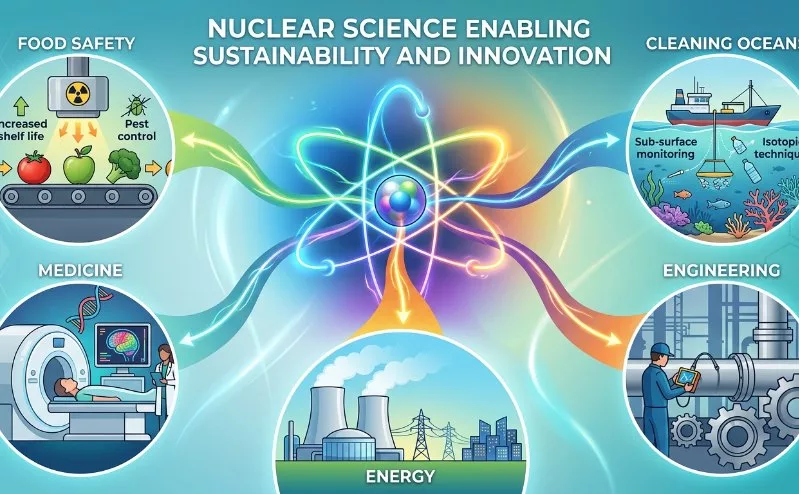
The same principle applies to Atoms4Food, the IAEA–FAO initiative addressing food insecurity through nuclear and isotopic techniques. Mutation breeding can accelerate development of drought-, heat- and disease-tolerant crops; isotopes can improve fertiliser and water-use efficiency; irradiation can support food safety and preservation; and nuclear-derived tools can strengthen livestock disease control.
In East Africa, IAEA-supported mutation-breeding trials have targeted Fusarium-resistant bananas, while nuclear techniques have demonstrated their value in pest control. For a continent whose population is projected to approach 2.5 billion by 2050, producing more with less land and water is not optional.
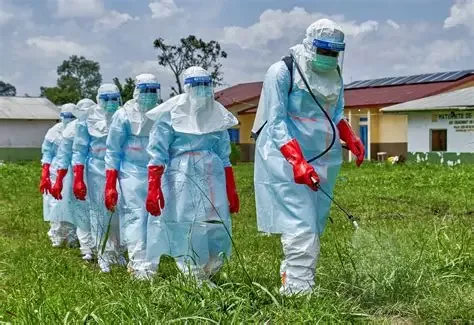
IAEA’s Zodiac (Zoonotic Disease Integrated Action) adds another dimension: nuclear-derived molecular techniques can strengthen early detection and surveillance of zoonotic diseases. During outbreaks such as Ebola, the contribution is not a nuclear “cure”, but faster laboratory diagnosis, pathogen identification and surveillance—critical tools for containment.
NUTEC Plastics similarly connects nuclear science with environmental protection. The IAEA uses radiation technologies to improve plastic recycling and isotopic techniques to detect and trace marine microplastics. An African NUTEC Plastics roundtable brought together 411 participants from 49 countries, including 46 African countries, demonstrating the scale of regional interest. For Kenya and other Indian Ocean states, this links directly to fisheries, tourism, ports and the blue economy.
The frontier is expanding further. In August 2026, the IAEA launched ATLAS (Atomic Technologies Licensed for Applications at Sea) to develop frameworks for safe and secure peaceful nuclear applications at sea, including nuclear-powered vessels and floating nuclear power plants. Africa, with its major ports, long coastline and expanding maritime economy, should be part of setting the rules, not merely adopting them later.
Energy remains central. Africa must consider conventional nuclear power, small modular reactors and the longer-term promise of fusion. Grossi has also elevated global dialogue on fusion through Atoms4NetZero IAEA initiatives. If fusion matures commercially, countries that invest early in plasma physics, materials science, engineering and regulation will be better positioned to benefit.
More than 10 countries are embarking on nuclear energy programmes as part of their energy mix. Using energy planning tools such as MAED and WASP is already shaping the trajectory. Kenya is in phase 2 under the IAEA's 19-milestone approach blueprint in its plans to have nuclear energy contribute around 3000 MW.
The newest chapter is 'Atoms in Algorithms'. Artificial Intelligence is already being explored for reactor operations, predictive maintenance, nuclear medicine, safeguards, fusion modelling and radiation monitoring. The IAEA has published guidance on AI deployment in nuclear power and is supporting discussions on explainability, validation, cybersecurity and human oversight.
This is precisely why Africa must treat regulation as infrastructure. IAEA safety standards require governments to establish independent, competent and adequately resourced regulatory bodies with clear legal authority. In Kenya, the Kenya Nuclear Regulatory Authority, established under the Nuclear Regulatory Act, oversees radiation protection, nuclear safety, security and safeguards. It reports more than 1,500 licensed facilities, over 2,000 radiation workers and nine regional offices.
The lesson is clear: innovation without regulation is unsafe, while regulation without innovation can become an obstacle. We need both—strong science and strong institutions.
The journey from Atoms for Peace to Rays of Hope, Atoms4Food, ZODIAC, NUTEC Plastics, ATLAS, fusion and now Atoms in Algorithms shows that nuclear science is no longer about reactors alone. For Kenya and Africa, it is about healthier people, safer food, cleaner oceans, reliable energy, stronger industries and technological sovereignty. Initiatives such as these are clear testimony to the visionary leadership of DG Grossi and the commitment of all member states.
The next step is to move from being users of nuclear technologies to becoming co-creators of them. This will be a game changer. It is possible and can be done.
PS, Science, Research and Innovation |[email protected]