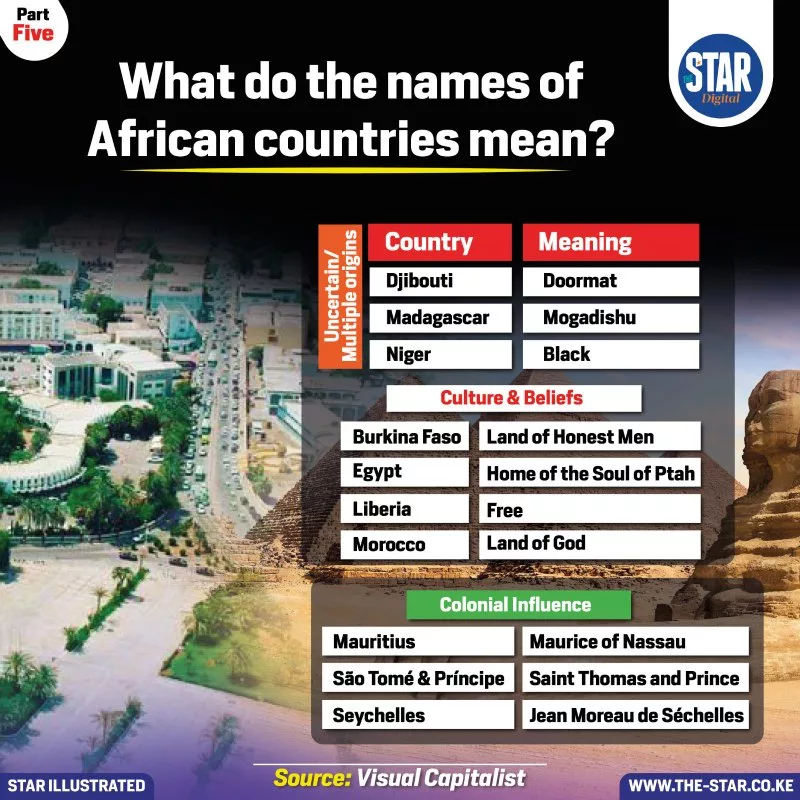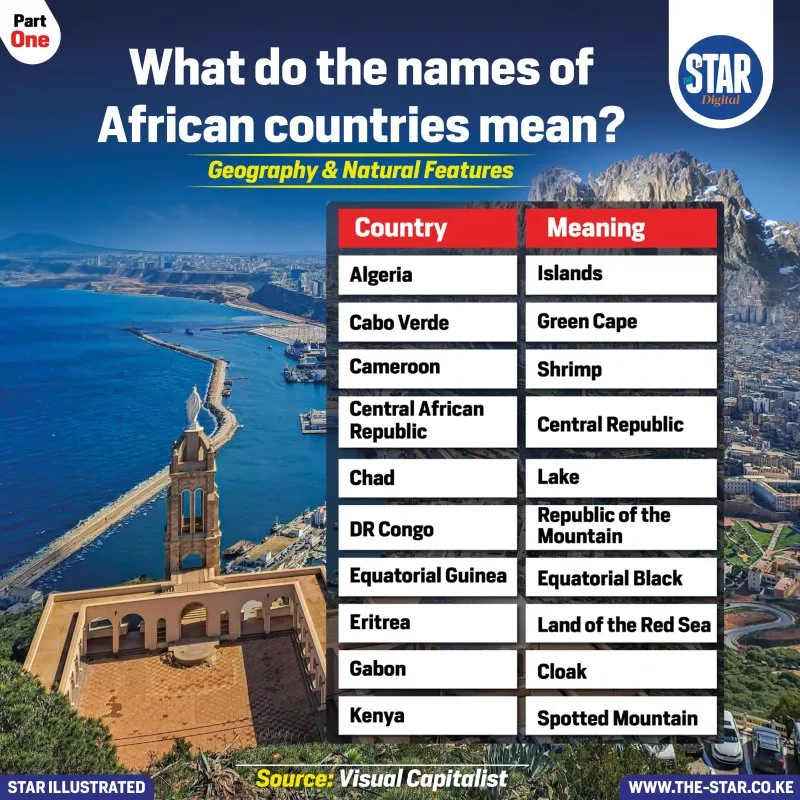
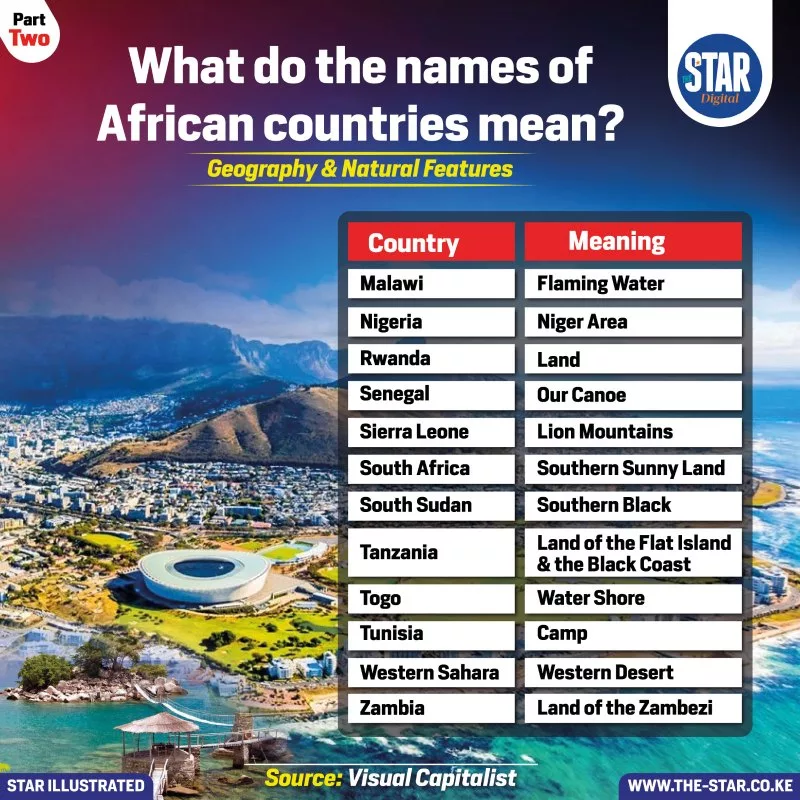
African countries carry names shaped by geography, ethnic groups, kingdoms, rulers, trade and colonial history.
Some names point directly to natural features. Cabo Verde, meaning "Green Cape", reflects its geographic setting, while Cameroon is linked to a Portuguese name meaning "shrimp". Chad refers to a lake, while Kenya is associated with "spotted mountain". Sierra Leone, meanwhile, means "Lion Mountains".
Other names have connections to people and communities. Burundi means "Land of the Rundi", while Lesotho is translated as "Land of the Human Beings". Ethiopia has been linked to the meaning "Land of the Burnt-faced".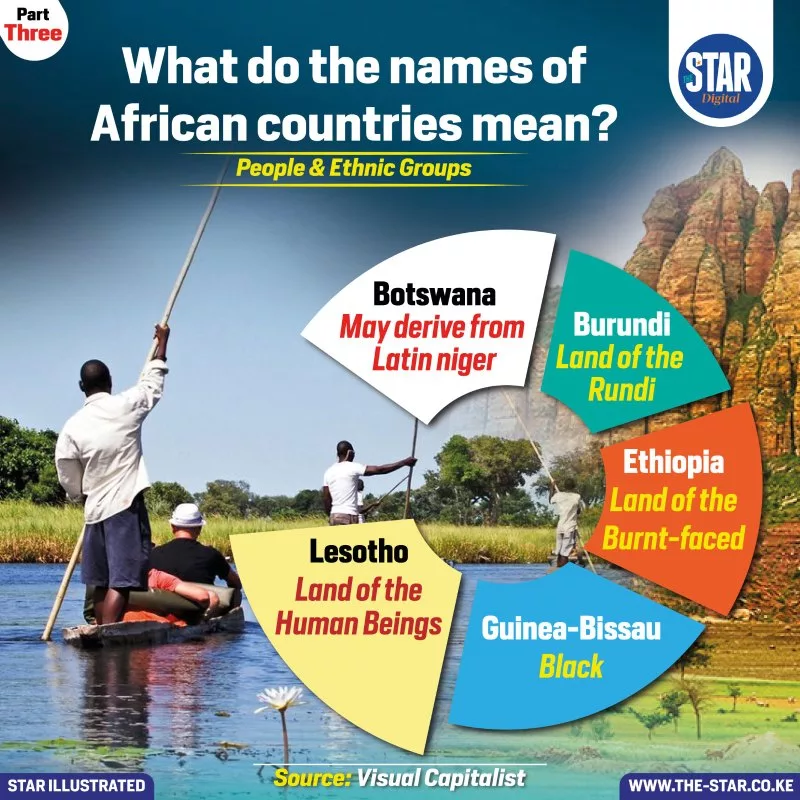
Kingdoms and historical figures have also influenced country names. Angola is associated with "King", Eswatini with King Mswati II and Zimbabwe with "Large Houses of Stone". Mozambique is linked to Musa Ben Mbiki.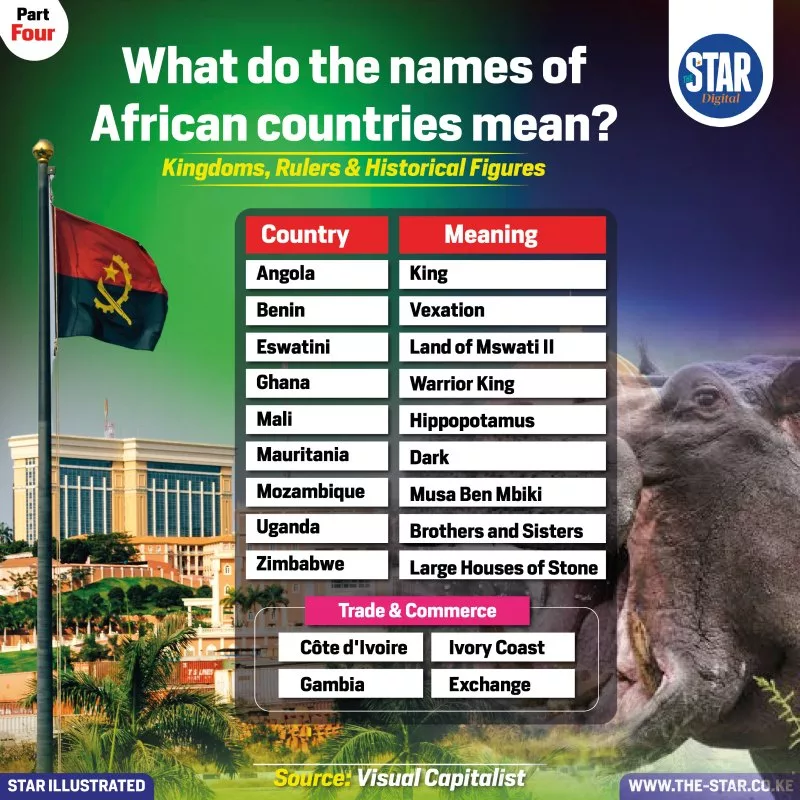
Trade and colonial history also feature in several names. Côte d'Ivoire means "Ivory Coast", while Gambia is associated with "Exchange". Mauritius was named after Maurice of Nassau, while São Tomé & Príncipe refers to Saint Thomas and Prince.
Together, the names offer a glimpse into Africa's diverse geography, cultures, histories and languages.