One question that I have not seen adequately answered in recent weeks concerns the controversy over the regrettable statement made by President William Ruto touching on foreign nationals living in Kenya.
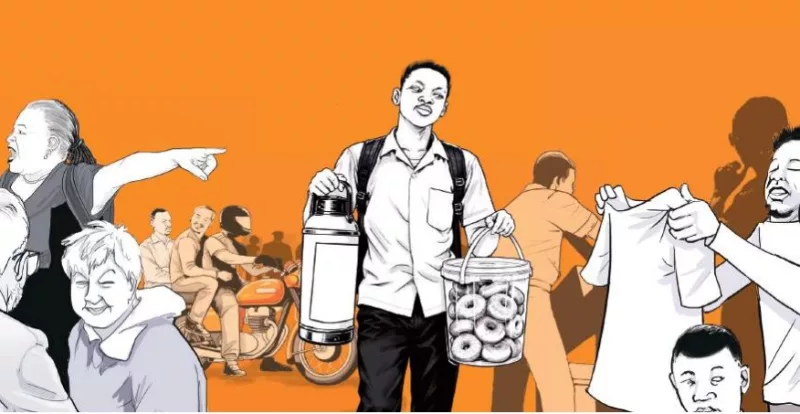
What he was widely understood to suggest was that he wanted to see street-level traders from (mostly) Burundi leave Kenya immediately. In some countries this would have signalled the commencement of disgraceful xenophobic attacks on “outsiders”, much as happened in South Africa.
In Kenya, the worst that happened to these Burundians was the kind of routine and incidental vandalism and hooliganism that even ordinary Kenyans are subjected to. There was no mass of demonstrators wielding “traditional weapons” marching up and down the Nairobi CBD, demanding that foreigners leave their country immediately.
Those occasional assaults on these Burundians were probably carried out by the kind of unemployed youths whose incomes are dependent on opportunities for petty theft.
So, what was possibly supposed to be a populist declaration was largely met with the disapproval of ordinary Kenyans.
My question is, why was this? What is it about Kenyans which made only the tiniest minority appear to consent to this suggestion that we should evict indigent foreigners who lived in our midst?
There are no verifiable facts in such matters, and one can only speculate:
For example, I would speculate that part of this tolerance might be because many of us view it as a compliment that these Burundians should consider our country to be relatively rich, and worth targeting if you are an intended economic refugee.
Their plight, after all, is really no different from that of those misguided young African men who set off from North Africa in small boats, determined to land on European soil, come hell or high water.
I could also add that in Kenya we do not subject such economic refugees to quite the same levels of extreme stigmatisation, as is the case in Europe.
Indeed, it is a valuable illustration of the impact of sustained vilification that in Europe it has been so easy to paint African economic refugees as criminals, where most of them are just ordinary people desperately seeking a better life.
But it could also be that part of this tolerance is due to a widespread awareness that we too, as a country, often receive help from foreigners, for various “development projects”.
Our mainstream media very often carries reports of ambassadors credited to Kenya either cutting a ribbon alongside Kenyan dignitaries to launch some new project, or presiding over the opening of some new factory.
This kind of media coverage exercises a very effective form of subtle propaganda, which results in most “media consumers” tending to be welcoming towards any foreigners.
In this way, the conclusion that it is a good thing to be tolerant towards citizens of our much poorer neighbours ends up being the equivalent of a national consensus.
Some among us, of course, go overboard and consider what is formally known as “Foreign Development Assistance” as a fundamental right.
I personally know of people – highly credentialed technocrats in some cases – who were apoplectic with rage when US President Donald Trump effectively shut down USAID, which was by far the most generous of the many donor institutions that preside over the funding of support programmes for just about any worthy cause you can think of.
Such people obviously believed that something which was ours by right had been taken away from us.
What is odd here is that this whole concept of foreign aid has not been a standard operating procedure for most of modern history.
The citizens of rich countries did not always feel a deep moral obligation to help those who, through an accident of birth, were citizens of poor countries. Diplomatic missions from rich countries to poorer countries did not have budgets specifically intended to help that poor country and its citizens rise up from poverty.
On the contrary, rich nations openly and unapologetically were focused on directly or indirectly colonising poorer countries, mostly through military conquest, with a view to unlimited extraction and exploitation.