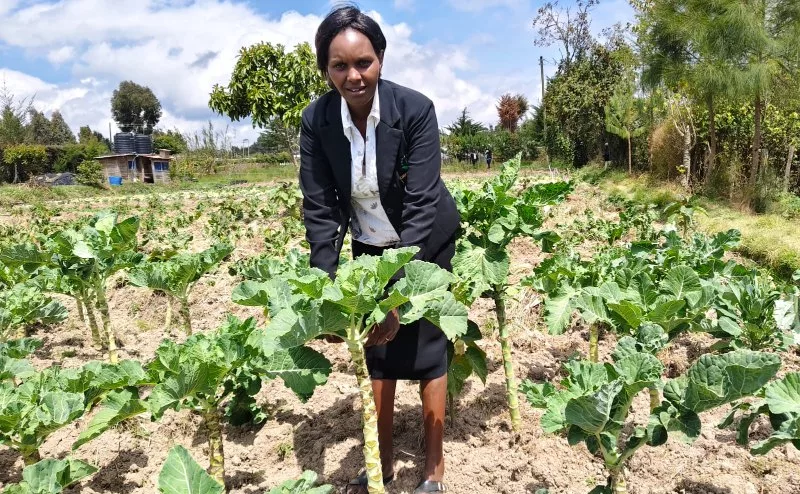
 Sarah Wanjiru in a section of her organic farm where she grows vegetables, including sukuma wiki, African nightshade, and spinach, among others, in Munyaka, Nyandarua county/ ALICE WAITHERA
A quiet transformation is taking root in Nyandarua as some farmers turn away from synthetic fertilisers and pesticides and embrace agro-ecological farming to produce safer food, restore soil health, and adapt to changing weather patterns.
In Munyaka, Kinangop, farmer Sarah Wanjiru is part of this shift, growing sukuma wiki, managu, spinach, kanzera, onions, fruits and courgettes using organic methods.
Her farm has become a small demonstration of what farmers can achieve by relying on compost, organic fertilisers and other regenerative practices instead of depending heavily on synthetic inputs.
“I am a vegetable and fruit farmer, and I farm organically. I sell mainly in the local market because I have seen that demand is high. People are slowly embrac engating these vegetables, especially after learning about their nutritional benefits,” Wanjiru explained.
She said traders at the local shopping centre had told her that her vegetables sell quickly because consumers like their taste, while her own children, who previously disliked vegetables, also enjoy the produce grown on her farm.
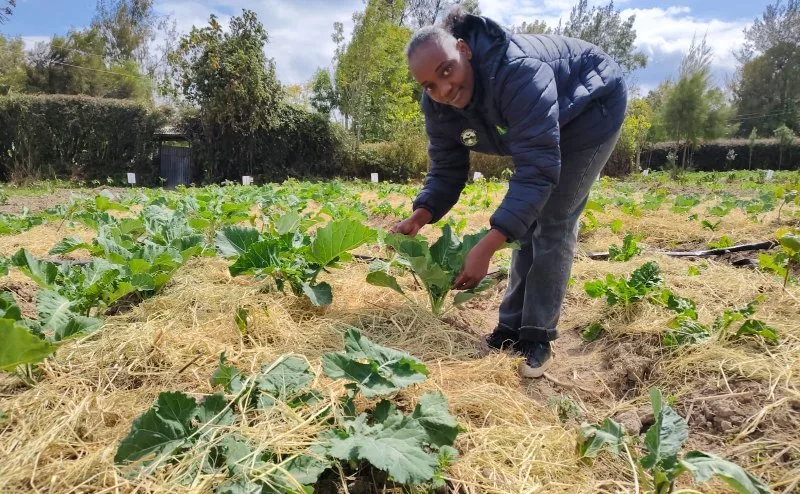 KOAN's field coordinator Jacqueline Waithera in an organic demo farm in Munyaka, Nyandarua county/ALICE WAITHERA
But moving away from synthetic inputs has not been without challenges.
Wanjiru said organic produce still has to compete with conventionally grown food as consumers are often unwilling to pay a higher price for it.
“I cannot sell my vegetables at a much higher price because the vendors know they can go to someone else and buy conventional produce at a lower price. That is one of the challenges for organic farmers,” she said.
The challenge, she argued, could ease if more farmers embraced organic production, creating enough supply and bargaining power to negotiate better prices.
Wanjiru farms together with her husband and family and is also a member of Munyaka Smart Farmers, a group that has been there for years but only fully embraced organic farming last year, enabling them to learn collectively.
The move comes amid growing concern over the use of pesticides in Nyandarua, one of Kenya's leading sources of potatoes and vegetables.
Research conducted in 275 randomly selected potato farms in the county earlier this year found residues of banned pesticides at levels exceeding international food safety limits.
The study found that only 12 per cent of farmers followed pesticide label instructions, with many relying instead on advice from agrochemical retailers or fellow farmers.
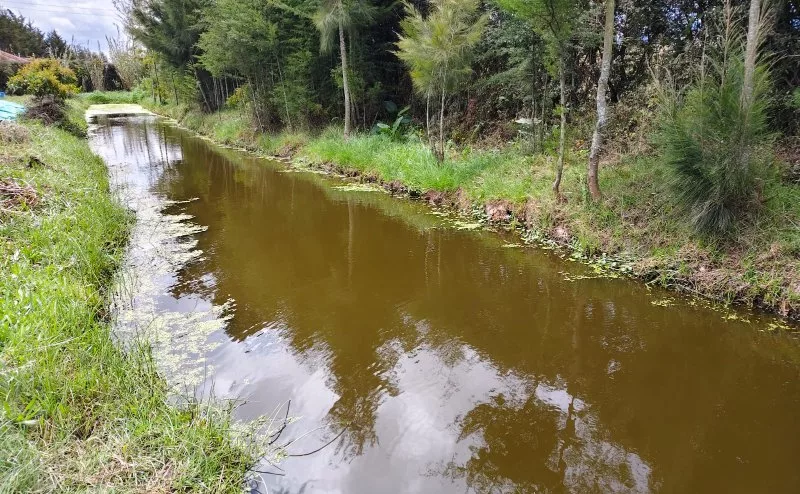 One of the water pans constructed in Sarah Wanjiru's agro-ecology farm in Munyaka, Nyandarua county/ ALICE WAITHERA
Some farmers were also harvesting crops only three weeks after spraying, potentially leaving insufficient time for chemical residues to break down.
Farmers were further found to routinely mix different chemical products, creating potentially unpredictable interactions.
Two insecticides, chlorpyrifos and fenitrothion, were detected at levels above international Maximum Residue Limits, raising concerns about the safety of food reaching consumers.
The findings have strengthened efforts by organisations that champion agro-ecology to demonstrate that farmers can reduce their reliance on synthetic inputs without compromising production.
David Karanja, executive director of the Organic Agriculture Centre of Kenya (OACK), said the organisations had moved into Nyandarua after seeing increasing interest among farmers in organic production.
“We have seen an opportunity here in Nyandarua, where farmers have expressed interest in embracing organic farming. Apart from providing them with fertilisers and bio-fertilisers, we are doing a lot of capacity building and training,” Karanja said.
Speaking during a field day in Wanjiru’s farm, Karanja said farmers were beginning to challenge the perception that Nyandarua was synonymous with chemical-intensive potato and vegetable production.
Karanja said there is evidence that healthy soils could support productive farming without relying heavily on synthetic inputs.
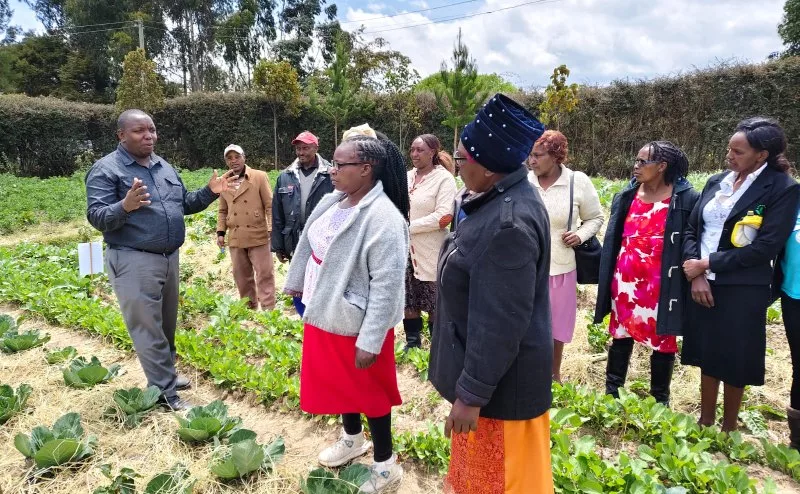 OACK's exective director David Karanja taking a group of farmers through a training session on agro-ecology in a demo farm in Munyaka, Nyandarua county/ ALICE WAITHERA
“If you take care of the soil using organic methods, the soil will take care of the crop,” he observed.
The programme is being implemented under the Greener Greens project, which is being led by the World Vegetable Centre in partnership with OACK and the Kenya Organic Agriculture Network (KOAN), with ICIPE as a collaborator.
Carol Wangungu, an agronomist and project manager at the World Vegetable Centre, said the project started in Murang’a before being extended to Nyandarua after farmers expressed interest in the approach.
Wangungu said excessive use of synthetic fertilisers and pesticides had affected soil health and contributed to the disappearance of organisms such as frogs, chameleons and butterflies from some agricultural areas.
She said agro-ecology seeks to reverse the damage by encouraging farmers to work with resources already available on their farms.
Animal manure, crop residues and leaves can be composted and used to improve soil fertility, while plants found locally can be used to prepare bio-pesticides.
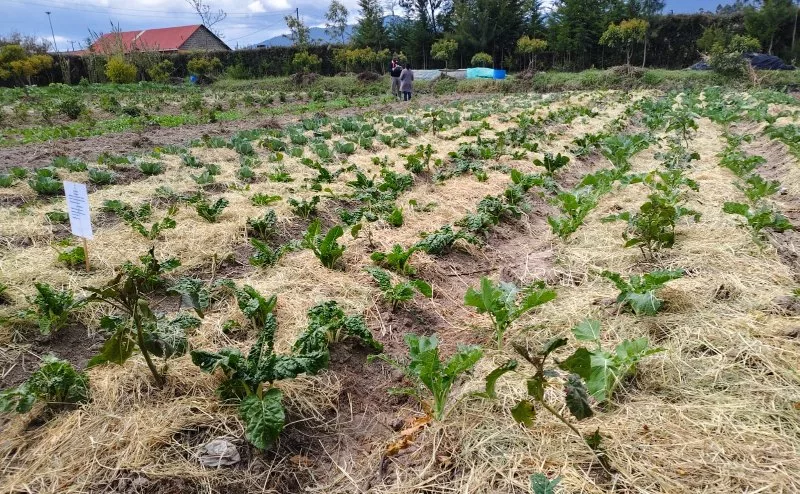 Sarah Wanjiru's farm that practices organic farming in Munyaka, Nyandarua county/ ALICE WAITHERA
The programme is also helping farmers develop markets for their produce.
Jacqueline Waithera, a field coordinator with KOAN, said farmers were being linked with traders, schools, hospitals, restaurants and other institutions.
They are also being trained on marketing and the Participatory Guarantee System, an affordable certification approach based on trust and peer monitoring.
Under the system, farmers conduct peer reviews and maintain records to demonstrate that they are following agreed production standards.
Waithera said reliable markets were important in encouraging farmers to adopt organic farming because they gave them an incentive to invest in safer production methods.
For Wanjiru, however, the transition is ultimately about more than markets and farm incomes.
She wants farmers to look back to practices used before chemical-intensive agriculture became widespread.
Instant Analysis
In Munyaka, Kinangop, farmer Sarah Wanjiru is part of this shift, growing sukuma wiki, managu, spinach, kanzera, onions, fruits and courgettes using organic methods.
Research conducted in 275 randomly selected potato farms in the county earlier this year found residues of banned pesticides at levels exceeding international food safety limits.