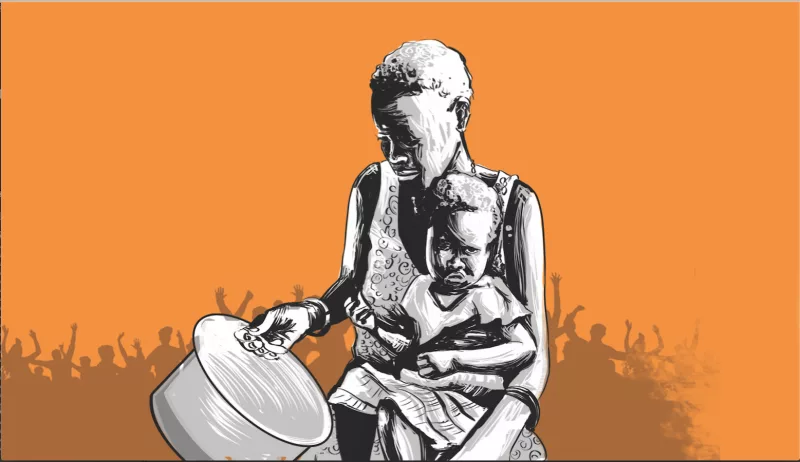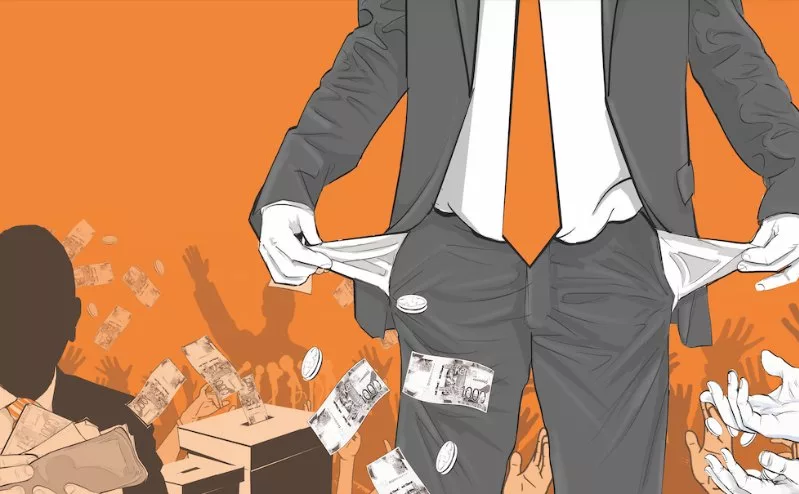
Has there ever been any serious academic study undertaken to demonstrate the devastating impacts of Kenyan politics on a politician's personal finances?
If indeed it exists, I know nothing about it. I have not seen any such study quoted in any essay in the media, nor yet found any such study online.
And yet, in my experience, politicians (especially those out of office) are positively eager to explain why they are no longer riding so high financially, as they once were. So, it would not be very hard to gather the data on this.
In the UK, this kind of academic study already exists, and I found one online, which elucidates that “the key empirical work is Jane Roberts’ 2017 book, ‘Losing Political Office’…It reports that leaving office was commonly experienced as a form of grief or identity loss; electoral defeat in particular could bring humiliation, loss of confidence, and depressive symptoms.”
Mind you this is about the UK, a country in which politicians do not have to dig into their personal bank accounts to fund the imperious demands of grassroots leaders.
Nor yet spend on “facilitation” for their polling agents “to ensure that votes are not stolen”.
All of which guarantee that in Kenya, any electoral defeat is sure to be “experienced as a form of grief or identity loss”, ending in “humiliation, loss of confidence, and depressive symptoms.”
As I could find no Kenyan study of this phenomenon, let me illustrate how it plays out here with two examples out of the many such stories I have heard.
First, from the 1980s, I present a CEO of a leading state corporation. Being a man with a strong sense of sympathy for the many underprivileged young people in his rural village, he set out to use his influential status to get such young men and women jobs.
As a result, he became very popular with the village folk back home, and as such, came under increasing pressure to offer himself as a candidate for parliament, since the serving MP (according to the narrative of the villagers) had “done nothing”.
And he did run – and won.
Then his troubles began. For what the voting public considers to be an act of great generosity when you are one of the more successful “sons of that soil”, suddenly becomes their right when they can say, “You would never have reached where you are without our votes”.
What I remember him telling us, his friends, was that “the reality of Kenyan politics is that for every one problem you solve, three new problems spring up. And all require money.”
The demands placed on him were so many, so diverse and so extravagant that he decided, just one year into his five-year term, that he would not run again, and deliberately ignored most of the requests made by voters.
In any case, he turned his back on politics for good, after serving just one term. He had learned the true cost of holding political office in Kenya and was not willing to pay it.
But he was a rare case of someone who was not fully infected by the bug of politics. Far more common is the MP (or MCA, senator or governor) who finds being in political office the most fulfilling job of his life and is therefore willing to effectively bankrupt himself trying to appease his supporters.
I know of one such politician who won once and then subsequently lost three consecutive elections.
By the last of those three defeats, he was no longer campaigning with the grand convoys of SUVs that he had previously deployed. He had just one old pickup, and the cheering supporters riding it were mostly his own relatives.
His main campaign strategy at this point was to tell anyone who would listen that the other candidates who were splashing money all over the constituency were thieves using stolen money to get elected, and that they wanted to go back to parliament so that they could steal even more.