It is a hot afternoon in the sprawling Mathare informal settlement, but Thomas Otieno is already thinking about rain.
The 45-year-old father of four struggles to push a handcart loaded with household belongings through a chaotic stream of pedestrians, motorcycles and traders on Mau Mau Street, the busy artery connecting Mathare to Huruma Estate.
“I’m running away from El Niño,” he shouts, trying to attract attention and squeeze through the crowd.
For Otieno, the approaching rains are not an abstract climate forecast. They are a painful memory.
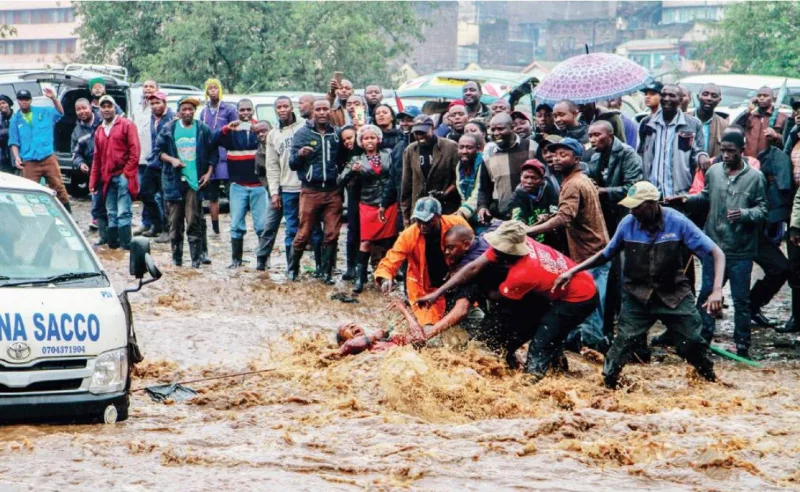
He lost a daughter and a brother to floods in 2012 after the Mathare River burst its banks and swept away their shanties.
“Mathare River swallowed them. I hear El Niño is coming in October. I dread floods,” he tells the Star.
Otieno has been putting aside Sh2,000 every month since May, hoping to raise enough money to move his family to a one-bedroom apartment in the neighbouring Huruma Estate.
He has found a house for Sh8,000 a month.
“It is costly, but the safety of my family is paramount,” he says, wiping sweat and dust from his face.
Otieno's hurried relocation captures the mood in a country that has learnt, often painfully, that a weather forecast can become an economic shock almost overnight, if precautions are not taken, and sometimes even if they are.
This time the warning is unusually stark.
The World Meteorological Organisation says El Niño, caused by warming of the Pacific Ocean, is already firmly established and is expected to intensify into a very strong event.
WMO cited an exceptionally high probability, nearly 100 per cent, that it will persist through February 2027.
The United States Climate Prediction Centre has put the probability of a very strong El Niño at above 90 per cent and estimates a 75 per cent chance that the October-December 2026 event could become a historic El Niño, potentially exceeding all such events since 1950.
Some researchers say it could be the most intense and destructive in several hundred years.
THE MAKING OF EL NIÑO
El Niño is a natural climate phenomenon caused by abnormal warming of surface waters in the central and eastern tropical Pacific Ocean. It occurs every two to seven years.
Although it is not caused by climate change, its effects are worsened by a warming climate.
Normally, trade winds push warm surface water westwards towards Asia and Australia. During El Niño, however, those winds weaken, allowing warm water to move eastwards.
This changes atmospheric circulation and the distribution of rainfall and temperature across large parts of the globe.
The consequences can be dramatically different from one region to another.
In East Africa, particularly during the October-December short rains, El Niño is associated with a higher probability of above-normal rainfall and flooding.
The current event could be amplified by another oceanic phenomenon: the positive Indian Ocean Dipole.
The global weather forecaster has predicted a positive IOD during the September-November season, with a projected seasonal mean of 0.9°C
For instance, the 2023-24 El Niño was accompanied by a strong positive Indian Ocean Dipole and contributed to exceptionally heavy rains and flooding across Kenya, Somalia and Ethiopia.
The World Bank estimated that around 1.5 million people were displaced across parts of the region.
The 1997-2000 El Niño-La Niña episode cost Kenya about Sh290 billion, equivalent to 14 per cent of GDP during the three-year period, the World Bank reports.
The floods associated with the 1997-98 El Niño alone were estimated to cost about 11 per cent of annual GDP.
The 2023-24 event also demonstrated the human cost of extreme rainfall, with roads, bridges, farms and homes destroyed across East Africa.
PROJECTED ECONOMIC IMPACT
Although Kenya has not projected economic loss tied to upcoming climate scourge, African Development Bank climate chief Anthony Nyong estimates that heavily affected African economies could lose one to two per cent of GDP.
This translates to a continental economic hit of about $10 billion-$20 billion (Sh1.3 to 2.6 trillion).
Applied only as a scenario to Kenya, a one to two per cent shock in an economy of about Sh17.6 trillion would represent roughly Sh176 billion to Sh352 billion.
Agriculture is likely to be the first major transmission channel.
Excessive rain can destroy crops, erode soils, drown livestock, disrupt harvesting and make roads impassable.
It can also destroy storage facilities and prevent farmers from getting produce to markets.
The arising net effect is even higher. Food shortages push prices higher, transport costs rise and businesses lose working days.
Furthermore, factories struggle to receive raw materials, schools close while health facilities face a surge in waterborne diseases, injuries and displaced families.
This is likely to force the government to redirect scarce resources from development projects to emergency response, reconstruction and relief.
The International Monetary Fund has found that an El Niño shock can raise real commodity-price inflation by roughly 3.5 to four percentage points in the period following the shock.
More recent scenario modelling is even more dramatic.
Citigroup economists have warned that a very strong El Niño could result in $3 trillion to $5 trillion in global economic losses over five years, equivalent to roughly 2.7-3.2 per cent of global GDP, with a super-El Niño scenario reaching as much as $7 trillion, or about 6.4 per cent of global GDP.
Research published in Nature Communications said the 1997-98 El Niño was associated with cumulative global economic losses of an estimated $5.7 trillion, while the 1982-83 event generated about $4.1 trillion in losses.
The 2015-16 event was associated with roughly $3.9 trillion in cumulative losses.
Climate change and economic expert Julius Mwai says El Niño is more than a weather story.
It triggers a monetary-policy shift, food insecurity, debt and slower economic growth.
The World Bank expects Kenya's economy to grow by about 4.3 per cent in 2026 and 4.4 per cent in 2027.
A major climate shock could eat into growth at precisely the time the government is trying to restore fiscal stability.
Africa's exposure is particularly severe because many economies depend heavily on rain-fed agriculture and have limited fiscal and insurance buffers.
Globally, the effects can be equally disruptive, although they are distributed unevenly.
Historical estimates put the economic damage from the 1997-98 El Niño at around $35 billion to $45 billion in direct damages and losses.
The global lender says the event affected millions and deaths were estimated at more than 20,000.
REMEDIAL MEASURES
In the face of glaring statistics, county and national governments have put mitigation measures in place.
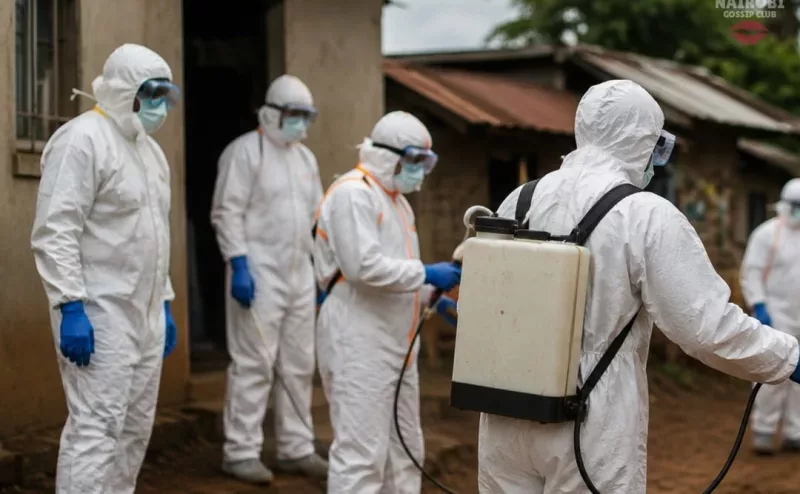
Nairobi Governor Johnson Sakaja has activated a multi-agency preparedness team involving the Kenya Red Cross, Kura, KeNHA, disaster-management agencies and county departments.
Five new subcommittees have been formed, covering infrastructure and drainage, emergency response and evacuation, shelter and relief, security and traffic, and communication.
"Across all 17 sub-counties, the Green Army and other teams are clearing drains, waterways, river channels, illegal dumpsites and waste collection points," Sakaja said.
He said daily garbage collection has risen from 1,000 tonnes to 3,000 tonnes.
At the Coast, the warning signs are already visible.
Mombasa Governor Abdulswamad Nassir says the county faces a 98 per cent probability of significantly above-average rainfall, with cumulative rainfall potentially reaching about 680mm,
The county has mapped flood-prone areas, unclogged drainage systems and established emergency-response arrangements.
Nassir has also taken the unusual step of ordering construction companies to stop on-site mixing of cement, sand and ballast after a 48-hour window.
At the national level, President William Ruto has placed Deputy President Kithure Kindiki at the centre of the response.
The Cabinet established an Ad Hoc Cabinet Committee on El Niño Preparedness and Response in June, chaired by Kindiki, and ordered activation of a National El Niño Contingency Plan.
It covers flood mitigation, evacuation and shelters, drainage clearance, reinforcement of vulnerable roads and bridges, emergency equipment and medical supplies, farmer advisories and contingency financing.
By August, the government had identified 18 counties and major urban centres as particularly vulnerable, including Nairobi, Mombasa and Kisumu.
Counties have been urged to map hotspots, prepare evacuation areas, clear drainage systems and pre-position essential supplies.
Communication architecture is also being rebuilt.
The National Crisis Communication Standing Committee, chaired by Broadcasting PS Stephen Isaboke, is working to close the ‘last-mile’ connectivity gap.
Isaboke said this will ensure weather warnings do not remain technical bulletins but reach households in an accessible form they can act upon.
Government spokesman Charles Owino has urged residents in riparian areas to move to safer ground before the rains arrive.
“There is no cause for panic. But there is every reason to prepare early,” Owino said during a briefing on September 10.
All 47 counties have been directed to map flood-prone areas and identify safer evacuation grounds.
FUNDING PLAN
Economic Planning PS Boniface Makokha has outlined measures to cushion the economy from both the first-round damage of floods and the second-round effects of food shortages, higher prices, disrupted production and reconstruction costs.
Treasury CS John Mbadi told the Star his ministry has integrated the expected El Niño weather phenomenon into its fiscal planning.
Part of the plan is to secure significant emergency funding while lowering economic growth expectations to cushion the country from anticipated rains, flooding and economic damage.
On Friday, the exchequer announced that it will be accessing $400 million (Sh51.8 billion) from the World Bank in six weeks through the lender's Rapid Response Option.
The money is being prepared under a Contingency Emergency Response Project and is intended to help Kenya respond to overlapping shocks, including El Niño-related disruption, regional health risks and high energy prices.
The financing is equivalent to roughly 10 per cent of Kenya's undisbursed World Bank portfolio — a significant intervention for a country already struggling with tight fiscal space and heavy debt-servicing obligations.
Preparedness is already becoming politically contested.
Wiper leader Kalonzo Musyoka has urged President Ruto to focus on the impending disaster.
Meanwhile, former Attorney General and Democratic Party leader Justin Muturi has called on Ruto to suspend political mobilisation and personally take charge of the national response.
“The emerging threat of El Niño demands presidential leadership, not political theatre,” Muturi said, urging the government to establish a clear command structure, identify high-risk areas and secure emergency resources.
His central argument is simple: preparedness must precede disaster, not follow it.