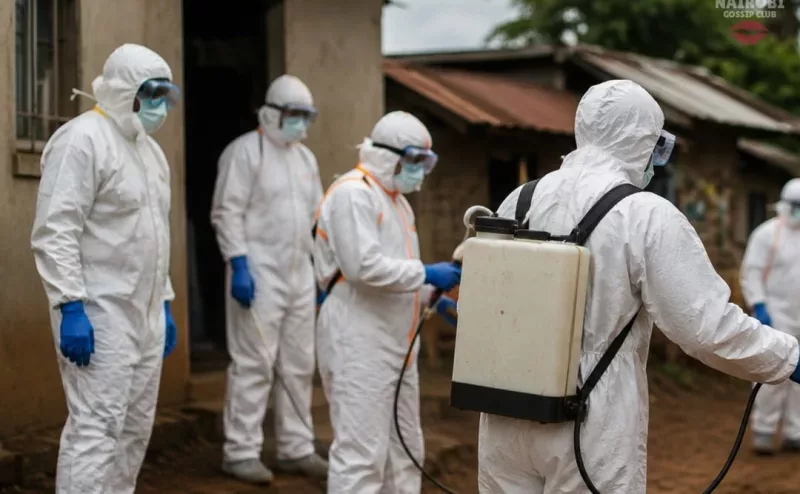
Experts have demanded that Kenyan medics take charge of the Laikipia Ebola containment facility for the country to fully benefit.
They facility that was intended to provide isolation for Americans exposed to Ebola while working in the region, is currently managed by Americans.
The facility has elicited legal and health controversies.
Experts who spoke during the Bioethics Society of Kenya (BSK) conference in Nairobi said the controversy provides an opportunity for Kenya to improve how it handles future public health emergencies.
Melba Katindi from Next Generation Lawyers said Kenyans primarily opposed the facility because there was poor communication on how it would operate.
“There is no doubt that we need that sort of cooperation especially during outbreak and a lot of the time when two countries or more decide to collaborate, it's not necessarily unethical or unlawful,” Katindi said.
She said lack of publicly available information about the Kenya-US cooperation had created uncertainty around the project.
She said Kenya needs to consider whether it is fair for the country to bear the risks associated with hosting such a facility without clear guarantees that its own citizens will benefit.
“Are we going to have our medics having oversight over that facility in the event of negligence and exposure to our citizens? Who takes responsibility for that given that it is an American-run facility?” she said.
Kenya has not reported an Ebola case.
Public health expert Dr Richard Ayah questioned why Laikipia was selected for the facility and whether its location raised questions about Kenyan oversight.
“What if that facility was designated as part of the US Embassy so that it was a sovereign part of the US? Would we then have oversight about what happens inside? Yes, we want. And I think part of the question that is being asked is why Laikipia?” he posed.
Ayah also raised the ethical dilemma faced by health workers during Ebola outbreaks, saying they are often among those exposed to the greatest risk.
On the ethical issues surrounding the use of experimental drugs during a public health emergency, Ayah said health workers are the largest group of those who suffer and die during outbreaks.
The World Health Organization (WHO) says there are currently no licensed vaccines or therapeutics specifically approved for the prevention and treatment of the Ebola variant called Bundibugyo, which is spreading in DR Congo.
Ayah said experimental Ebola vaccines should be available to health workers in Kenya.
“I would argue that one of the things that we need to be looking at is even if there's something that is experimental, if it can be shown to work, we need it, because why would we be asking some people, you go out and treat something, but there's no cure? Why would you put your life at risk at that point?”
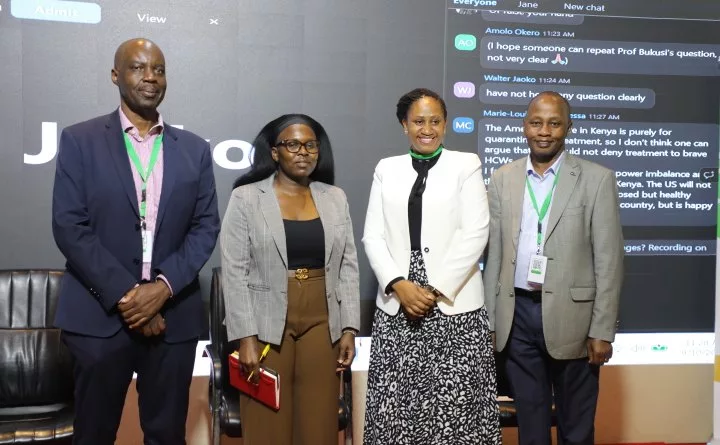
The Bioethics Society of Kenya (BSK) conference brought together experts to discuss ethical issues in medicine, science and healthcare, including how new health projects and technologies should be developed and managed.
Prof Walter Jaoko, an infectious diseases expert from the University of Nairobi, said preventing future outbreaks will also require attention to how humans interact with wildlife.
“It is us who invade the spaces where the animals are staying and thereby contract the disease,” he said.
The experts said this makes bioethics increasingly important as Kenya invests in preparedness for infectious diseases and other fast-moving scientific challenges.
They said bioethics provides a moral compass for navigating complex decisions in medicine, science and healthcare.
They said bioethics helps society set boundaries for fast-moving advancements like gene editing, artificial intelligence and cloning and ensures patient autonomy, meaning people have the right to full information and informed consent before treatment.