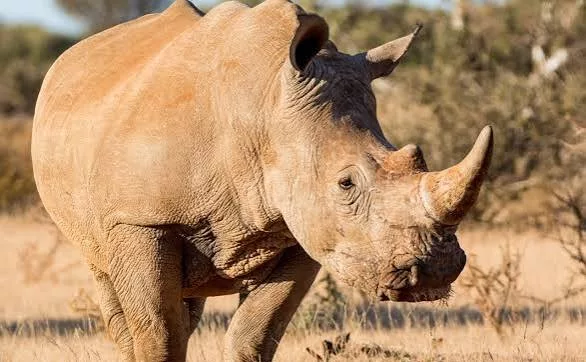
 The northern white Rhino /HANDOUT
The northern white Rhino is facing extiction with only two knoen white rhinos remaining in the world.
Najin and her daughter Fatu both are female and are currently being protected at Ol Pejeta conservancy in Likipia county.
Scientists say the northern Rhino population has reduced over the years mainly because of poaching and loss of their natural habitat.
Their horns have made them a target for poachers which has contributed greatly to the decline of their population
In March 2018 Sudan, the last known male northern white rhino died at Ol Pejeta after suffering from age- related health problems.
His death left only Najin and Fatu, making natural reproduction impossible.
Although the northern white rhino is not completely extinct because two females are still aliVe, it is considered functionally extinct because there is no living male to reproduce with them.
Scientists and concervationationsts are now using modern technology in atempt to save the subspecies.
Eggs have been collected from Najin and Fatu and combined with preserved sperm from northern white Rhino males that died the process has resulted in embryos which are being preserved.
Researchers say cloning could one day become part of the solution.
"Destroying something is easy, bringing it back is not," a scientist said.
According to Ol Pejeta, scientists had produced 39 northern white Rhino embryos by April 2016 the embryos could be transferred into southern white rhino females, which would act single mothers
However previous attempts to transfer the embryos have not yet resulted in a long term pregnancy.
Scientists are continuing with the programme as they search for a way to bring the northern white rhino back from the edge of extiction
The situation has made Kenya an important centre for the conservation of the northern white Rhino as the worlds last two are under protection iin the country. Their survival shows the importance of protecting wildlife and dealing with illegal poaching before more species become threatened.
and to ensure this is done the Kenya wildlife service plays an important role in this