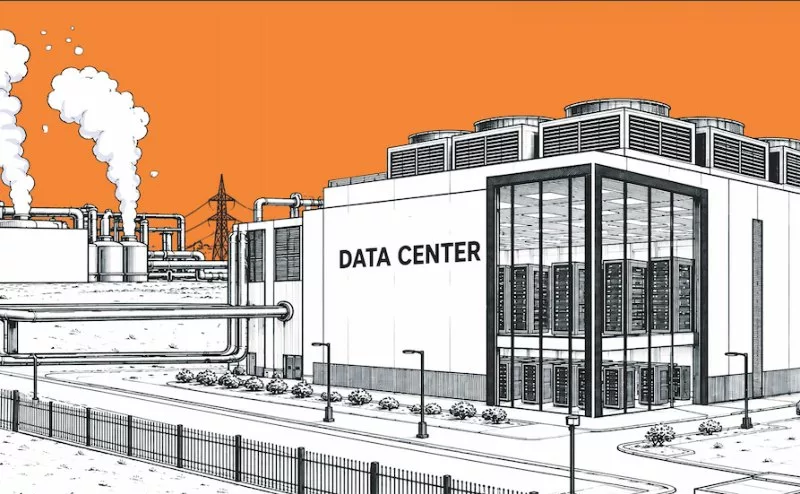
In May 2024, in Washington, President Ruto announced the largest private digital investment in Kenya's history: a $1 billion (Sh130 billion) Microsoft and G42 data centre at Olkaria, powered by our geothermal steam, with 100 megawatts to begin and eventually a gigawatt.
This May, he stood in Nairobi and said what the engineers had known for some time. At full scale, that one campus would need about half the electricity the whole country draws at its busiest hour. The project is suspended.
I am not an energy economist. I am a surgeon who has spent a career watching what happens when the thing a patient needs exists and the pathway to it does not. A tumour that was operable in March is not operable in September. The scan was there. The referral was slow. Olkaria is a disease of pathways, not of resources.
Consider what the industry did while we stalled. A year after Olkaria was announced, G42, the very same partner, broke ground with OpenAI on a campus in Abu Dhabi. Its first 200 megawatts, twice Olkaria's first phase, is due online this year and was reported ahead of schedule.
Microsoft has since committed $15 billion (Sh1.9 trillion) to the Emirates. OpenAI says the Abu Dhabi campus can serve everyone within 2,000 miles, which is a polite way of saying it can serve Africa from across the Red Sea. The capital did not wait for us. It never does.
The reflexive explanation is that Kenya lacks power and the Gulf has it. That is true and it is not the point. The point is what these companies are actually buying, and it is not electricity.
The most detailed public cost model of an AI data centre, from the research group Epoch AI, finds that electricity is about seven per cent of the annual bill. The chips are 60 per cent, because a fleet of processors worth billions wears out in five years whether it is computing or sitting in a crate.
That model is for an American campus and the energy share would be higher here, but the shape holds everywhere: the servers cost the same in Naivasha as in Nevada, and they depreciate from the day they land. For Olkaria's first phase the chips would have cost $2.5 to $4 billion (Sh324-Sh518 billion). The geothermal plant to run them would have been a tenth of that.
Now look at the queue. Connecting a large new load to the grid in the United States takes an average of 55 months. In Europe's data centre hubs it takes seven to 10 years. This is why Elon Musk is talking about data centres in orbit: not because power is expensive on Earth, but because the wait for it has grown longer than the life of the hardware.
The AI era will be located wherever electricity can be switched on fastest. That is a systems variable, not a resource variable, and it is the one on which a handful of African sites hold a lead almost nobody has noticed. Olkaria has 950 megawatts already generating, transmission already built and a proven steam field next door.
Kenya can energise a 100 megawatt module in under three years. Menengai and the Ethiopian Rift are in the same position. Almost nowhere in the hyperscalers' home markets can offer that. We were selling the scarcest thing in the industry and did not know it.
Why, then, has nobody built here? The answer is not a secret. It is the risk of lending money into an African contract. Which is exactly what the buyer removes. Microsoft is rated AAA, higher than the United States government. A power contract signed by Microsoft directly is bankable by any development lender on earth without a shilling of Kenyan guarantee. Kenya did not need to underwrite the demand. It needed Microsoft to sign for it.
The public record says the power was not there and the project is suspended, and that Microsoft then took its billions to the Gulf. Read together, those facts say the demand was never firm enough for anyone to bank, and a firmer contract, not a bigger grid, was what would have fixed it.
Here is why this matters beyond one deal. Every technology wave has had a geography, and once the geography sets, it sets for a generation. Africa did not host the factories of the industrial age or the fabs of the semiconductor age, and each time the excuse was a shortage we could not fix in time. This time the constraint the world is fighting is one we happen to hold, at specific sites, right now, for a window measured in months. Abu Dhabi has just shown how fast that window moves.
I know a little about artificial intelligence and enough about systems to recognise a late referral. The offer we should have made was not cheap electricity. It was speed, at a handful of sites, on a contract the buyer signs itself. That deal is still available. The window is not.