BY STAR TEAM
THERE are journalists who make headlines and editors who quietly, or imperiously, see to it that the people writing know precisely what they are doing.
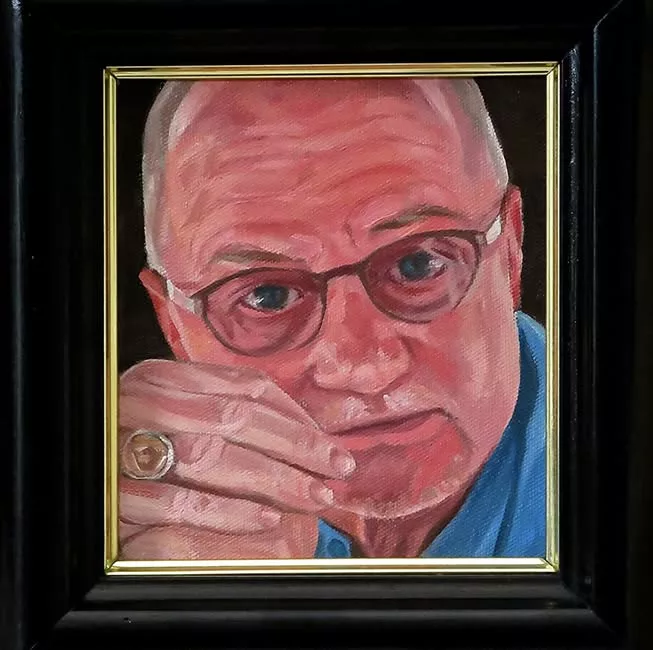
Frank Whalley, who died on Monday at his Spring Valley home in Nairobi at 79, belonged to the second, and perhaps most consequential bracket.
For decades, the hack with the sharp eye, sharper tongue and almost obsessive allergy of messy copy was not simply an editor.
He was a coach in the mould of a drill sergeant – often irascible, at times intimidating, but a teacher whose lessons rung long in the heads of those who passed through his hands.
He began his career in the 60s in Manchester and arrived at the Daily Nation, in the mid 90s, as training editor, where his remit soon went beyond tightening copy.
He taught reporters how to think straight, editors how to shape copy and sub-editors to understand design. His seniors quickly tapped into his boundless energy, nose for news and capacity to turn a story around in a matter of minutes. He was soon a key cog in production and the visual appearance of the front page, in the process helping influencing the newspaper’s enduring identity.
His philosophy was simple. Journalism is a skill, and skill demanded disciplined repeated application.
Stephen Muiruri, a former Nation reporter, has been quoted recalling how Whalley intervened after the 1998 US embassy bombing to press management to hire him. As the newsroom struggled to understand the magnitude of the explosion, Whalley soon understood the immensity of the attack.
He would later persuade management to find Muiruri a job after the young correspondent had filed a breakthrough splash that established the hotel, in downtown Nairobi, where the terrorists had assembled the bombs.
That was Whalley in his element. Always on the lookout for new talent. He could be rough and impatient. Colleagues remember him as resolute and prone to making his frustration volubly clear.
In the early days of the Star, which hit the streets in July 2007, Joseph Olweny, then production editor, recalls Whalley as uncompromising about deadlines.
The newspaper was running under great pressure, with the Nation Media Group contracted to print it under a deadline that could not be missed. Whalley had been engaged by the bosses of the Star as editorial director and consultant and helped assemble the editorial operation. The eventual founding editor was Catherine Gicheru, but Whalley was central to the preparation and production of the new newspaper.
William Pike, one of the paper’s founders, later described Whalley as the consultant who helped get the ambitious project off the ground.
The Star’s launch was audacious. Its owners wanted to break into a market dominated by the Nation and Standard. Whalley brought to the venture the experience of a veteran who understood a newspaper was not merely a cluster of stories. It was a daily performance in which journalism, design, production and editorial judgment worked in chaotic harmony.
His influence extended beyond individual newspapers.
At the Nation, Whalley became part of the long tradition of in-house trainers that sharpened the likes of Pamela Makotsi, Kwamchetsi Makokha and Mutuma Mathiu.
The training philosophy was to produce staff who could report, edit and put together a newspaper. Whalley would be one of its most recalled tutors.
In a 2005 interview in a history of the Daily Nation, he remarked about journalists with what he called “delusions of adequacy” and his frustration with repeated mistakes. That was one of his big peeves.
In later years he became one of the most persistent and knowledgeable art critics. Writing for The EastAfrican, he developed a unique voice - informed without being conceited and often funny.
Is the headline right? Do the design elements pack in harmony? Does the story answer the key questions? That’s what occupied his day.
“He suffered no fools. Many editors could not stand him,” Bernard Mwinzi, a former Nation editor wrote on his Facebook page.
The journalists he taught recall his stinging tongue. Some the jokes. Some the shivers of getting copy back with Whalley’s red marks plastered all over the print out.
“He taught me how to write court stories,” Star News Editor Jillo Kadida recalls.
“Whalley was a small man who seemed to move at twice the speed of everyone else, sprinting from one newsroom office to another, cigarette in hand. He had a sharp, mischievous wit, a warm smile and a generosity that softened the edges of his demanding personality.”
Journalism, in his views, depended on hands on exposure - experience must hold the hands of a novice. In Whalley’s era newspapers were cobbled together under pressure. Stories were filed. Sub-editors fixed grammar, photo editors printed out pictures, pages were patched together. Deadlines were cast on stone.
Even with the breathtaking changes in media, the old standards endure. Accuracy. Clarity and simplicity. For the reporters he drilled, faulted or praised, Whalley’s legacy will forever be the inclination to check and check and check again.