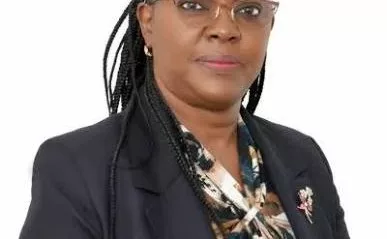
Gender PS Anne Wang'ombe/HANDOUT
The government has unveiled a national policy seeking to dismantle the economic barriers that have kept millions of women from fully participating in the economy.
The National Policy on Women’s Economic Empowerment sets out measures to increase women’s access to jobs, land, finance, technology, markets and productive resources.
“Financial inclusion for economic empowerment among women is also low. These inequalities limit women's active participation in the economic sector,” the document states.
Ministry of Gender, Culture, the Arts and Heritage, through the State Department for Gender and Affirmative Action, developed the policy.
The policy proposes interventions to tackle discrimination across 15 areas of the economy.
They include labour and employment, agriculture, trade and entrepreneurship, productive resources, ICT and the digital economy and the blue economy.
Others are unpaid care work, climate change, manufacturing, construction, energy, transport, sports, the creative economy and governance.
“The realization of women's economic empowerment requires concerted and targeted efforts that prioritize women's needs and preferences while acknowledging that women are not a homogenous group,” it says.
A major focus is increasing women’s participation in formal employment and narrowing the wage gap.
The policy seeks to increase the participation of women in the labour force.
“The policy seeks to create an enabling environment and enforce affirmative action that will eliminate gender disparities in the number of women employed, the levels of employment and the wage rates,” the policy reads.
It proposes gender-transformative programmes to challenge social norms that restrict women’s economic participation, greater use of affirmative action funds, safer workplaces and enforcement of equal-pay and maternity-leave laws.
The government also wants more girls and women to pursue science, technology, engineering and mathematics, areas where women remain under-represented.
The policy’s diagnosis shows the scale of the challenge.
Although women account for 50.2 per cent of Kenya’s working population, they are heavily concentrated in lower-paying informal and service-sector jobs.
In 2023, only 1.27 million women were in wage employment compared with 1.87 million men.
“The majority of the women in the rural areas spend a great deal of time on low-productivity work, which has created major income disparities between women and men,” the document states.
Agriculture is another major target.
The document shows that women make up about 75 per cent of the agricultural labour force but continue to face limited access to land, credit, technology and markets.
The policy seeks to “promote integration and participation of women in agricultural value chains to improve agricultural productivity and food security.”
“Women continue to suffer exclusion in policy decisions and have little or no access to credit facilities hence affecting their capacity to exploit modern technology, adapt to new crop production methods and access better markets,” it says.
It proposes equitable access to productive resources, greater participation of women in agricultural decision-making, climate-smart technologies that reduce their workload and stronger links to markets and value addition.
Land ownership remains a particularly significant barrier. The policy cites the 2022 Kenya Demographic and Health Survey showing that 73 per cent of women do not own land.
The government argues that removing such barriers would benefit the wider economy.
Citing FAO estimates, the policy says equal access to productive resources could increase women farmers’ yields by 20 to 30 per cent and raise agricultural output in developing countries by between 2.5 and four per cent.
The framework also seeks to confront the invisible economic burden of unpaid domestic and care work.
The 2021 Kenya Time Use Report found that Kenyan women spend approximately five times more hours on unpaid care and domestic work than men.
The policy therefore places unpaid care work among its priority areas, alongside digital access and the wider digital economy.
It also targets sectors where women remain poorly represented, including manufacturing, construction, energy, extractives and transport.
Women account for only 26.3 per cent of the manufacturing workforce, according to the policy.
The framework proposes improved access to economic resources and opportunities while promoting women’s participation in emerging areas such as the blue economy, sports and the creative industries.
The policy is anchored in the Constitution and aligned with Vision 2030, the Bottom-up Economic Transformation Agenda and the Fourth Medium Term Plan for 2023-2027.
It also seeks to strengthen existing initiatives such as the Access to Government Procurement Opportunities programme, Hustler Fund and Women Enterprise Fund.
Gender and Affirmative Action Principal Secretary Anne Wang’ombe said the policy was developed through broad consultations involving state and non-state actors.
“The Policy was enriched by information generated during consultative forums held in seventeen counties,” she said.
Implementation will require national and county governments, the private sector, civil society and development partners to work together.
The policy includes an implementation matrix and monitoring framework intended to track progress.
It also calls for better production and use of gender-disaggregated statistics to help the government identify gaps and measure whether interventions are delivering results.
INSTANT ANALYSIS
The policy is ambitious in identifying the structural barriers limiting women’s economic participation, particularly unequal access to land, jobs, finance, technology and markets. Its strength lies in linking empowerment to national economic growth rather than treating gender equality as a standalone issue. However, its success will depend on funding, enforcement, coordination and measurable accountability. Without firm implementation, the framework risks becoming another policy document that identifies longstanding problems without transforming women’s economic realities.