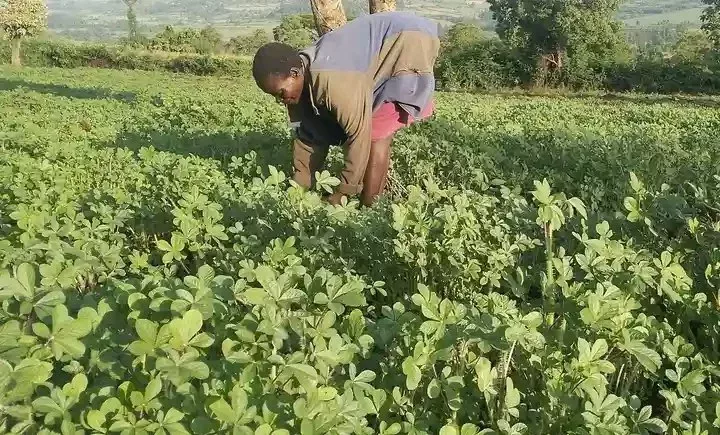
For nearly half of Kenyan children aged between six and 33 months, fruits and vegetables are missing from their diets.
The gap may seem like a simple matter of what is on a child’s plate, but the Food and Agriculture Organisation says it could have consequences far beyond nutrition, affecting growth, development and the country’s future human capital.
FAO Chief Economist Maximo Torero said 45 per cent of Kenyan children consumed no fruits or vegetables, according to data from the Kenya Demographic and Health Survey 2022.
“Nearly half of Kenyan children do not eat any vegetables or fruits. Vegetables remain substantially under-consumed,” Torero said.
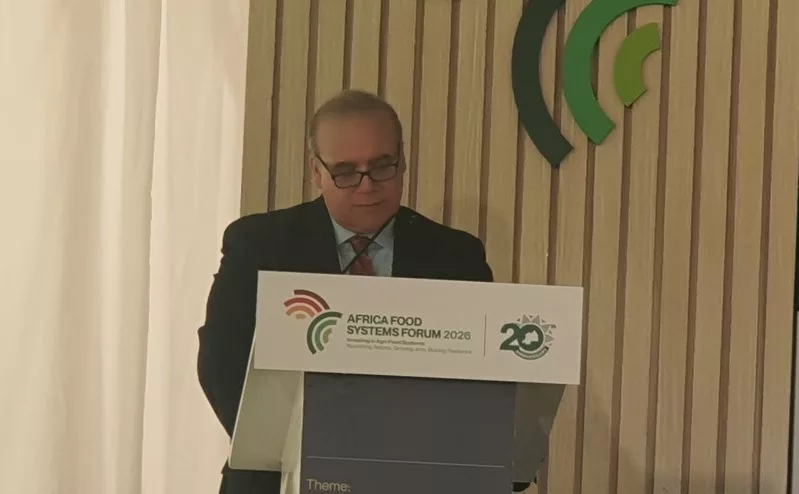
He was speaking at the Africa Food Systems Forum 2026 in Kigali, Rwanda, during a side event titled ‘Power the Plate: Energy for Nutrition’.
Torero said Kenya was not alone, with evidence from across Africa showing that between 45 and 69 per cent of young children consume no fruits or vegetables.
“The vegetables gap is a nutrition problem. It is a human capital problem and therefore it is an economic problem that we need to resolve,” he said.
The challenge, Torero said, cannot simply be blamed on consumers failing to make healthy choices. Availability and affordability are major barriers, particularly for poorer households.
“When the prices rise, purchase of vegetables for instance fall—with poorer households cutting back the most,” he said.
Vegetables and fruits account for about 40 per cent of the least-cost diet, while in the lowest income quintile of the least developed countries, vegetables cost approximately five times as much per calorie as starchy staples.
Torero said food systems must therefore be transformed to make healthy diets accessible.
“In much of Africa, food systems do not yet make enough vegetables available for everybody to consume quantities consistent with the healthy diets. We cannot place the responsibility entirely on consumers,” he said.
“People cannot be asked to choose a healthy diet if the healthy choice is scarce, unavailable, or unaffordable.”
He called for greater investment in vegetable value chains to lower the cost of healthy diets, strengthen livelihoods and increase resilience to economic and climate shocks.
Fruits and vegetables provide fibre, vitamins, minerals and bioactive compounds essential for healthy bodies. High consumption is associated with lower risks of premature mortality, stroke and some cancers.
The World Health Organisation recommends that people consume at least 400g of fruits and vegetables daily.
However, Torero said consumption in sub-Saharan Africa is estimated at only about two-thirds of the recommended level.
Former Ethiopian Prime Minister Hailemariam Desalegn called for greater investment in the production and distribution of nutritious vegetables.
“Africa needs to produce and consume more vegetables if you want healthier diets, stronger livelihoods and more resilient food systems,” he said.
Desalegn called for investment in irrigation, cold chains, transport and market infrastructure, as well as research and development.
The Africa Food Systems Forum 2026, now in its 20th year, has brought together more than 5,000 delegates from over 50 countries in Kigali under the theme ‘Investing in Agri-Food Systems’.
During the forum, innovations in energy, refrigeration and solar dryers were also showcased as possible solutions to food-system challenges.
For Kenya, the message is stark: putting more nutritious food within reach of families may be as important as telling them what they should eat.