Leaders from Western and Nyanza are plotting a political
alliance they say could consolidate more than seven million votes behind
President William Ruto in the 2027 General Election.
Led by Energy and Petroleum Cabinet Secretary Opiyo Wandayi and Kakamega Deputy Governor Ayub Savula, the leaders are pushing for the Luhya and Luo communities to unite politically.
They want to realign a voting bloc that has traditionally been associated with the former Prime Minister Raila Odinga.
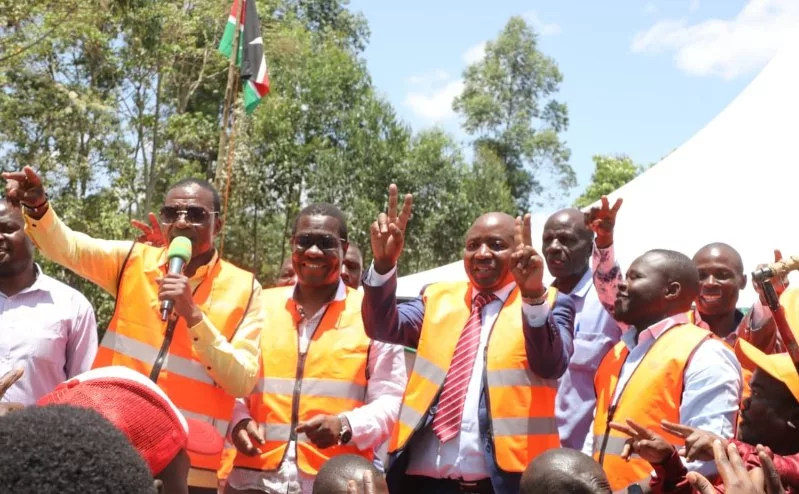
Speaking during political mobilisation activities in Kakamega and Bungoma counties, the leaders said the two regions could wield significant political influence by voting as a bloc.
Savula urged leaders from the two regions to begin laying the groundwork for a joint political strategy that would extend beyond the 2027 election.
“The two regions should rally behind Ruto in recognition of his administration’s development record,” said Savula, who is the deputy coordinator of President Ruto’s Western regional campaign lobby.
Savula blamed the previous administration for the decline of major sugar industries in the region.
He said the revival of Mumias Sugar and Nzoia Sugar companies demonstrated a shift in government policy under Ruto.
Migori Senator Eddy Oketch said the two regions had previously voted together for Raila and that the same unity should now be transferred to Ruto, whom he described as the broad-based government candidate.
He said the Luhya and Luo communities could then position themselves for Ruto’s succession in 2032.
“The Luo and Luhya communities will negotiate and agree on a joint presidential candidate for 2032 after Ruto completes his second term,” Oketch said.
Wandayi criticised former President Uhuru Kenyatta’s administration for doing little to address the economic challenges facing the wider lake region.
He cited the revival of Mumias Sugar and Nzoia Sugar companies under the Ruto administration as evidence of the government’s commitment to the region.
“In the last four years, Ruto has done a lot for the people of Nyanza and Western, and they should reciprocate by giving him all the votes,” Wandayi said.
The emerging political alliance would represent a significant shift in the electoral arithmetic of Western Kenya and Nyanza, regions that have historically played an important role in presidential contests.
Western Parliamentary Caucus chairman John Waluke (Sirisia), Kaikai Bisau (Kiminini), Mary Emase (Teso South), Beatrice Adagala (Vihiga Woman MP), Dan Wanyama (Webuye West), David Ndakwa (Malava), Fred Ikana (Shinyalu), Lilian Siyoi (Trans Nzoia) and nominated Senator Connie Wakwabubi attended the events.
Waluke said a majority of MPs from the region were likely to support Ruto, citing development projects initiated by the President across the country.
For now, the proposal remains a political mobilisation effort rather than a formal alliance.
However, its ambition is clear: to bring together two of Kenya’s major voting blocs, secure their support for Ruto in 2027 and give Western and Nyanza leaders greater leverage in negotiations over the country’s political succession after the election.
INSTANT ANALYSIS
The proposed Western-Nyanza alliance signals an attempt to rewrite Kenya’s 2027 electoral arithmetic by shifting traditionally Raila-aligned voting blocs towards Ruto.
Beyond securing votes for the President, the initiative points to a bigger bargain: using a united Luhya-Luo bloc to strengthen the regions’ negotiating power ahead of the 2032 succession. Its success, however, will depend on whether grassroots voters embrace the elite-led realignment and whether regional interests can overcome longstanding political loyalties.