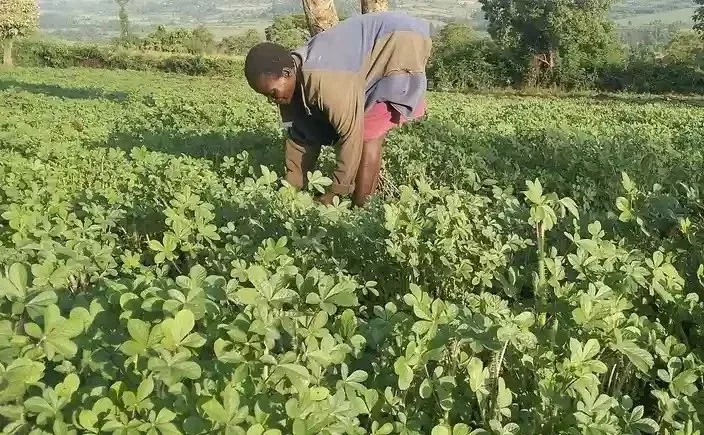
The Digital Climate Advisory Services (DCAS) for Smallholder Farmers is being implemented by KALRO in partnership with a technology firm known as TomorrowNow.
In Kenya, smallholder farmers often lack timely and reliable weather information crucial for decision making.
This limits their ability to plan and adapt to the changing climatic conditions.
Digital Climate Advisory Services (DCAS) aims to empower millions of smallholder farmers to adapt to climate change by delivering actionable, location-specific weather forecasts, providing agronomic advice tailored to farmers’ needs by using a simple SMS to ensure accessibility.
KALRO Deputy Director General in charge of Crops Research Dr Alice Murage said the new innovation is now serving 5.6 million framers.
“We are converting our research into information that farmers can understand and more so to help them forecast. We are not just telling them that it is going to rain tomorrow so that they can plant but we also prepare them on when to plant and what to plant, when to weed, the different fertiliser recommendation,” Murage said.
During the forum, the initiative by Kenya was lauded having been successful so far.
Already, a number of countries including Malawi have come to Kenya to benchmark on how the initiative has been rolled out.
“Other countries are also planning to come and learn from us,” Murage said.
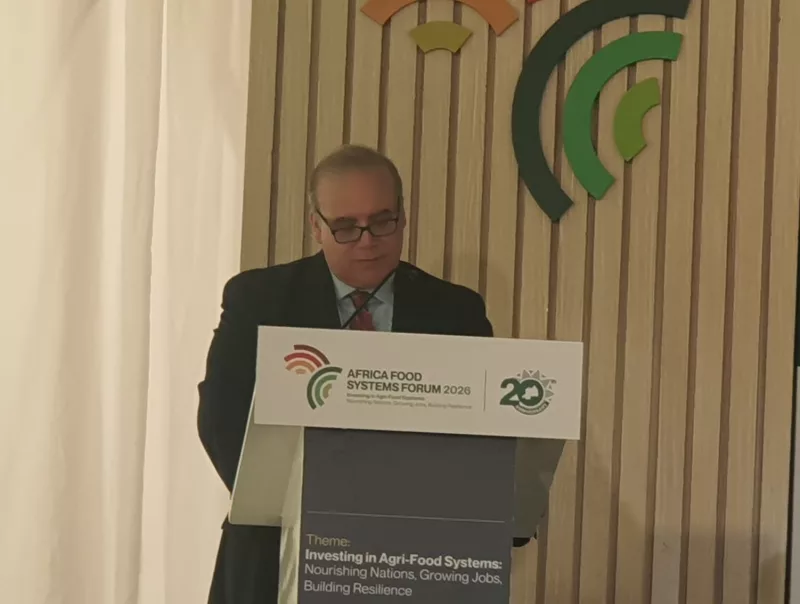
Murage was one of the panel that sought to find ways of scaling up national climate services at the ongoing Africa Food Systems Forum 2026 that kicked off at Kigali Convention Centre this week.
Now in its 20th year, the Forum has catalysed billions in agricultural investment, shaped continental food policy through the Malabo Declaration, and built an unrivalled network of stakeholders committed to advancing Africa's food systems.
The 2026 edition in Kigali, Rwanda convenes under the theme Investing in Agri-Food Systems – bringing together over 5,000 delegates from over 50 countries for four days of high-impact programming, deal-making and policy dialogue.
Murage said they sent out the information to the farmers every week.
She said Digital Climate Advisory Services help farmers make decisions on what to plant but also when to plant.
“We are trying to advise them that when it rains, is it enough to plant? Is it the right time to weed and harvest? These advisories are making farmers to make the right decision at the right time.”
Murage said doing research is one thing and helping farmers access the information at the right time is the best thing that can happen.
“You can have good information but if it reaches farmers at the wrong time, then it does not have any impact.”
Murage said the initiative ensures that farmers have the right information that they can trust.
To ensure that the information is of use by the farmer, Murage said they help curate in a language farmers understand.
Murage said about six million farmers get information weekly through SMS.
Murage said the data has been proven as farmers also call back to get clarity of the information through the toll-free number.
She said the initiative deals with crops and livestock.
Murage said with availability of funds, the initiative could be scaled up.
“We will keep enhancing depending on the needs of the farmer,” she said.
TomorrowNow CEO Brian Miranda said they seek to unlock the power of next-generation weather solutions in agriculture, facilitating millions of farmers thrive and attain food security.
The firm leverages partnerships with farmer-facing organizations, government agencies, private weathertech firms and research institutions, to operationalize weather innovation within food security applications.
Miranda said they aim to support the delivery of next-generation weather technologies to 100 million farmers by 2030, unlocking their potential to strengthen global food systems and ensure local prosperity.
He said Kenya has made a number of strides in rolling out the initiative that now allows farmers to get information on weather.