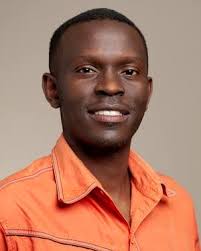
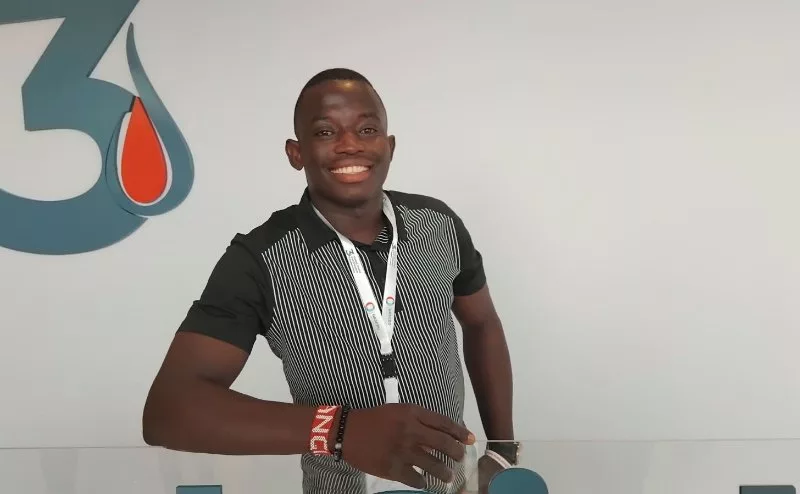
 Kelvin Mabonga, a final-year student of Bungoma National Polytechnic,
The sweat came first, then the fever, then a pain in the chest that made it hard to breathe.
Kelvin Mabonga, then a final-year student of Bungoma National Polytechnic, was home in Bungoma after a gruelling week at the Kenya National Drama and Film Festival in Nakuru last year.
Nakuru had been warm, but Bungoma was cold that night. A change like that means nothing more than adding an extra blanket for many people. For Kelvin, it was the start of a two-month fight for his life.
His experience is common with many of the 250,000 Kenyans living with sickle cell disease. It’s a life of daily medication, finding health workers who understand the disease, while trying to live a normal life in communities where many people still mistake the limits imposed by the condition for laziness or weakness.
“We are stigmatised by the community because you cannot be able to do heavy lifting even at work or at home. They think you are pretending. They think you are lazy,” Mabonga says. “The problem is just that our condition doesn't allow us to do tough situations. If you do that you may end up with a crisis.”
People with sickle cell are born with sickle shaped red blood cells. Normal, disc shaped cells slide easily through blood vessels carrying oxygen to every part of the body. But these sickle-shaped cells sometimes get stuck in narrow blood vessels, blocking the flow of blood and oxygen. That blockage is what doctors call a crisis, and it is one of the most painful things a human body can go through.
Temperature changes and fatigue can trigger it.
Mabonga's family rushed him to Bungoma West Hospital in Kanduyi at 2am during his crisis last year. Doctors there knew him well; he had been a patient since 2014. They put him on oxygen and injected him with a strong painkiller called tramadol.
What followed was nearly two months of pain, wrong turns in his treatment, and a fight for his life that ended only after he was rushed by ambulance to a hospital in Eldoret.
"Living with sickle cell means you cannot even swim, because all these things use up the oxygen your body already struggles to carry," he explained.
Mabonga spoke at the ongoing third Global Sickle Cell Disease conference in Nairobi whixh he is attending to learn more about his condition and spread the awareness.
“Many people think we die early, but with proper care, a person with sickle cell can live in old age,” says Mabonga, who is 25 years old.
While in past decades most children with sickle cell anemia did not survive into adulthood. Today, better medical care allows many more patients to live well into their 50s, 60s, and beyond.
However, the condition has no widely available cure, though a bone marrow transplant can cure some patients, and new gene therapies are showing promise. But these remain too costly and scarce for most African patients. For now, life-long treatment focuses on managing pain and preventing crises rather than curing the disease.
Dr Gladwell Gathecha, the acting head of the Division of Non-Communicable Diseases at the Ministry of Health, says that in Western Kenya, one of the regions where sickle cell is most common, only four hospitals are fully equipped to treat blood disorders.
She said there currently 250,000 Kenyans living with Sickle cell, and each year about 14,000 infants are born with the condition across Kenya.
“Sadly, we lose around 400 people annually, and out of the 47 counties in Kenya, 17 are considered high-vulnerable for sickle cell. It has been quite a journey to reach where we are, where Sickle cell stopped being a neglected condition to now a condition that is prioritised at a national level, and we took a number of steps to reach there,” she said.
The ongoing conference has brought together more than 200 global leaders, clinicians, researchers, policymakers, and caregivers.
The goal is to expand access to newborn screening and life-saving treatments like hydroxyurea and to advocate for strengthening of health systems and building sustainable, patient-centered approaches to care.
Dr Gathecha said hospitals in high risk areas have been instructed to test babies for sickle cell when an infant reaches six weeks.
“Currently, we have screened around 5,000 infants. It's still a drop in the ocean, because not all the 17 counties that I mentioned are screened, but we are improving and scaling up this intervention,” she said.
She also noted only 119,000 Kenyans are accessing the life-saving hydroxyurea drug partly due to stockouts. The drug is taken daily to prevent the painful crises and costs about Sh3,000 for a full-year dose.
Health Cabinet Secretary Aden Duale, who addressed the ongoing conference, noted that roughly one in every 30 Kenyans carries the sickle cell gene without necessarily knowing it.
He said the government has trained more than 800 health workers and is training 107,000 community health promoters to help spot the disease early, especially in high-burden counties.
“Because screening must lead immediately to confirmation, to counseling, to preventive care, to treatment, and above all, to reliable follow-up,” he said.
He said from May 2026, the Social Health Authority (SHA) formally began covering sickle cell disease for the first time, paying for diagnostics, some medicines, and procedures like blood transfusions and red cell exchange.
But Mabonga says the relief only stretches so far. "The drugs are covered by SHA, but they are still very expensive, and if you don't have a parent who is a teacher or civil servant, or a disability certificate, getting steady access can be difficult," he says. "Even with insurance, many of us are still struggling to get medicine every single month."
He says one of the hardest parts of living with sickle cell is dating. Many young people quietly walk away once they learn about his condition, afraid of what a future with him might demand of them.
"Finding a partner is very hard, because once someone learns you have sickle cell, they often think they are signing up to be a caregiver for life," Mabonga says. "It is not that people don't care, it is that they fear the responsibility, so many just leave before things get serious."
Mabonga works as an ICT intern with his sub-county education office and hopes to become a software developer. His message to other Kenyans is simple. "Don't tell someone living with sickle cell that they cannot do something, because that kills their morale," he says. "Show them love, show them support, and let them know that surviving is not the ceiling, because we can live long, full lives if we are given the chance."
END