Some 1,404 out of the 1,924 employees at the Office of the Director of Public Prosecutions come from only six ethnic communities.
Documents tabled before the Senate’s National Cohesion, Equal Opportunity and Regional Integration Committee show the positions are held by Kikuyus, Kalenjins, Luhyas, Luos, Kambas and Kisiis.
This implies the six communities account for 72.97 per cent of the employment opportunities.
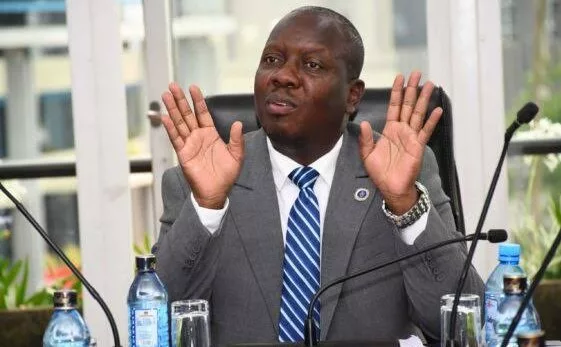
Presenting the documents before the committee, chaired by Marsabit Senator Mohamed Chute, DPP Renson Ingonga said Kikuyus are the single largest community occupying job positions at the ODPP.
There are 314 Kikuyus at the ODPP, representing 16.2 per cent, followed by Kalenjins with 268, representing 13.91 per cent.
There are 297 Luhyas, or 15.45 per cent; 204 Luos, representing 10.59 per cent of the workforce; 133 Kambas, representing 6.91 per cent; and 189 Kisiis, representing 9.81 per cent.
The figures are as of August 2026.
“No single ethnic group exceeds the 33.3 per cent set under the National Cohesion and Integration Commission,” Ingonga said.
Other communities with a high number of representatives at the ODPP are Meru, with 83; Mijikenda, 40; Maasai, 47; Embu, 31; Borana, 33; Somalis, 53; Taita, 21, and Kenyan Swahili, 15.
Among the underrepresented communities at the ODPP are Sekuiye, Aweer, Burji and Makonde, with one member each.
Rendile, Nubi and Malakote have two members each, while Ogaden and Njemps have three members each.
Dorobo, Orma and Teso have four members each.
In total, 45 communities are represented at the ODPP.
According to the DPP, representation of minority groups has improved, with 40 ethnic groups collectively accounting for 45.6 per cent of staff.
“Through the Public Service Commission annual National Values and Principles Compliance Framework, the ODPP undergoes audits to evaluate inclusivity in relation to gender and ethnicity,” Ingonga said.
He explained his office has taken deliberate steps to ensure the office’s website is accessible to all cadres.
“All ODPP recruitment advertisements have a statement on affirmative action for the minority, intersex and persons with disabilities,” Ingonga stated.
He said the ODPP has ensured recruitment materials, application portals and interview processes are fully accessible.
Measures include screen-reader compatibility, the provision of sign-language interpretation during interviews and the use of accessible venues.
“The ODPP remains steadfast in upholding the constitution, promoting inclusivity and ensuring justice for all Kenyans,” he said.
In total, there are 1,007 females and 917 males at the ODPP.
Recently, the committee tabled a report that laid bare the deep ethnic imbalances that continue to affect the public service.
It revealed that Kikuyus and Kalenjins account for more than a third of workers in the 51 agencies examined by the panel.
The two communities have 56,774 employees out of a total of 148,092, representing 38.33 per cent of the workforce captured in the inquiry.
The report has an explicit verdict: the Kikuyu, the Kalenjin and the Kisii are overrepresented.
At Kenyatta National Hospital, 1,492 out of 5,056 employees, representing 29.51 per cent, are Kikuyus. At the Kenya Tea Development Agency, 554 of the 1,603 employees are Kikuyus.
The community also dominates the Public Service Commission, where 18,319 out of 89,819 employees are Kikuyus, representing 20.39 per cent.
At the Public Procurement Regulatory Authority, 15 out of 64 employees are Kikuyus.
At the Kenya School of Government, there are 115 Kikuyus out of 492 employees, while at the Central Bank, there are 325 Kikuyus out of 1,311 employees, representing 24.79 per cent.
Other agencies with a high number of Kikuyus include the Capital Markets Authority, where they account for 24 of the 99 staff, and the Public Procurement Regulatory Authority, where 15 of the 64 employees are from the community.
INSTANT ANALYSIS
The audit of 148,092 staff across 52 state agencies reveals sharp ethnic imbalances. Kikuyus and Kalenjins dominate, exceeding national shares, while Kenyan Somalis and Turkana remain underrepresented. Regional agencies show extreme local majorities — Maasai at 71 per cent, Kamba at 62 per cent and Mijikenda at 61 per cent. Tiny communities such as El Molo and Konso are nearly absent. These gaps breach constitutional diversity requirements and reflect persistent recruitment biases favouring larger groups.