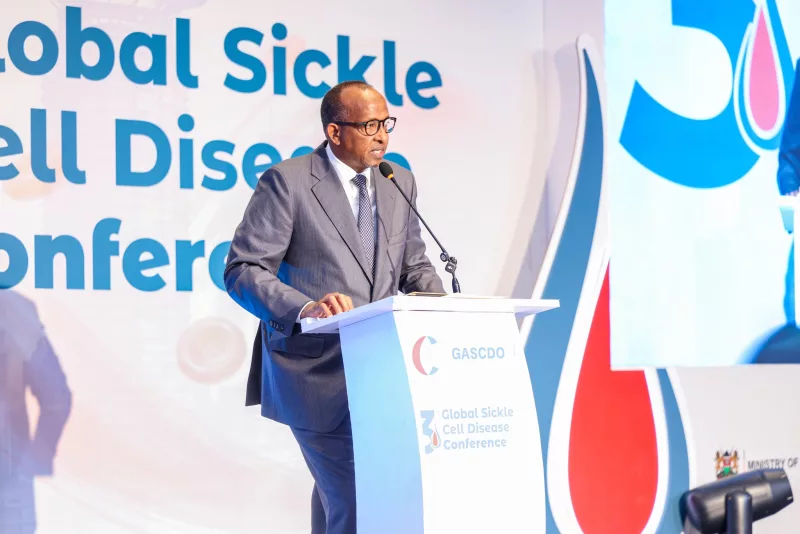
 Health Cabinet Secretary Aden Duale./HANDOUT
The Government has renewed its push for universal infant screening for sickle cell disease, with Health Cabinet Secretary Aden Duale calling for early detection, reliable access to treatment and stronger referral systems.
Duale spoke Tuesday when he resided over the opening session of the three-day Global Sickle Cell Disease Conference in Nairobi, held under the theme 'Global Standards, Local Impact: Advancing Sickle Cell Care Across Systems and Communities.'
Leaders present at the opening session included MoH's Director for Family Health Dr. Bashir Issak, Global Alliance for the Sickle Cell Disease Organization (GASCDO) CEO Ms Biba Tinga, Sickle Cell Federation of Kenya CEO Geoffrey Owino, Ministry's Head of Division of Non-communicable Diseases Dr Gladwell Gathecha alongside other Ministry officials.
The Ministry of Health published its Policy Guidelines on Infant Screening for Sickle Cell Disease in 2023, providing a framework for universal screening.
The guidelines recognise that early diagnosis can help prevent potentially fatal complications among children with the disease.
The Ministry estimates that about 14,000 children are born with sickle cell disease in Kenya every year.
Without early diagnosis and appropriate treatment, the disease can cause severe complications and contribute to childhood deaths.
Duale’s latest call therefore appears to be less about creating a new policy and more about turning an existing framework into a functioning nationwide programme.
The government has said it is expanding universal newborn screening while working on a national sickle cell disease registry and revised treatment guidelines.
It has also trained more than 107,000 Community Health Promoters on sickle cell disease and more than 800 healthcare workers in specialised care.
However, implementation remains the critical test.
A 2025 study involving mothers in Western Kenya found that although acceptance of newborn screening was high, only a small proportion of mothers had actually undergone screening.
The findings highlighted the gap between policy and access.
That gap matters because screening only becomes life-saving when it is linked to treatment.
A baby diagnosed early needs access to follow-up care, medicines, vaccinations, caregiver education and referral services.
Experts in Kenya have similarly stressed that screening must be linked to a functioning continuum of care rather than simply producing a diagnosis.
The Government has also been expanding financial protection for patients.
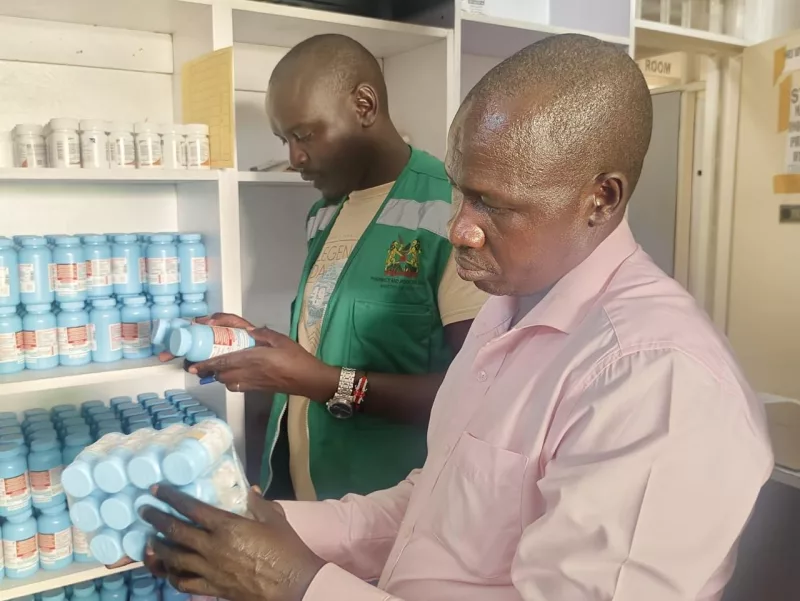
The Ministry has integrated sickle cell disease into the national health financing framework through SHA, with support for diagnostics, essential medicines and blood transfusions.