A fresh storm is brewing over what MPs termed National Treasury’s inordinate delay in disbursing more than Sh60 billion to the Equalisation Fund.
Lawmakers are warning they could reject future budgets unless Treasury fixes the delays that have left marginalised areas without adequate basic services.
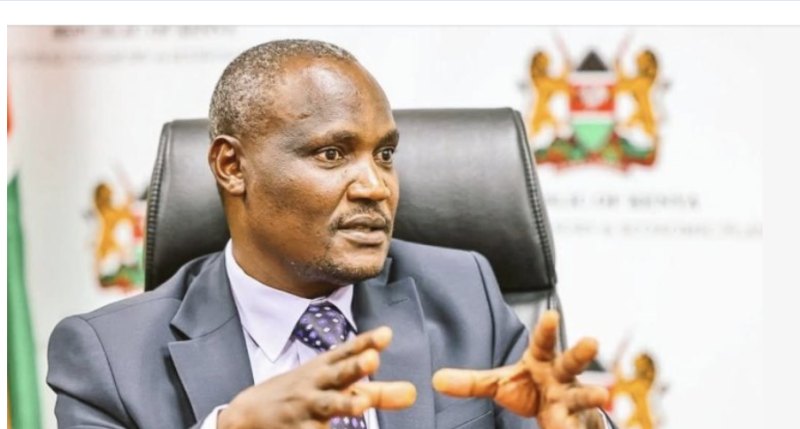
Treasury CS John Mbadi faced lawmakers in plenary, who demanded answers over the billions of shillings owed to the constitutional fund and the slow implementation of projects.
Samburu West MP Naisula Lesuuda and her Tiaty counterpart William Kamket led the push for answers.
They questioned the government’s commitment to the fund, which was created to uplift areas that have historically lagged behind.
Lesuuda spoke at a time when the government had accumulated massive arrears.
An audit queried Treasury’s failure to remit billions to the fund by June 30, 2025.
This is even as it emerged that the fund has, since inception, received a paltry Sh22.4 billion out of the expected Sh90.3 billion.
“There is an arrears of 75.2 per cent of the total entitlement from when we started implementing the Equalisation Fund,” Lesuuda said.
Responding to the MPs, Mbadi said the delays were partly caused by the late operationalisation of the fund, which was established under the 2010 constitution.
“This fund has had challenges from the beginning,” Mbadi said, noting the first financial year that should have seen resources allocated was 2010-11.
He said the absence of a legal framework and disagreements over the administration of the fund delayed its implementation for about three years, hence the arrears.
The constitution requires 0.5 per cent of all revenue collected by the national government each year to be paid into the fund.
Mbadi said Parliament appropriated Sh11.8 billion under the Equalisation Fund Appropriation Act, 2018, for 360 projects in the 14 counties initially identified as marginalised.
By June 30, 2026, Sh10.98 billion, or 95 per cent of the approved allocation, had been transferred to implementing ministries, departments and agencies.
Of the 360 projects, 266 were fully complete while 31 were substantially complete, he said.
Under the second Marginalisation Policy, 1,624 projects valued at about Sh9.94 billion had been approved by June 2026, with 1,072 reported as fully complete.
The projects cover basic services, including water, roads, health facilities and electricity.
But MPs said the figures did not reflect the reality on the ground.
Kamket accused county governments of frustrating implementation and demanded changes to the system governing procurement.
“The elephant in the room is the procuring role,” he said.
“Unless you address that matter of procurement, this fund will continue to be wasted.”
Kamket cited Baringo, where he said intra-county marginalisation had contributed to poor absorption, with implementation standing at only 29 per cent.
He questioned Mbadi’s proposal to seek legal advice on the 2019 High Court decision that invalidated the original guidelines for administering the fund.
The original guidelines allowed national government ministries and agencies to implement projects directly.
The High Court later ruled them unconstitutional after the Council of Governors challenged them.
New regulations introduced in 2021 shifted implementation towards county governments through conditional grants.
Mbadi said Treasury was seeking advice from the Attorney General on the judgment and possible reforms.
He said administrative delays were being addressed through July 2024 guidelines that allow approved funds to be transferred directly to county special-purpose accounts, shortening the disbursement chain.
The CS also criticised the expansion of the fund’s coverage from 14 counties to 34 under the second Marginalisation Policy.
“In my view, therefore, it was a mistake by the CRA to increase the number of counties from 14 to 34,” Mbadi said.
He argued the fund should remain focused on counties that have historically suffered deeper marginalisation, including Samburu, Baringo, Turkana, Mandera, Wajir, Isiolo, Marsabit and Garissa.
The remarks drew further concern from MPs, who said communities were already losing faith in the fund.
Turkana Central MP Joseph Namuar said Turkana had not received Sh148.5 million in an earlier allocation.
He also questioned whether communities had been consulted over projects for the current financial year.
Baringo North MP Joseph Makilap warned that MPs could take action during budget consideration if the problems were not addressed.
“Minister for Finance, if you want this thing to succeed for the time being before it lapses in 2031, let us get the projects,” Makilap said.
Endebess MP Robert Pukose was even more direct, warning Treasury the House could reject the Equalisation Fund allocation when the Budget Committee brings it before MPs.
“To the CS, when the Budget Committee tables here, this Equalisation Fund will be rejected by the House,” he said.
Pukose said an Equalisation Fund hospital project in Endebess was 50 per cent complete, contradicting claims that projects were not progressing.
Budalang'i MP Raphael Wanjala said communities in his constituency had waited for years without seeing the benefits of the fund.
“For the last 14 years, this money has been going through the county governments, and we have never seen this money in Budalang'i,” he said.
With the fund due to lapse in 2031 unless Parliament extends it, MPs now want Treasury to speed up disbursements.