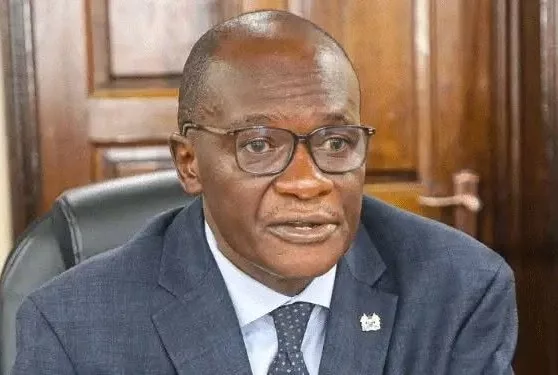
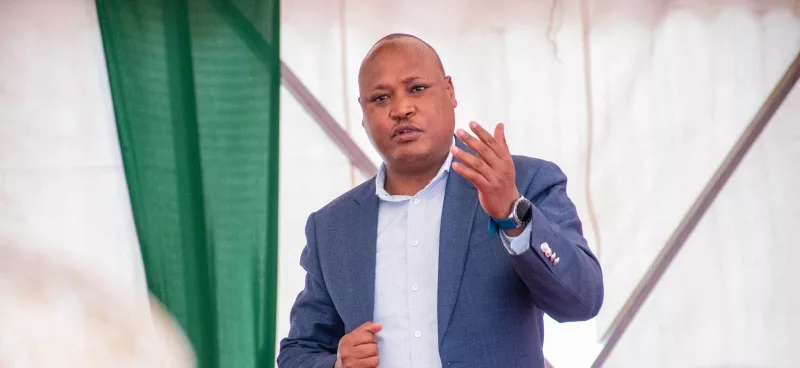
 JKF's non-executive chairperson, John Ketora
The Jomo Kenyatta Foundation (JKF) sits at the intersection of two critical national priorities: expanding access to education and strengthening opportunities for disadvantaged learners.
Through its scholarship programme, the foundation is supporting thousands of students whose families would otherwise struggle to keep them in school.
But as demand for educational support continues to rise, questions remain over the scale of the programme, its funding and whether the current model is sufficient to bridge the country’s widening access gap.
In an interview with JKF non-executive chairperson John Ketora, we delved into the scholarship challenges, the publishing mandate, and the budget gap that causes the foundation to punch below its weight. Excerpts.
Your mandate include advancement of education and scholarship; are you people up to the mandate?
Yes. At the moment, the Jomo Kenyatta Foundation supports about 24,000 students through full scholarships, including approximately 10,000 students in Grade 10, with the rest drawn from Form 3 and Form 4. The scholarships cover essential needs such as school fees, pocket money, uniforms, transport, and personal items, including soap and other basic amenities required while in school.
Talking about the numbers under your cover, in terms of scholarships, don’t you think you are scratching the surface?
The need out there is too big; actually, that is just a drop in the ocean. We recruit through subcounties and there is a set formula based on population, so you rarely find fewer than 100 applicants, yet the largest number you can pick is only 20. That number is really insignificant. Our programme is currently funded by the World Bank and not the Government of Kenya.
What are you doing, as a foundation, to increase your coverage in terms of numbers of beneficiaries?
The demand remains high. For instance, this year the World Bank gave us resources that could only handle 10,000 students. I wish the government could have doubled that number so that instead of covering only 10,000 learners, we could have covered at least 30,000 students recruited in a one year. That way, we could at least attempt to meet the need.
Given the few opportunities at the Foundation, how vigorous is your vetting to ensure only deserving cases are considered?
There are always very clearly set-out requirements that one must meet and we carry out our recruitment in the villages using national government administrative structures, the Ministry of Education and community stakeholders. We have a 15-member committee that vets the cases we receive to ensure candidates meet the minimum requirement in terms of grades. They then send the details to the Ministry of Education, which also has a committee. The ministry liaises with the World Bank to ensure we adhere to all their requirements.
Given the growing gap of deserving students who are left out of such programmes, do you think it is time the Government collapse all these bursaries, scholarships and provide free secondary and tertiary education?
That is actually what we have always advocated for—that a council called the Basic Education Scholarship and Bursary Council be created to bring together various bursaries and scholarship programmes under one coordinated system, placed under a single organisation within the Ministry of Basic Education to operate it. An established institution such as the Jomo Kenyatta Foundation could potentially manage such a programme because of its experience and existing capacity, perhaps expanding slightly for that enhanced mandate. We support this or any other council that could be formed so that we do not have scattered scholarships that eventually create duplication.
Apart from advancing education access through scholarship, the Foundation is also engaged in publication. How are you faring on this front?
Yes, we also do publications as one of our other mandate. We request government organisations—especially the Judiciary, IEBC and ministries—to outsource services from JKF. It is cheaper and cost-effective and JKF produces quality work when it comes to publishing. We are seeking greater business from government institutions. We have a lot of machines, and most of them are underutilised. Furthermore, JKF has been underfunded for a long time. Our recurrent budget stands at about Sh800 million and we have been allocated Sh200 million, so as you can imagine, we still face a very huge deficit.
Away from the foundation, you are a member of the ODM national leadership and a county boss from your region was reported warning of mass exit from the party over neglect. Is that the situation on the ground?
Actually, it is quite the contrary. It is the governor who has lost touch with the people. Those are the last kicks of a dying horse. He has mismanaged the county, as demonstrated by his ranking in recent surveys. ODM should treat him with caution if we are to retain our support in the region.