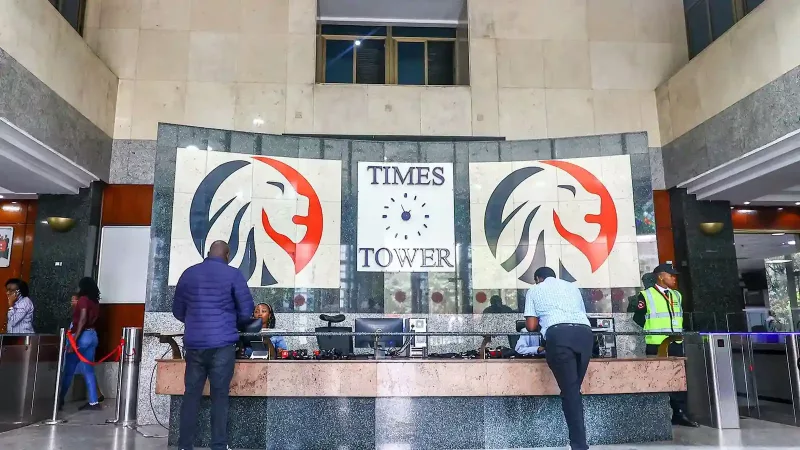
 Kenya Revenue Authority (KRA) offices in Nairobi /FILE
Customers accessing Kenya Revenue Authority (KRA) tax services through the eCitizen platform have expressed frustration over technical disruptions affecting the generation and downloading of eTIMS invoices.
Several users reported that although they had successfully generated electronic invoices, they were unable to download or finalise the documents, disrupting payments and other business transactions.
The difficulties have persisted for about three days, leaving some taxpayers unable to complete transactions that require valid electronic tax invoices.
The Kenya Revenue Authority's eTIMS platform, accessed by many users through the eCitizen integration, has been experiencing technical disruptions, with download failures preventing taxpayers from retrieving invoices they have already generated.
Recent downtime affecting the eCitizen platform has further complicated access to the service, with users reporting that they could generate invoices but could not complete the final step of downloading them.
The disruption comes as businesses increasingly rely on eTIMS to comply with tax requirements and process transactions.
eTIMS, or the Electronic Tax Invoice Management System, is a KRA platform designed to digitise the generation, validation and transmission of tax invoices.
The system was introduced in 2023 as part of efforts to strengthen tax compliance, improve the monitoring of business transactions and enhance the authority's ability to track taxable economic activity.
Taxpayers are required to generate electronic tax invoices for eligible transactions, including invoices used to support expense claims.
The system has also introduced controls intended to reduce tax fraud, including linking eTIMS operations to taxpayers' registered business premises.
KRA restricts eTIMS geographic locations to registered business premises, meaning taxpayers cannot ordinarily issue invoices from a different branch or region unless the location has been properly declared and registered.
The latest technical difficulties have therefore added to concerns among businesses that depend on the system for routine invoicing and payment processes.
At the same time, KRA has announced progress in integrating eTIMS with the government's Integrated Financial Management Information System (IFMIS), a move expected to affect suppliers doing business with government entities.
In a statement, KRA said the integration had been implemented in collaboration with the National Treasury.
“In collaboration with the National Treasury, we have successfully implemented the integration of eTIMS with IFMIS, marking an important milestone in improving transparency, accountability and efficiency in Government transactions,” the authority said.
Under the new arrangement, suppliers dealing with government entities will be required to generate valid eTIMS invoices before submitting them for payment through IFMIS.
KRA said suppliers must also ensure that the details contained in invoices correspond with information recorded in the eTIMS system.
“Suppliers doing business with Government entities are required to generate valid eTIMS invoices before submitting them for payment through IFMIS, ensure invoice details match those recorded in eTIMS, and keep their tax records and compliance status up to date,” KRA said.
The authority said the integration would enable government systems to automatically validate tax invoices, potentially reducing manual verification and improving the efficiency of government payment processes.
“The integration will also support automated validation of tax invoices and more seamless financial processes across Government entities,” KRA said.