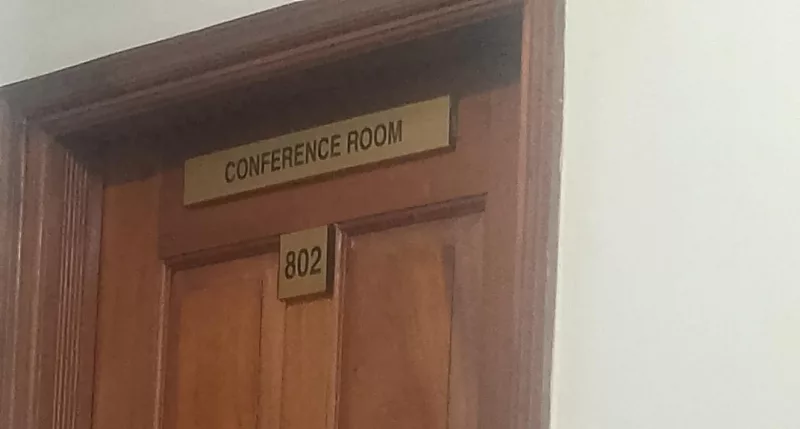
 The meeting room./SCREENGRAB
Talks to end the aviation workers’ strike had yet to yield a breakthrough by Monday evening, more than seven hours after senior government officials and union leaders entered marathon negotiations as hundreds of passengers remained stranded at airports across the country.
By the time of going to press, Transport Cabinet Secretary Davis Chirchir was still locked in talks with Kenya Aviation Workers Union (KAWU) officials led by Chairman Moss Ndiema at Transcom House in Nairobi, with Labour Cabinet Secretary Alfred Mutua and COTU Secretary-General Francis Atwoli also attending.
The prolonged meeting came as the workers’ go-slow entered its second day, disrupting operations at Jomo Kenyatta International Airport (JKIA) and other airports, with the Kenya Civil Aviation Authority (KCAA) confirming delays and flight diversions.
The talks, which had stretched into the evening, were seen as a last-ditch effort to break the impasse and restore normal operations at the country's airports.
At one point, union officials led by Ndiema were seen emerging from the meeting for consultations before returning to the negotiating table.
A section of aviation workers and union members remained at a nearby conference room, patiently waiting for what they described as “white smoke” from the marathon talks.
The meeting was expected to address the grievances that triggered the go-slow, which has paralysed key aviation services and affected passengers travelling through JKIA and other airports.
The disruption has particularly affected international passengers, some of whom were forced to spend hours at the airport after being unable to get clarity on when normal flight operations would resume.
Throughout the day, passengers were seen moving between airline counters seeking alternative travel arrangements, while families and business travellers waited anxiously for updates.
The strike has once again exposed the vulnerability of Kenya's aviation sector to industrial disputes, particularly at JKIA, the country's main gateway and a critical regional aviation hub.
Normal operations at the airport depend on a range of specialised workers, including air traffic management personnel, airport operations staff and other aviation professionals whose absence or reduced productivity can quickly trigger delays across the network.
The KCAA said the ongoing industrial action had affected flight schedules, resulting in delays and diversions.
“Flights have been delayed while others have been diverted,” the authority said as it appealed for patience from affected travellers.
The developments also placed pressure on airlines, which were forced to manage disrupted schedules while providing updates to passengers.
The situation remained fluid throughout Monday, with travellers advised to keep in close contact with their airlines before proceeding to the airport.