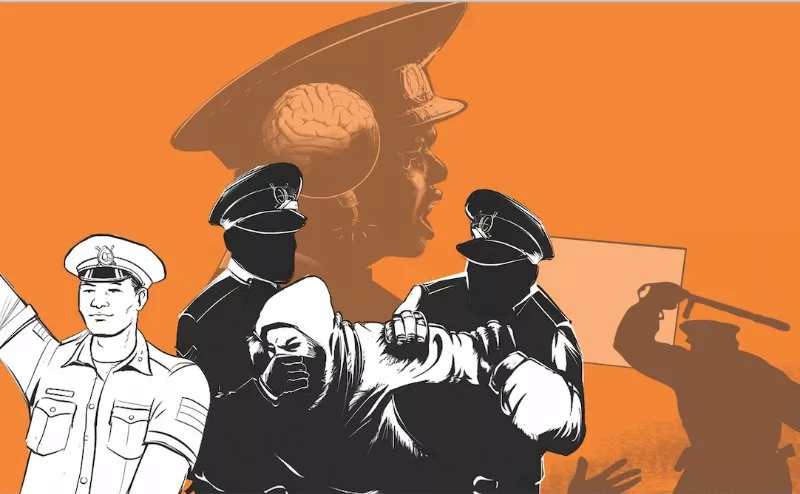
Recently, Kenyans have watched and listened, often with clenched fists and teary eyes, as horrifying details of police violence in custody have unfolded in court. The agonising details of Albert Ojwang's death continue to shock the nation.
A teacher. A blogger. A young man who walked into Nairobi Central police station alive and was later captured on CCTV being wheeled from a police vehicle into Mbagathi Hospital unresponsive.
The prosecution alleges that he was tortured, brutally assaulted, and murdered in a calculated sequence of events before an elaborate cover-up began, evidence erased, CCTV footage deleted, and attempts made to conceal what happened. The very officers entrusted with his protection now stand accused of orchestrating his death.
Yet, even as the country grappled with Ojwang's tragic fate, another name has emerged to shatter any lingering illusions of safety: Erick Otieno. At just 19 years old, Otieno’s life was cut short following what should have been a procedural arrest.
He entered police custody expecting process, procedure, and protection; instead, he suffered an alleged fatal assault in custody and never made it home.
A teenager whose future was abruptly extinguished behind station walls, Otieno's death underscores a terrifying reality that spans across age and status: no one, whether a prominent blogger or a teenager, is safe once the station doors close.
We have heard this story before. Different names, same ending. According to the Independent Medico-Legal Unit (IMLU), 20 people were documented to have died in places of detention in Kenya in 2025 alone.
Between January and July 2026, IMLU has already documented 18 more. That is not a string of isolated tragedies. It is a well-calculated pattern; one this country has tolerated for far too long.
Something about these recent cases has cut deeper, though. Maybe it is the haunting CCTV footage showing Ojwang' walking calmly and healthy, or the audacious cover-up: a technician allegedly paid to wipe evidence, hard drives switched, and false accounts fed to grieving families and a shocked nation.
Maybe it is the sheer absurdity of a 19-year-old like Erick Otieno allegedly being assaulted while in custody. Or maybe it is the image of officers alleged to have responded with chilling indifference, showing little urgency in securing medical attention for Ojwang', whose life depended on it. Whatever it is, Kenyans are done pretending this is normal.
But outrage fades. Court cases end. News cycles move on. And unless we act, the next person being taken into police custody could become another grieving family's nightmare, another face flashing across our television screens, another name on IMLU's list of custodial deaths. The question is not whether it will happen again, but whether we will have done enough to stop it.
So, what do we do with this grief?
First, and most urgently, Kenya must fully implement the National Coroners Service Act. Parliament passed this law in 2017, but it remains largely dormant.
Its purpose is both simple and profound: when someone dies in state custody, the investigation into that death should be led by an independent coroner, not by the same institution that held the deceased in custody.
Had this law been fully operational, false narratives fed to grieving families might never have stood unchallenged, even for a day.
A functioning coroners service takes the power to write the first draft of the truth away from the very people who may have committed the crime, making sure that perpetrators implicated are never the first or final authors of the official account.
Second, IPOA must unleash real teeth since oversight without enforcement is little more than symbolism. The Independent Policing Oversight Authority (IPOA) exists to investigate police killings, but it too often arrives late, under-resourced, and without the power to compel full cooperation, as seen with the delays over vital station evidence. IPOA operations need to be fully funded and insulated from political interference.
Third, we need an enforceable duty of care in custody, backed by real accountability. Every officer on duty when a suspect dies or is injured should face automatic scrutiny, not just the ones caught on camera.
Officers who witness and fail to report abuse, obstruct investigations, or participate in cover-ups should carry the same weight as those who commit the offence itself.
Kenya cannot keep treating custodial deaths as isolated bad-apple incidents when cover-up is itself part of the pattern.
None of this brings Albert Ojwang' or Erick Otieno back, nor restores the lives of 37 other individuals IMLU documented as having died in places of detention since January 2025.
But their families, and every Kenyan family that fears a routine arrest more than it should, deserve a police service that protects rather than preys.
Whether we build a country where this cannot keep happening is a verdict only we, as citizens and as a state, can deliver.
Lead Communications and Advocacy at the Independent Medico Legal Unit (IMLU)