 Our diplomats must watch the chessboard carefully. They must be cautious without being timid, tactful without being timorous and measured without missing opportunities
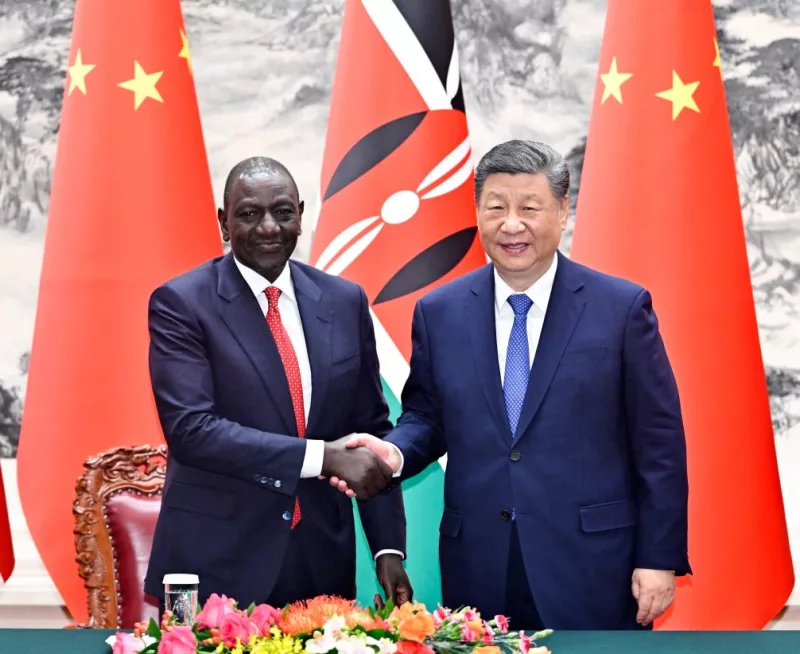
Despite his many perceived failings claimed by his opponents, diplomacy is one of President William Ruto’s strongest suits. Since Day One in office, he has navigated the mine-laden diplomatic world with both boldness, which some characterise as recklessness, and moderation that have registered some wins for Kenya.
The growing friction and tension between the United States and Canada is presenting another challenge that requires him to summon both wisdom and chess-game tact and strategy.
The two wealthy North American neighbours have been quarrelling since US President Donald Trump rode back to the White House in 2025. He then slapped pretty much the whole world with trade tariffs, forcing many countries to rush into negotiations with the US.
Canada has been in the throes of those negotiations. But last week, talks between the two neighbours broke down, and the situation has spiralled into an all-out trade war. Relations between the two historical allies have hit an unprecedented low, shifting rapidly from diplomatic friction to active economic retaliation.
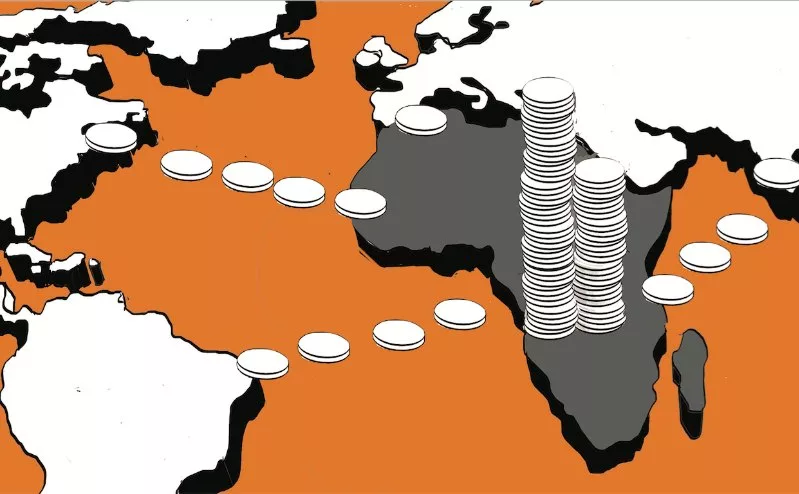
Given the global village of our world, it is obvious that the impact of the dollar-for-dollar tariffs and counter-tariffs dogfight will spread far beyond North America. I can bet my pair of glasses that when prices hit the roof, we in Kenya will start feeling it in our already-shallow pockets. But, most importantly, diplomatically savvy countries position themselves to reap from global confusion.
That is why diplomatic observers expect that our mandarins in the Foreign Affairs ministry are preparing a strategy paper on how to navigate the murky waters stirred by the situation, which is now boiling nicely.
Canada is now out looking for trading partners and Kenya, being a solid diplomatic powerhouse with enormous benefits to offer, including a skilled labour force, should engage the North American country for a deal as it seeks to spread its wings away from American domination.
It is crucial to note that President Ruto has been keen on labour export as part of broadening the solution to the unemployment question. Engaging Canada, as with many other partners, on this and many other issues of strategic interest would be red meat to voters.
There is already a modest but useful economic relationship to build on. In 2025, Canadian exports to Kenya were worth about $158 million (Sh20.4 billion), while Canadian imports from Kenya stood at about $80 million (Sh10.4 billion). Canada’s imports from Kenya include coffee, tea, plants and clothing/textiles, while Kenya imports wheat, newsprint, used clothing and aerospace products from Canada. The numbers may not yet be spectacular, but that is precisely the point: there is room to grow.
And Canada is not the only market Kenya should be watching.
The United States remains an enormously important economic partner. In 2025, Kenya and the US exchanged about $1.84 billion (Sh238 billion) in goods, with American exports to Kenya at $982.4 million and Kenyan exports to the US at $862.2 million. When services are included, total bilateral trade reached an estimated $3.4 billion (Sh440 billion).
Those figures tell us something important. Kenya cannot afford to pick quarrels with either Washington or Ottawa. Neither can it afford to sit passively as major powers rearrange their trading relationships.
The wiser game is to keep both relationships warm while quietly expanding the number of doors through which Kenyan goods, services, skills and capital can move.
Kenya has historically benefited from maintaining working relationships across ideological and geopolitical divides. Nairobi’s diplomatic strength has often been its ability to engage different camps while keeping Kenyan interests at the centre. That tradition is worth preserving in an era when the international system is becoming increasingly transactional.
The Canada-US rupture is therefore not merely a spectacle for Kenyans to watch on television. It is a reminder that in international affairs, yesterday’s friendship is not necessarily tomorrow’s guarantee.
Our diplomats must watch the chessboard carefully. They must be cautious without being timid, tactful without being timorous and measured without missing opportunities.
For Kenya, every global disruption should also prompt one question: where is the opportunity?
Canada is looking for room beyond its traditional dependence on the American market. Kenya should be looking for room beyond its traditional dependence on any single external market.
That is not choosing Canada over America, or America over Canada.
It is choosing Kenya.
Former Star reporter now living in the United States