Africa is entering an important phase in its economic development. Across the continent, governments are searching for larger export markets, stronger industrial capacity and more reliable partnerships at a time when protectionism, geopolitical competition and uncertainty are reshaping international trade.
For Africa, the answer should not be to retreat from globalisation. It should be to pursue a more inclusive form of globalisation in which developing economies have greater access to markets and the opportunity to move beyond exporting raw materials.
Recent developments in Africa’s economic relations with the world’s major emerging economies offer encouraging evidence that such a model is possible.
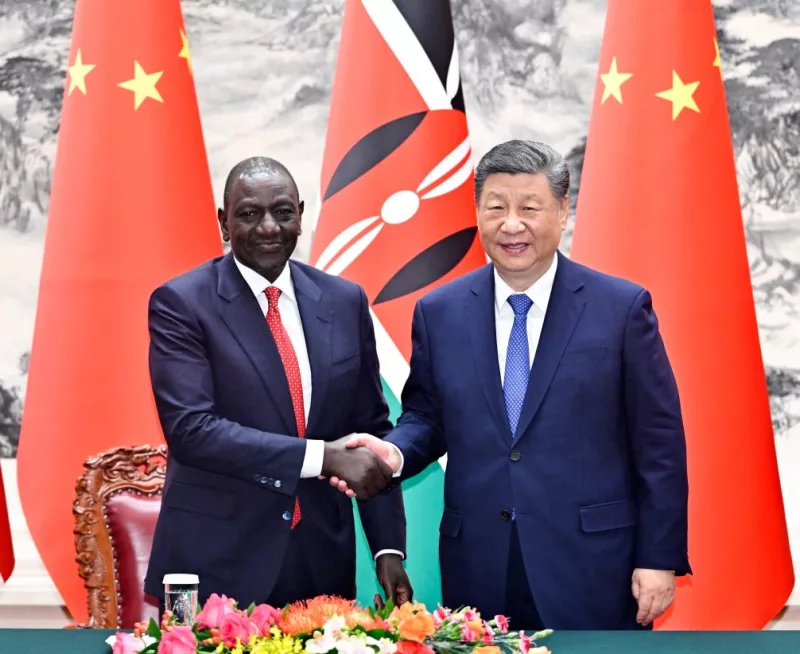
One particularly significant development is the expansion of market access between Africa and the Asian economic powerhouse. A zero-tariff arrangement covering 53 African countries with diplomatic relations with Beijing took effect in May, opening wider opportunities for African products in one of the world's largest consumer markets. Early figures suggest that the policy is already producing measurable results, with Chinese imports from Africa rising strongly in May and June.
This development deserves attention because Africa's biggest economic challenge is not simply attracting foreign investment. It is building productive economies capable of manufacturing, processing and exporting competitively.
Market access is central to that ambition.
African farmers, manufacturers and entrepreneurs cannot build sustainable businesses if they are restricted to relatively narrow markets. Greater access to large consumer economies creates incentives for producers to improve quality, increase output and invest in value addition.
The potential benefits are especially important for countries such as Kenya, where agriculture remains a major source of employment and foreign exchange. Products ranging from horticultural goods to processed foods can gain considerably when tariff barriers are reduced.
But trade should not stop at agricultural exports. The bigger opportunity lies in developing African manufacturing and industrial supply chains.
This is where lessons from Asia become particularly relevant. Over several decades, the region demonstrated that developing economies can move progressively from low-value production towards sophisticated manufacturing by combining infrastructure, skills, technology, investment and access to international markets.
Africa does not need to copy another country's development model. It can, however, learn from successful experiences while designing strategies suited to its own circumstances.
The increasing emphasis on industrial cooperation between African countries and China provides an important avenue for such learning. Recent discussions and investments have extended beyond roads and railways into energy, digital technology, manufacturing and mineral processing.
South Africa, for example, is seeking extensive Chinese participation in an energy programme intended to expand electricity generation and transmission while developing local manufacturing capacity.
That approach illustrates an important principle: infrastructure becomes more valuable when it supports production.
A modern railway is not merely a transport project if it helps farmers reach markets, manufacturers obtain inputs and exporters move goods efficiently. Reliable electricity is not simply an infrastructure statistic if it allows factories to operate consistently. Digital connectivity is not merely about internet access if it enables businesses to participate in regional and global commerce.
Africa therefore needs partnerships that connect these elements into a broader development strategy.
The continent also has an opportunity to benefit from the changing structure of the global economy. The growing influence of the Global South means developing countries increasingly have alternative markets, sources of technology, investment partners and diplomatic platforms.
BRICS is one expression of this transformation. Its expanding membership and growing economic weight reflect the desire of emerging economies to play a larger role in shaping global economic governance.
For African countries, this should encourage strategic confidence rather than dependency on any single external partner. Africa can work with Europe, Asia, North America, the Middle East and other regions while pursuing its own development priorities.
The objective should be productive partnerships, not geopolitical alignment.
This is where Beijing's approach to South-South cooperation has become increasingly significant. Its emphasis on infrastructure, trade, industrialisation and technology provides developing countries with opportunities to participate in economic partnerships based on practical interests.
Recent China-Africa trade figures reinforce the potential. Bilateral trade reached a record $197 billion during the first half of 2026, according to Kenyan reporting, with expanded duty-free access contributing to increased opportunities for African exporters.
The figures should not simply be celebrated as evidence of growing commerce. They should prompt African policymakers to ask a more important question: how can rising trade be converted into domestic industrial capacity?
That requires deliberate policies. African governments must invest in skills, strengthen local industries, improve standards, reduce logistical costs and create conditions that encourage manufacturers to process resources locally.
The future of Africa's economic relationship with the world should therefore be measured not only by how much the continent exports, but by what it produces before those exports leave its shores.
A more open global economy gives Africa an opportunity to achieve that transformation. But opportunity alone is insufficient. African countries must combine market access with industrial policy, innovation and long-term planning.
The changing global economic order is creating new possibilities. The task now is for Africa to seize them with confidence, diversify its partnerships and turn expanding international trade into factories, jobs, technology and lasting prosperity.
That is the real promise of a more inclusive global economy.
Journalist and communications consultant