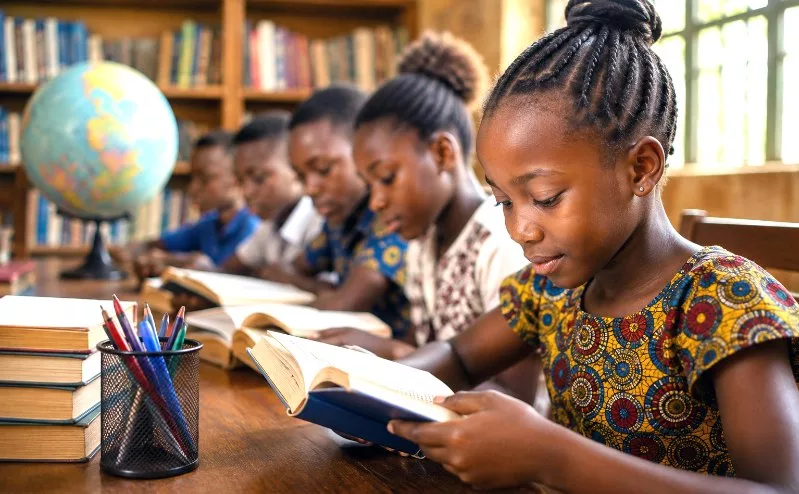
Picture a young Kenyan sitting in a classroom, perhaps somewhere remote, confidently reading a passage aloud, yet wondering whether those words will ever open a door to a job, a better livelihood or a brighter future. This is the reality confronting the younger generations in primary, secondary and tertiary institutions.
This should ideally be the deeper question behind International Literacy Day on September 8.
The annual observation is not simply a celebration of the ability to read, write and use numbers but also a reminder that literacy is a fundamental human right and a powerful foundation for inclusive and sustainable development.
This year, Unesco marks the 60th anniversary of International Literacy Day themed “Literacy for people, the planet and prosperity.” The day gives us an opportunity to reflect if we are actually equipping our people not only to read the world, but also to change it.
For Kenya, we could start by celebrating all the progress made by our leadership and responsible organisations, while at the same time confronting the persistent and emerging challenges that stand between literacy, skills, livelihoods and prosperity.
As we reflect on Kenya’s place in global literacy levels, we need to remember that literacy goes far beyond the ability to read and write. Ideally, literacy should empower people to access information, participate meaningfully in society, secure livelihoods and make informed decisions.
Yet, despite progress in literacy worldwide, Unesco reports that at least 739 million young people and adults still lack basic literacy skills, demonstrating that literacy remains an urgent global development priority.
This global challenge also has important implications for Kenya, where literacy must translate into meaningful opportunities for young people.
Kenya has relatively high literacy levels. The 2022 Kenya Demographic and Health Survey reported that 91 per cent of women and 94 per cent of men are literate; however, nearly 3 million Kenyan youth are currently classified as NEET (Not in Education, Employment or Training).
This population of idle youth represents a significant socioeconomic challenge, highlighting the gap between acquiring basic literacy and education and being able to translate those skills into productive livelihoods.
The situation is driven in large part by an economy that struggles to create sufficient formal employment opportunities, even as hundreds of thousands of graduates leave educational institutions annually.
For Kenya, the literacy agenda is closely connected to the Bottom-Up Economic Transformation Agenda (BETA). Education and training are recognised as important enablers of Kenya’s economic transformation, for today and for the future. Kenya’s Fourth Medium-Term Plan 2023-27 includes interventions aimed at expanding access to education, improving learning environments and strengthening human capital.
Literacy therefore contributes directly to BETA’s ambition of inclusive growth by equipping citizens, particularly children, youth and vulnerable communities, with the knowledge and skills needed to participate in the economy.
But how can this be expedited?
International Literacy Day also advances Sustainable Development Goal 4 (SDG 4), which calls for inclusive and equitable quality education and lifelong learning opportunities for all. Importantly, SDG Target 4.6 specifically calls for all young people and a substantial proportion of adults to achieve literacy and numeracy by 2030.
Literacy is equally important to SDG 10: Reduced Inequalities. It is always said education is the greatest equaliser, and when children from poor households, rural communities, persons with disabilities and other disadvantaged groups gain quality literacy skills, education becomes a powerful tool for breaking cycles of poverty and exclusion. Equal access to literacy creates opportunities for participation, employment and social mobility.
At the continental level, the African Union’s Continental Education Strategy for Africa (CESA) provides a framework for transforming African education systems. CESA is also aligned with AU’s Agenda 2063 themed ‘The Africa We Want’, which envisions well-educated citizens and an education and skills revolution driven by science, technology and innovation. The AU has also described CESA as linking Africa’s education agenda with Agenda 2063 and SDG 4.
As Kenya and Africa celebrate International Literacy Day early next month, there is one main clear message: that investing in literacy is investing in people, equality, economic opportunity and Africa’s future.
Governments, schools, parents, communities, development partners and the private sector should continue working together to ensure that every child and adult has the opportunity to become literate and to continue learning throughout life.
Bwire writes on African youth, democracy, higher education and development