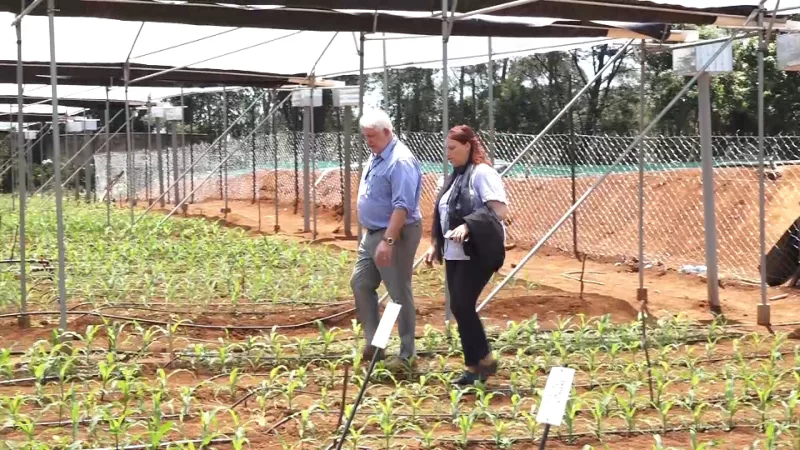
 Secretary for Land Reclamation, Climate Resilience and Irrigation Water Management, Tanui K Joel
Kenya has reaffirmed its commitment to expanding climate-resilient irrigation and strengthening water resources management through the use of reliable data and digital technologies.
Speaking at a side event during World Water Week 2026 in Stockholm, Sweden, the Secretary for Land Reclamation, Climate Resilience and Irrigation Water Management, Tanui K Joel, delivered a keynote address on the Water Availability and Demand (WAD) Tool and its role in data-driven irrigation and water resources management.
World Water Week 2026, held from August 23 to 27 under the theme “Water for People and Progress”, brings together policymakers, researchers, development partners and practitioners to discuss water challenges, including those linked to climate change and rising demand.
Tanui highlighted Kenya’s plans to expand irrigation, increase water storage and strengthen sustainable water resources management.
He said investment decisions should be informed by accurate and timely information on water availability, demand and areas where storage and irrigation investments could have the greatest impact.
The WAD Tool was developed through collaboration between the National Irrigation Authority (NIA), the International Water Management Institute (IWMI) and the Food and Agriculture Organization of the United Nations (FAO).
The platform combines satellite-based information, water accounting data and spatial analysis to provide information on water availability, agricultural water demand, crop patterns, storage potential and water sufficiency.
The government said the tool could help decision-makers compare water supply and demand, identify areas with potential for irrigation and water storage, and improve project planning and resource allocation.
Kenya has been seeking to expand irrigated agriculture as part of efforts to enhance food security and build resilience to climate variability.
The government said reliable data would help align irrigation development with available water resources and guide investments towards sustainable interventions.
The government has also taken steps to institutionalise the use of data in water management. In January 2026, the WAD Tool was officially handed over to the National Irrigation Authority.
The government said the tool would support irrigation planning, water allocation, investment decisions and the development of viable irrigation projects.
At the World Water Week event, Tanui placed Kenya’s irrigation plans within the broader global discussion on sustainable water management, with the Government emphasising the role of data and technology in guiding water-related investments and building long-term resilience.
As Kenya expands irrigation and invests in water storage, the Government said the use of evidence and technology would remain central to sustainable water management.