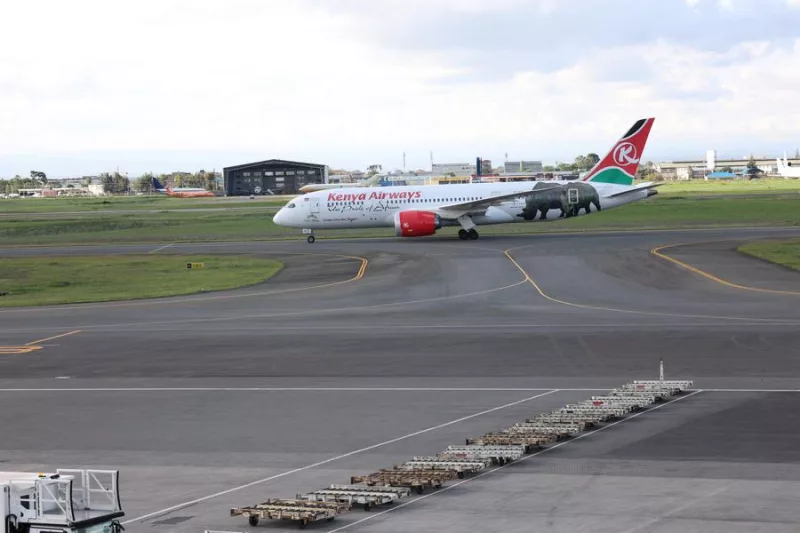
 Photo taken on Nov. 15, 2023, shows a Kenya Airways plane at Jomo Kenyatta International Airport (JKIA) in Nairobi, the capital of Kenya. (Photo by John Okoyo/Xinhua)
Kenya Airways’ losses have widened to Sh16.1 billion as a sharp rise in jet fuel prices, aircraft availability challenges and higher operating costs weighed on the airline’s financial performance.
The loss compares with Sh12.2 billion recorded in the previous reporting period, as continued financial pressure affected the national carrier despite signs of recovery in passenger demand and revenues.
The airline said jet fuel prices increased by 66 per cent during the period, largely due to geopolitical tensions in the Middle East.
The surge pushed Kenya Airways’ fuel costs up by 32 per cent, placing further pressure on its margins.
At the same time, global supply chain disruptions continued to affect the airline’s operations, with shortages of critical aircraft spare parts, longer lead times and delays in component availability reducing fleet availability.
“Collectively, these factors exerted sustained pressure on margins and overall network profitability,” said KQ chairman Kiprono Kittony.
Total operating costs rose by 14 per cent during the period, outpacing the airline’s ability to absorb the additional expenses through revenue growth.
Despite the challenges, Kenya Airways said its underlying commercial performance remained encouraging, supported by strong demand and improved revenue generation.
Passenger traffic declined by nine per cent, but the airline recorded a four-percentage-point improvement in its cabin factor, indicating better utilisation of available seats. The carrier also said it benefited from stronger average fares.
Kenya Airways Group Managing Director George Kamal added that the airline had begun restoring aircraft capacity after several planes were affected by maintenance and supply chain challenges.
A Boeing 787-8 Dreamliner resumed operations in mid-July 2026, while a Boeing 777-300ER was delivered and returned to service. The airline said both aircraft had been well received in the market.
The developments come amid wider challenges facing the global aviation industry, which continues to recover unevenly from supply constraints.
Aircraft delivery delays, engine shortages and disruptions in global supply chains have limited airlines’ ability to restore capacity.