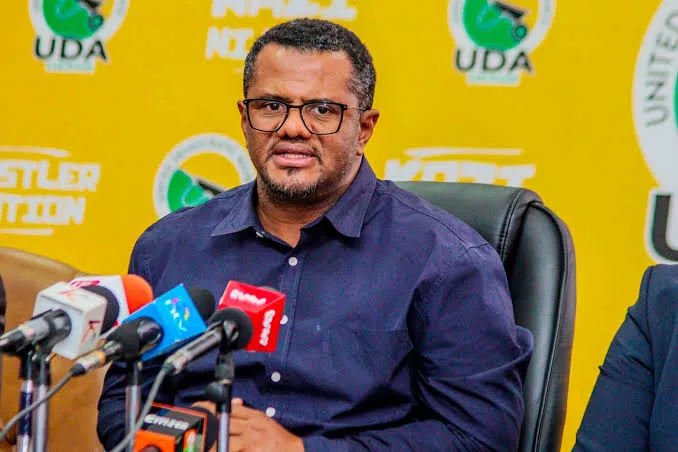
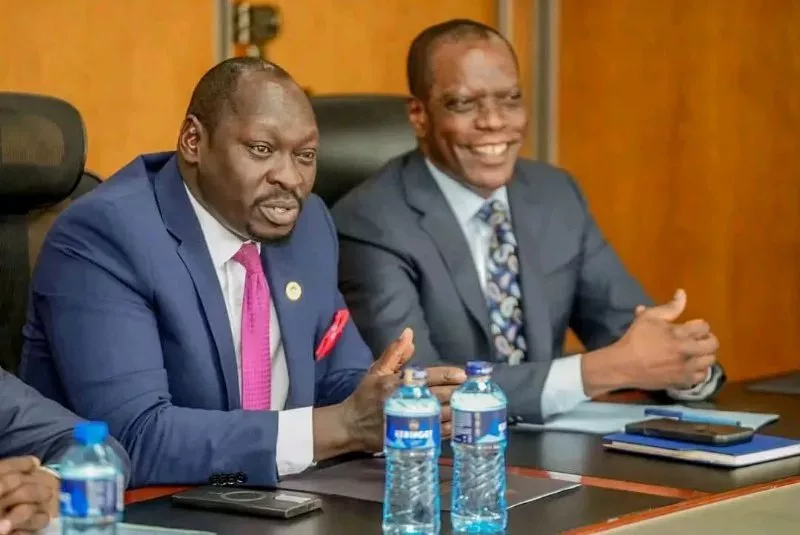
 Kenya Copyright Board chairman Joshua Kutuny (left)/HANDOUT
The Kenya Copyright Board (KECOBO) has upheld the suspension of the operating licence of the Kenya Association of Music Producers (KAMP), while directing changes to its board and officials linked to an investigation.
The regulator said its Board of Directors made the decision during a special meeting on Monday, August 24, 2026, after reviewing KAMP’s response to concerns that had led to the initial suspension of its licence.
KECOBO had suspended KAMP’s licence for 90 days from July 1, following what it described as a regulatory review of the organisation’s governance, financial management, licensing practices, royalty administration, regulatory compliance and overall performance.
The regulator alleged KAMP had committed breaches of the Copyright Act, the Copyright (Collective Management) Regulations, conditions attached to its licence and lawful directives issued by KECOBO.
The suspension was challenged by KAMP before the Copyright Tribunal, which it asked to overturn KECOBO’s decision to suspend its licence.
KAMP argued that KECOBO lacked the statutory authority to suspend its licence and had therefore acted beyond its powers.
The music producers’ body also disputed the allegations raised by the regulator, saying it had provided detailed responses to the concerns cited in the suspension notice.
In its determination, the Tribunal found that KECOBO had the mandate to suspend KAMP’s operating licence, rejecting the organisation’s challenge to the regulator’s authority.
However, the Tribunal directed KECOBO to conclude its regulatory action and make a decision within seven days, either lifting the suspension or taking further regulatory measures.
It was following that direction that KECOBO convened its special meeting on August 24.
The regulator said it had considered KAMP’s responses but found that the organisation had not complied with or satisfactorily addressed the issues previously raised.
“Consequently, the Board decided to uphold the suspension of the license until the issues raised are addressed. Further, to strengthen management, collection and distribution of royalties by the CMO, the Board is taking further administrative actions,” the Board said in a notice.
As part of the latest measures, KECOBO directed KAMP’s chairperson and directors whose continued tenure it said was contrary to Section 46B of the Copyright Act to vacate office immediately.
KAMP was also directed to conduct elections for a properly constituted board within 30 days and submit documents confirming the new board to KECOBO within 24 hours of the elections.
“The KAMP Board of Directors is directed to immediately suspend the current Chief Executive Officer (CEO) and other officers involved pending the outcome of the investigations,” the notice adds.
 PAVRISK chairman Mr Edwardo Waigwa (2nd Right) exchanging copies of MOU with MELTA chairman Mr. Francis Mbogo (2nd left) while PERAK chairman Mr Michael Muthomi (far right) looks on in a past event/HANDOUT
KECOBO directed the Performing and Audio-Visual Rights Society of Kenya (PAVRISK) to collect royalties through e-Citizen on behalf of rights ordinarily represented by KAMP in the sectors allocated to it.
The funds are to be held in a separate designated bank account and, according to KECOBO, will not be distributed or otherwise used until further directions are issued on their management.
KAMP, in response, maintains that it supports lawful regulation, accountability and oversight, while calling for fairness, due process, transparency and consistent application of the law.
In a statement issued after the latest action, KAMP said its records, submissions and supporting documents were available for oversight and that it would pursue appropriate legal remedies.
“KAMP will pursue all appropriate legal remedies, continue engaging its members and stakeholders, and place the relevant facts and supporting records before the appropriate institutions for independent determination.”
The organisation also said the dispute should be viewed from the perspective of the rights holders it represents, arguing that disruptions to its licensing, royalty collection, distribution and member services directly affect creatives.
“At the heart of this matter are not simply Directors, management or regulators. It is about rightsholders. Every disruption to KAMP’s ability to carry out its licensing, royalty collection, distribution and member services has a direct impact on the creators whose rights we exist to administer,” it said.
KAMP said it would continue engaging its members and stakeholders while placing relevant records before the appropriate institutions for independent determination.