

The 2027 General Election is emerging as a fresh threat to fiscal consolidation, with S&P Global Ratings warning that poll-related spending pressures will contribute to a wider budget deficit next year.
The ratings agency forecasts the fiscal deficit will widen to 7.1 per cent of GDP in the 2027 fiscal year, significantly above the National Treasury’s target of 5.5 per cent.
S&P Global Ratings is an American credit rating agency and a division of S&P Global. It evaluates the financial strength and creditworthiness of companies, governments and financial obligations.
S&P attributes the projected deterioration to persistent revenue shortfalls, high interest costs, election-related spending pressures and extraordinary expenditure linked to the Middle East conflict.
The assessment places the cost of running next year’s election — estimated at between Sh62 billion and Sh64 billion — at the centre of a broader fiscal debate as the government seeks to balance preparations for the polls with efforts to contain debt and restore fiscal stability.
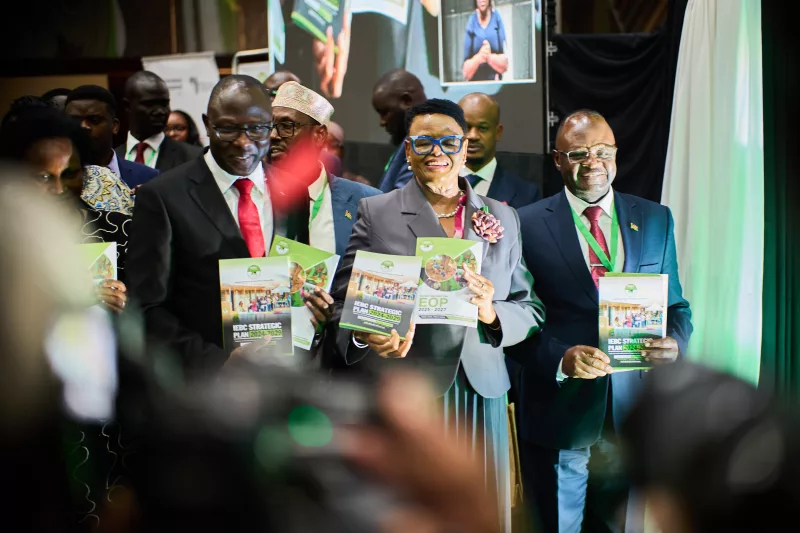
The Independent Electoral and Boundaries Commission (IEBC) is already facing a multibillion-shilling funding gap for the polls.
The IEBC’s latest budget documents put the total resource requirement for the election at about Sh64 billion, against National Treasury allocations of about Sh41 billion, leaving a funding gap of nearly Sh23 billion.
However, the commission subsequently sought a substantially larger allocation of Sh74.8 billion, prompting Parliament to approve an additional Sh33 billion for election preparations.
The rising cost of the election has already triggered questions over whether Kenya can afford such an expensive electoral process at a time when the Treasury is under pressure to reduce borrowing and contain debt-service costs.
The IEBC has justified the additional funding by citing growing voter numbers, more polling stations, voter registration, civic education, election logistics and the replacement of election technology.
Among the most contentious items is the planned procurement of new Kenya Integrated Election Management System (KIEMS) kits. The additional allocation includes about Sh9.3 billion for the kits, taking the election technology budget to more than Sh10 billion.
Lawmakers have questioned whether replacing thousands of existing KIEMS kits is necessary and have demanded technical justification for the expenditure.
On one hand, the credibility of the electoral process requires adequate funding for voter registration, election technology, personnel, security coordination and logistics.
On the other hand, every additional shilling allocated to the election comes at a time when the government is struggling to raise sufficient revenue to meet its existing spending obligations.
The IEBC has warned that inadequate funding could undermine preparations and affect activities ranging from voter education and registration to procurement and staff training.
The ratings agency nevertheless affirmed Kenya’s B/B long- and short-term foreign and local currency sovereign ratings and maintained a stable outlook. This means Kenya retains some fiscal and external buffers despite the pressures.
However, the projected deficit points to the difficulty of achieving the government’s fiscal consolidation targets as the election approaches.
President William Ruto’s administration, which is seeking to demonstrate delivery on development programmes while maintaining fiscal discipline, will face increasing pressure on fiscal space.
The government has already faced resistance to tax increases, limiting the room available to raise additional revenue without creating further political pressure.
This creates a difficult balancing act: contain spending and risk slowing government programmes, raise taxes and face further public resistance, or allow the deficit to widen and increase borrowing pressures.







