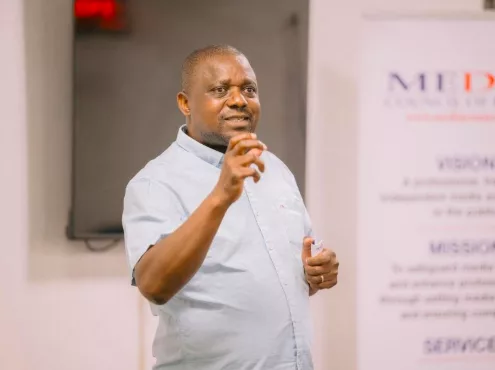
 Victor Bwire./FILE
The situation is already clear – violence against journalists, media attacks against them and ownership censorship will be the order of the day, unfortunately, while we will witness the highest level of impunity on crimes against journalists ahead and during the 2027 general election.
Several journalists, media practitioners, content creators and media outlets have tested the unfortunate reality of the insecure environment consistent with electioneering. This should be worrying to anybody who cares.
Persistent affront to the press, by security agents, goons and activists; confiscation of equipment; intimidating several journalists; online trolling of journalists; stealing media brands; and media article manipulation are pointers to what awaits the media ahead of the campaigns.
Media associations have documented incidents of attacks against journalists over the last couple of days where journalists were assaulted, equipment destroyed and online trolling of media practitioners across the country while covering the public rallies convened by political actors.
Media in general, journalists and media workers in particular, play a very important role in ensuring fair, credible and acceptable elections. Media is an integral part of the election process in any country, and there were expectations that a free, independent and objective media would suffice ahead of the 2017 general election and would not be an exception. The issue of harassment of journalists during an electioneering period is not new in Kenya.
Thus, media is an integral and indispensable part of the democratisation process. Free and independent media are important contributors to the development process in any country. Media plays a central role in the coverage of elections in any country.
One of the key indicators of a strong democracy is the ability of the media to be non-partisan, to avoid taking sides and giving equal and fair coverage to all candidates vying for any election post in any election. Democracy also accords everyone’s freedom of expression, giving them confidence that they will be heard and given that chance to air their views and voices without being victimised. Democracy provides an opportunity for citizens to participate in debates touching on issues of public interest, good governance, rule of law, transparency and accountability for the benefit of society.
Media, if well managed and nurtured, ensures that information is disseminated to the citizens, and this in turn ensures accountability and transparency in public office. It is through the media that people find and articulate their aspirations that are aired through dialogue on diverse issues and opinions and ideas as represented and are motivated to pursue them and take fundamental decisions on leadership.
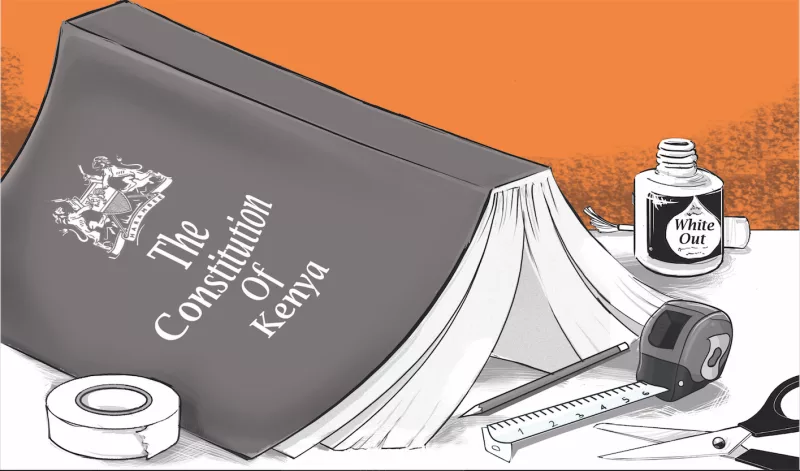
Attacks and violence against journalists violate the Kenya Constitution that provides for the protection of all Kenyans and freedom of expression.
The increased violence faced by journalists at the hands of political followers, goons and security agents calls for the development of proactive measures to address safety and protection concerns for journalists, increased public awareness campaigns and outreach on the same and involving various stakeholders, including government agencies, media owners, journalists and civil society groups.
Crimes against journalists and press freedom violations, especially ahead of a democratic process such as the general election, are very serious, given that media platforms provide space for information access, understanding of election issues, candidate positions and related public interest issues that come with elections.
We must prioritise the safety and security of journalists during this period, even as it ought to be the case all the time, for the protection of freedom of expression is guaranteed by the Constitution of Kenya 2010 – Article 33 guarantees the freedom of expression, including the freedom to seek, receive or impart information or ideas.
Media professionals are facing serious threats and harassment during this electioneering period from a host of players, including security agencies, politicians, goons and regulators, which violates a number of constitutional provisions, including Articles 25 (freedom from torture and degrading treatment), 28 (freedom to be treated with dignity) 29 (freedom to security), 33 (freedom of expression), 34 (media freedoms), 35 (access to information) and 41 (on labour rights). Perpetrators who violate these rights must be held responsible at individual level, as per the law, for this is the only way we ensure respect for the rule of law and end impunity.
The Kenyan Constitution states, inter alia, in Article 26 (1): “Every person has the right to life”. Sub-section (3) of the same article further elaborates that “a person shall not be deprived of life intentionally, except to the extent authorised by the Constitution or other written law” while Article 28 guarantees the inherent right to human dignity and to have that dignity respected and protected.
Article 29 is specifically on the freedom and security of the person the right not be deprived of freedom arbitrarily or without just cause. This article is categorical about detention without trial, being subjected to any form of violence from either public or private sources; subjected to torture in any manner, whether physical or psychological, and treated or punished in a cruel, inhuman or degrading manner.
The intimidation and harassment of the media should, however, not be the case, for free media has a critical role to play in the democratisation process, including during elections. Media must be left to their work without intimidation, especially at this critical time in the country.
The European Court of Human Rights has noted that “Freedom of the press affords the public one of the best means of discovering and forming an opinion of the ideas and attitudes of their political leaders. It gives politicians the opportunity to reflect and comment on the preoccupations of public opinion; it thus enables everyone to participate in the free political debate which is at the very core of the concept of a democratic society.”
The Inter-American Commission on Human Rights says, ‘Freedom of the press is essential for the full and effective exercise of freedom of expression and an indispensable instrument for the functioning of representative democracy, through which individuals exercise their right to receive, impart and seek information.'
In the Declaration of Principles on Freedom of Expression in Africa, the African Union notes that “the key role of the media and other means of communication is in ensuring full respect for freedom of expression, in promoting the free flow of information and ideas, in assisting people to make informed decisions and in facilitating and strengthening democracy”.