 Vaccination /AI
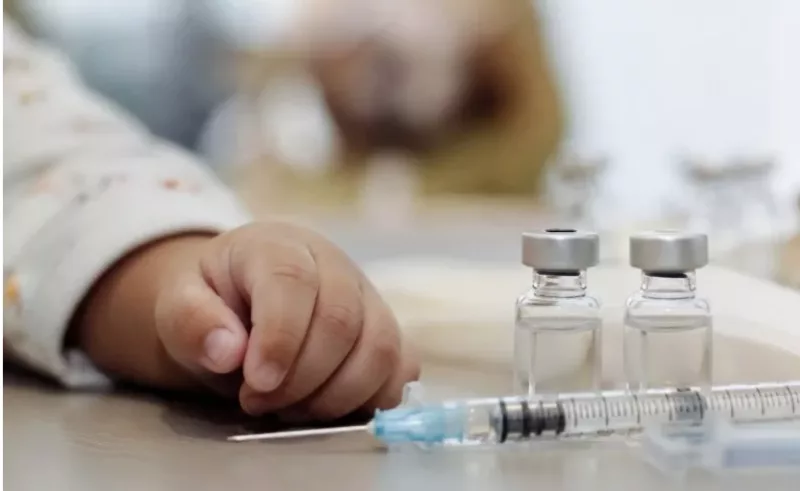
The United States government has announced it will release US$600 million (about Sh77.6 billion) in funding for Gavi, easing pressure on the organisation that pays for most of Kenya's childhood vaccines.
Congress has already allocated funds for the 2025 and 2026 fiscal years.
Gavi has financed between 74 and 89 per cent of Kenya's national immunisation budget between 2021 and 2025, according to Ministry of Health figures, while the government has contributed only 11 to 25 per cent over the same period.
Gavi CEO Dr Sania Nishtar welcomed the US move, saying the alliance is deeply grateful to the United States for this commitment to unlock funding to Gavi.
“This investment will help us to strengthen global defences against outbreaks and pandemics and protect more children from preventable diseases,” she said.
Nishtar added that the money would help protect more children from preventable disease and reinforce global defences against outbreaks and pandemics. She also pointed to the scale of the partnership over the years, noting that Gavi has immunised more than 1.2 billion children worldwide since 2000.
“The United States’ partnership has been a key contributor to Gavi’s success in immunising over 1.2 billion children since 2000, and we look forward to renewing this partnership and achieving even greater impact in the years ahead,” she said.
The US currently accounts for 13 per cent of Gavi's funding, making it the organisation’s third-largest contributor,
In June last year, US Health Secretary Robert F Kennedy Jr announced Washington would withhold contributions to Gavi until the organisation "re-earns public trust," putting a pledged $1.6 billion for 2026–30 in doubt, and by November Congress's $300 million appropriation for fiscal 2025 still had not been disbursed.
The freeze dragged on for over a year, prompting a bipartisan push from Senate Appropriations Committee leaders Susan Collins and Patty Murray urging the State Department to release the funds, until the July 30 announcement finally unlocked the $600 million.
As a condition, Gavi committed to phase out vaccines preserved in thimerosal, a mercury-based preservative.
It is used in multi-dose vials of vaccines like diphtheria, tetanus and pertussis (whooping cough) vaccine-based combinations, which are widely used in lower-income countries such as Kenya because they are cheaper to procure and easier to transport than single-dose alternatives.
Large reviews by the World Health Organization and other health bodies have found no evidence linking it to autism or other developmental problems claimed by Kennedy Jr.
Gavi has helped Kenya introduce vaccines including pneumococcal, rotavirus, HPV, yellow fever and malaria jabs, support that health officials credit with driving down child deaths since 2001.
The National Treasury put the value of that support at more than $950 million, spread across seven new antigens added to the national immunisation schedule.
Treasury Principal Secretary Chris Kiptoo recently called the relationship transformative, crediting it with strengthening the immunisation programme so that millions of children across the country are shielded from preventable illness.
“This partnership has been truly transformative,” Kiptoo said. “Thanks to Gavi’s support, Kenya’s immunisation programme has been significantly strengthened, ensuring that millions of children across the country are protected from vaccine-preventable diseases.”
Kenya is expected to gradually take over full financing of its vaccines as its economy grows, but that transition has already been pushed back once, with donor support currently scheduled to run until 2029 unless Gavi grants a further extension.
Health officials have been open about the scale of that challenge. During a recent dialogue between the Ministry of Health and Gavi's board, Cabinet Secretary Aden Duale pressed for a carefully managed exit that protects the gains already made while the country builds up domestic financing for vaccines.
The talks fed into an ongoing review of Kenya's Expanded Programme on Immunisation, whose findings will shape the next National Immunisation Strategy covering 2025 to 2030.
The country is also in the middle of a broader shift in how it works with Gavi, one that hands Nairobi more control over vaccine procurement but also more financial responsibility.
In December, Gavi's board approved a new model under its 2026–30 strategy, known as Gavi 6.0, that will send close to 90 per cent of the alliance's vaccine procurement budget directly to country governments rather than routing it through the Unicef as before.
That means the Kenya Medical Supplies Authority will take on a bigger role in managing vaccine supply.
Gavi described the reform as a way of giving governments more say over how resources are used while cutting bureaucracy. The alliance said the changes would put country ownership at the centre of its model and sharpen the focus on reaching the most vulnerable children even where money is tight.
Instant analysis
The US funding boost offers Kenya a temporary reprieve, but it also exposes the fragility of a childhood immunisation programme heavily dependent on donors. With Gavi financing up to 89 per cent of Kenya’s immunisation budget, any disruption could quickly threaten vaccine access and undermine gains made against preventable diseases. The planned transition to domestic financing therefore becomes increasingly urgent as donor support approaches its 2029 endpoint. Gavi’s new procurement model could give Kenya greater control, but it also shifts financial and supply-chain responsibilities to Nairobi, testing the government’s ability to sustain immunisation independently.