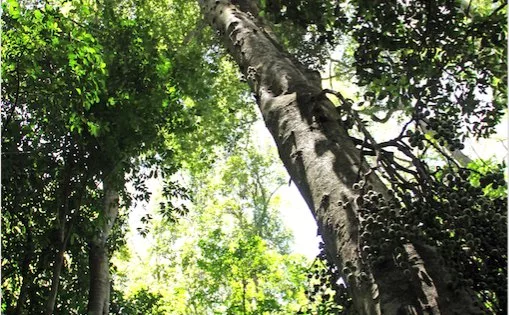
 A forest /FILE
Africa is sitting on a vast green fortune, but much of the wealth is leaving the continent in its rawest form.
A new report shows that tree commodities are grown on more than 247 million acres across Africa, yet the continent captures less than 10 per cent of the global market value of most of the products it produces.
The report, Tree-powered bioeconomies in Africa, published by Landscape Alliance, formerly known as CIFOR-ICRAF, says Africa’s problem is not a shortage of trees or commodities, but its failure to turn them into higher-value products.
Kenya is among the countries affected.
Its major tree commodities include coffee, tea, wood and timber, macadamia, avocado, mangoes, citrus, pawpaw, gum arabic and resins.
Yet much of the continent’s production is exported with limited processing, leaving the more lucrative stages of manufacturing, innovation and job creation to other countries.
“Africa is not short of tree resources. It is short of value capture,” Dr Peter Minang, Africa director at Landscape Alliance and lead author, said.
“Every year we export millions of tonnes of raw tree commodities, while the processing, manufacturing, innovation and higher-paying jobs they could support are created elsewhere.”
The continent is already a global powerhouse in several tree commodities.
Africa produces about 70 per cent of the world’s cocoa beans, up to 90 per cent of gum arabic and more than half of global cashew nuts. It is also the world’s leading producer of shea, baobab and argan oil.
But the report warns that this production strength has not translated into equivalent economic power.
Raw commodities leave African farms and forests, only for much of their value to be added elsewhere through processing, manufacturing and the creation of finished products.
The losses begin even before produce reaches international markets. Up to 44 per cent of perishable tree fruits, including mangoes, avocados, oranges and other citrus fruits, are lost annually in many African countries.
The report says 11 sub-Saharan African countries are classified as tree-commodity-dependent economies. Seven rely on a single tree commodity, while four depend on several.
Forestry is already an important economic pillar, contributing more than 10 per cent of formal GDP in about 11 African countries. Yet demand for wood on the continent is expected to triple by 2050, pointing to an even bigger economic opportunity — and challenge.
Beyond timber and food crops lies another largely untapped frontier: medicine and other bio-based industries.
The report says about 5,400 plant species and 16,000 medicinal applications have been documented in Africa. These could provide building blocks for part of the continent’s pharmaceutical market, valued at about $50 billion annually.
Trees such as Prunus
africana, alongside shrubs, herbs and climbers, could support
pharmaceuticals, nutraceuticals, cosmetics and other high-value products.
Minang said Africa could reverse the pattern by investing in processing, strengthening local industries and creating policies that allow African businesses to compete in global bioeconomy markets.
The opportunity could grow further as Africa’s middle class expands. The report projects that the middle class could account for 40 per cent of the continent’s population by 2060, creating greater demand for high-value tree-based products.
The African Continental Free Trade Area could also provide a larger market for such products.
Yet the policy foundation remains weak. Only three African countries — South Africa, Namibia and Ethiopia — have comprehensive national bioeconomy policies, while the East African Community has one regional strategy.
The report argues that closing this value gap could turn trees, forests and agroforestry from sources of raw materials into engines of green industrialisation, jobs and rural economic growth.
For Kenya and the rest of Africa, the message is clear: the biggest opportunity may not be growing more trees, but learning to make far more money from the ones already standing.