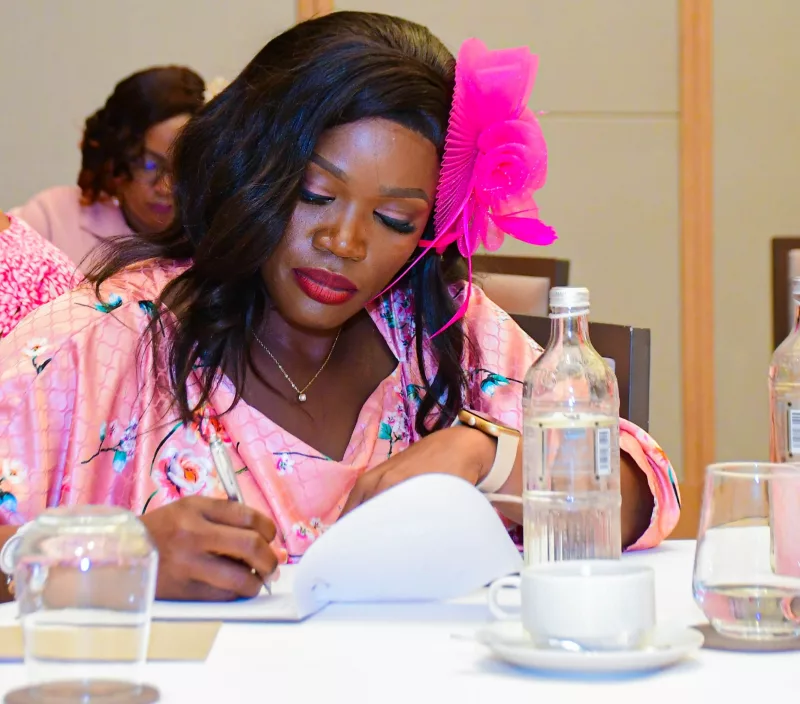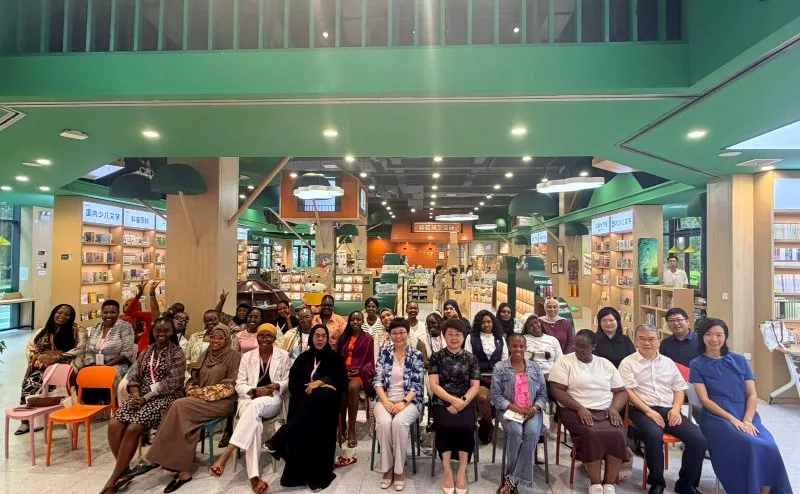
When 28 women leaders, entrepreneurs and professionals from across Africa gathered in China for a seminar on Short Video and Live-streaming Marketing, it represented far more than a training programme on digital commerce.
It was a reflection of a growing shift in international development, one that prioritises skills, technology transfer and women's economic empowerment.
The participants, drawn from Kenya, Egypt, Gambia, Rwanda, South Africa, the African Union and other African countries, spent weeks learning how digital platforms are transforming businesses, creating jobs and opening new markets.
They explored how entrepreneurs can use short videos, live-streaming and e-commerce to reach customers beyond their local communities and compete in an increasingly digital global economy.
For Africa, where women dominate the informal sector and small businesses but often struggle with access to markets, finance and digital skills, such training is timely, mainly because digital commerce is no longer the future but is the present.
Across Africa, women run thousands of enterprises ranging from fashion and agriculture to tourism, handicrafts and food processing, yet many remain locked out of wider markets because they lack the technical knowledge to market products online.
Training programmes such as this help bridge that gap by providing practical tools that can translate into higher incomes and business growth.
More importantly, the seminar reflects China's broader philosophy that sustainable development begins with investing in people.
Over the past four decades, China has lifted hundreds of millions of people out of poverty through economic reforms, industrialisation and investment in human capital and women have been central beneficiaries of this transformation.
For instance, the most striking example is education, because when the People's Republic of China was founded in 1949, fewer than 20 per cent of girls were enrolled in primary school and nearly 90 per cent of Chinese women were illiterate, yet today, the picture is dramatically different.
The net enrolment rate for girls in primary education has remained above 99.9 per cent since 2015, reflecting one of the world's most remarkable education transformations.
Higher education also tells a similar story as women now account for 50.76 per cent of undergraduate students and 50.01 per cent of postgraduate students, a remarkable achievement considering that only about 23,000 women attended university among a female population of about 260 million in 1949.
Education has, in turn, become the foundation for women's economic participation, leadership and innovation.
China has complemented educational progress with expanded social protection.
This is so because, in 2024, approximately 651 million women were covered under the country's basic medical insurance scheme, representing nearly half of all participants, women also benefit from maternity, unemployment and work-related injury insurance programmes that provide greater economic security.
Health, education and social security form the pillars of a development model that recognizes women not merely as beneficiaries of policy but as drivers of national progress.
Another notable initiative is the establishment of the Global Center for Women's Capacity Building, which promotes skills development, leadership training and international exchanges.
It demonstrates China's growing interest in sharing development experiences with countries across the Global South, particularly in Africa.
The recent seminar on digital marketing fits squarely within that vision because rather than offering financial aid alone, it focused on equipping African women with knowledge that they can immediately apply in their businesses and communities.
China's approach to gender equality is also deeply embedded within its national development framework because the country identifies gender equality as a fundamental national policy and integrates women's development into every Five-Year National Economic and Social Development Plan.
Rather than treating women's issues as stand-alone programmes, China links them to broader economic, political, cultural, social and environmental development.
President Xi Jinping has repeatedly emphasised this integrated approach inistsing that they should strive for women's development in tandem with social and economic progress by coming up with more well-rounded development strategies that take into account national interests, gender differences and the special needs of women.
China also credits much of its progress to the leadership role of the Communist Party of China (CPC), which has, since its founding in 1921, consistently promoted gender equality as one of its political commitments.
Over the decades, the Party has introduced policies aimed at protecting women's rights, expanding access to education, increasing workforce participation and promoting leadership opportunities.
Africa stands to benefit from studying not only China's infrastructure achievements but also its investments in human development.
Equipping women with digital entrepreneurship skills could unlock enormous economic potential. Short-video platforms, live-streaming commerce and digital marketplaces are increasingly becoming engines of employment and wealth creation, particularly for young entrepreneurs.
By sharing its experience in education, social protection and digital innovation, China is offering African women more than technical skills.
It is offering a model that places human capacity at the centre of development a lesson that could prove just as valuable as any physical infrastructure project.