On March 13, 2020, Kenya reported its first case of COVID-19, a development that plunged the country into a state of panic and uncertainty. Lockdowns were imposed, daily life was upended, and plans across the country were thrown into disarray. This came barely 48 hours after the World Health Organization had declared COVID-19 a global pandemic. At the time, it was difficult to establish a clear plan of action, including who needed to do what, when and how.
COVID-19 called for stringent infection prevention and control measures, including heightened personal hygiene, social distancing and restrictions on population mobility. It also required systematic case-by-case identification, which saw increased efforts geared towards testing, contact tracing and containment, alongside diligent medical and environmental health interventions.
To fix the COVID-19 menace, these interventions required a proper skill mix of community health promoters, administrators, law enforcers, public health experts, medical experts, epidemiologists and innovators, among others. Memory takes me back to the morning, a few days after March 13, 2020, when my then boss, Dr Cathy Mwangi, stepped into the office with the urgency of an army commander.
She called for an emergency meeting and announced that the government had declared COVID-19 a public health emergency. As a company dealing with digital innovations, we had a chance to be innovative and change the tide. She called on the software engineers in our company to urgently think through a solution that would help the country deal with COVID-19. She took time to give insights on how she thought the solution would look, including possible use cases, the interface, the name, and the kind of data she expected such a system to generate for decision-making.
As she walked back to her office, she made her final polite but firm request: she needed a solution in less than two weeks.
For the next few days, I saw a young, dedicated, and highly skilled group of people think hard, write code, run scripts, and test functionality. My role was to look at data, assess its accuracy, completeness, consistency, uniqueness, validity, usefulness, and advise on the next course of action regarding what needed improvement.
In less than 10 days, we had deployed an app — ‘Jitenge’. Jitenge was critical in managing COVID-19 at the border posts, airports, and supporting home-based care. Following its rollout, we held daily meetings with government officials and other key stakeholders. Using data generated from the Jitenge app, we monitored the progression of the virus, recommended possible solutions, and deployed necessary support and interventions.
The Worldometer froze updates on routine COVID-19 status updates in April 2024, as country-level daily data reporting was phased out. The war had been won from all quarters, by and with all the necessary available skills.
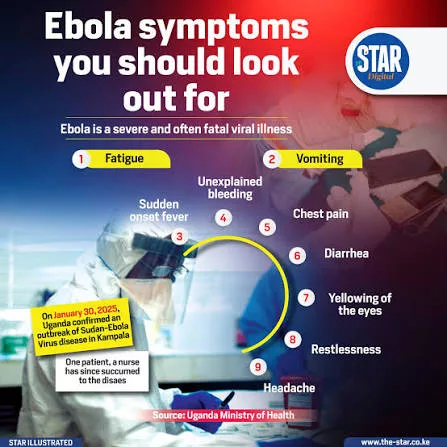
Kenya’s first case of Ebola was declared on October 6, 2026. We really do not wish that Ebola escalates. In fact, we should pray against it. But as efforts to contain the scourge continue to take shape, there is a need to reflect on the COVID-19 experience and draw lessons that can inform the current response. One such lesson is on how different complementary skills can work together against a pandemic.
As we, common wananchi, think about Ebola and take the prescribed measures seriously, our medical experts will be in the laboratories, pharmacies and wards supporting suspected and confirmed cases. Community health promoters and public health specialists will be spreading information in communities providing key health messages. Data scientists will be crunching figures and modelling patterns while administrators and law enforcers will ensure compliance with public health regulations and address conduct that puts others at risk.
Seemingly, a Dr. Cathy Mwangi should be summoning their team of innovators to think through how cases can be identified, contacts traced with ease and linked to care, supported throughout the process with minimal or no exposure to the virus, and ultimately, the use of quality data generated from the innovations to inform decisions. This might be easier now than before with the potential that Artificial Intelligence offers.
If everyone takes their responsibilities seriously and respectfully utilises their skills in a collaborative manner, Ebola can be contained.
Dr. Collins Mudogo is a Postdoctoral Fellow, [email protected]