He is 19, and the tumour sits in his thigh bone, just above the knee. I can remove it and save the leg. The operation needs a metal implant to replace the bone I take out, and the implant is not on the hospital shelf. His family must buy it.
So we wait. They sell a cow, then a piece of land, then hold a harambee. A tumour does not wait with them. Some families come back in time. Others come back when the only operation left is an amputation.
Nothing in that story is a failure of surgery. It is a failure of money: how much the country collects, and how well it spends what it collects. I have written before about the spending. This is about the collecting.
A government has no money of its own. It has ours. When the Treasury runs short, it reaches for the payslips it can already see. I think there is a better place to look. Before another tax, pay Kenyans to ask for receipts.
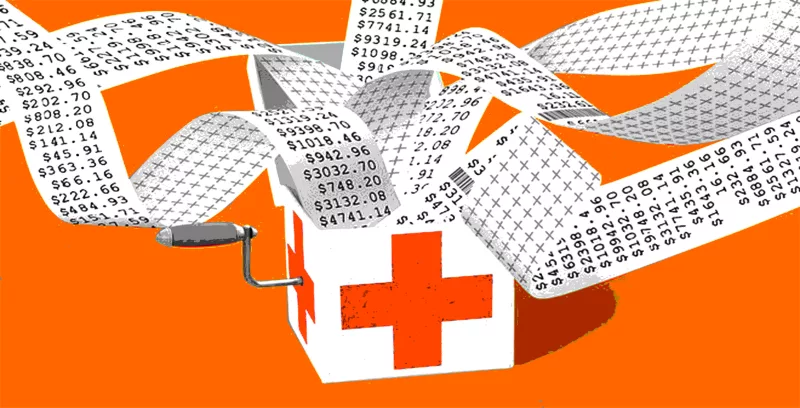
I ask for one almost every day. It is not patriotism. I run a clinic, and every electronic receipt is an expense the taxman will recognise. When I ask, the sale cannot be hidden, because an eTIMS receipt reaches the Kenya Revenue Authority the moment it is issued.
Most Kenyans have no such reason. A shopper gains nothing from a receipt and is often offered a discount to go without one. The sale disappears, and the tax with it.
We know receipts move money. KRA says monthly domestic VAT rose from about Sh20 billion to between Sh28 billion and Sh30 billion once every supply needed an eTIMS invoice.
São Paulo went further and enlisted the shopper. Since 2007 the Brazilian state has shared up to 30 per cent of the sales tax a shop actually pays among the customers who give their identity number at the till, and entered them in prize draws.
An economist at the London School of Economics measured what followed. Shops reported at least 21 per cent more sales for more than four years, and the state came out ahead after paying for the rewards.
Closer to home, Rwanda has paid shoppers 10 per cent of the VAT on their receipts since March 2024, with prize draws on top. More than 700,000 people have signed up.
Kenya has tried a version, and KRA deserves credit for it. For seven weeks in late 2024, the Jinice na Risiti Legit campaign let anyone scan receipts in an app and enter weekly draws for cash, laptops and phones. Even a receipt that failed to verify earned an entry, so every failed scan pointed to a sale worth a second look.
Then it ended, as planned. I have looked for what it found and could not find it. Seven weeks cannot change a habit. A shopkeeper who dislikes receipts only has to wait.
A draw suits us. Kenyans staked Sh330.5 billion on betting in the year to June, by KRA’s own figures. A receipt draw offers the same hope of a win, and the ticket costs nothing.
Keeping it would be cheap. By my arithmetic, a monthly draw with a Sh1 million top prize and a thousand smaller ones, with its running costs, comes to under Sh200 million a year.
Portugal offers a caution. It runs a receipt lottery and also gives every shopper a small tax credit on invoices from restaurants, garages and hairdressers. Researchers there found the credit moved people more than the draw. A lottery pays a few. A rebate pays everyone a little. Kenya may be different, and a trial would tell us.
Now return to the ward. São Paulo is the benchmark. Apply its result to our domestic VAT and the gain is about Sh33 billion a year. This year’s budget gives all the referral hospitals in the country Sh45.3 billion.
That is a hope, and I will not call it a promise. But money never collected cannot be spent at all.
So I have three small requests of KRA and the Treasury. Publish what the 2024 campaign found. Run it for a full year, with entry by phone number at the till and test a small rebate beside the draw. Measure it against places that do not have it, and tell us what it earned.
Somewhere tonight a family is counting what it has sold to save a leg. Their country should not be short for want of a receipt.
Make the receipt pay everyone.
Surgeon, writer and advocate of healthcare reform and leadership in Africa, [email protected]