By the time 2027 posters start peeling off matatu windscreens in January, Kenyans will have already decided who to blame, and who to forgive.
We know the script by heart. The presidency will be on trial in every boda stage debate. Cabinet Secretaries will be weighed like cattle at a market. The national government will carry the full weight of our anger over the prices of unga and fuel, and the dollar.
But somewhere between the noise of State House and the chants of presidential hopefuls, we have quietly agreed to look away from the people who actually sign the cheques that touch our daily lives.
The governor. The MP. The woman who controls the bursary list in your ward. The MCA who votes on your county budget and then disappears for four years.
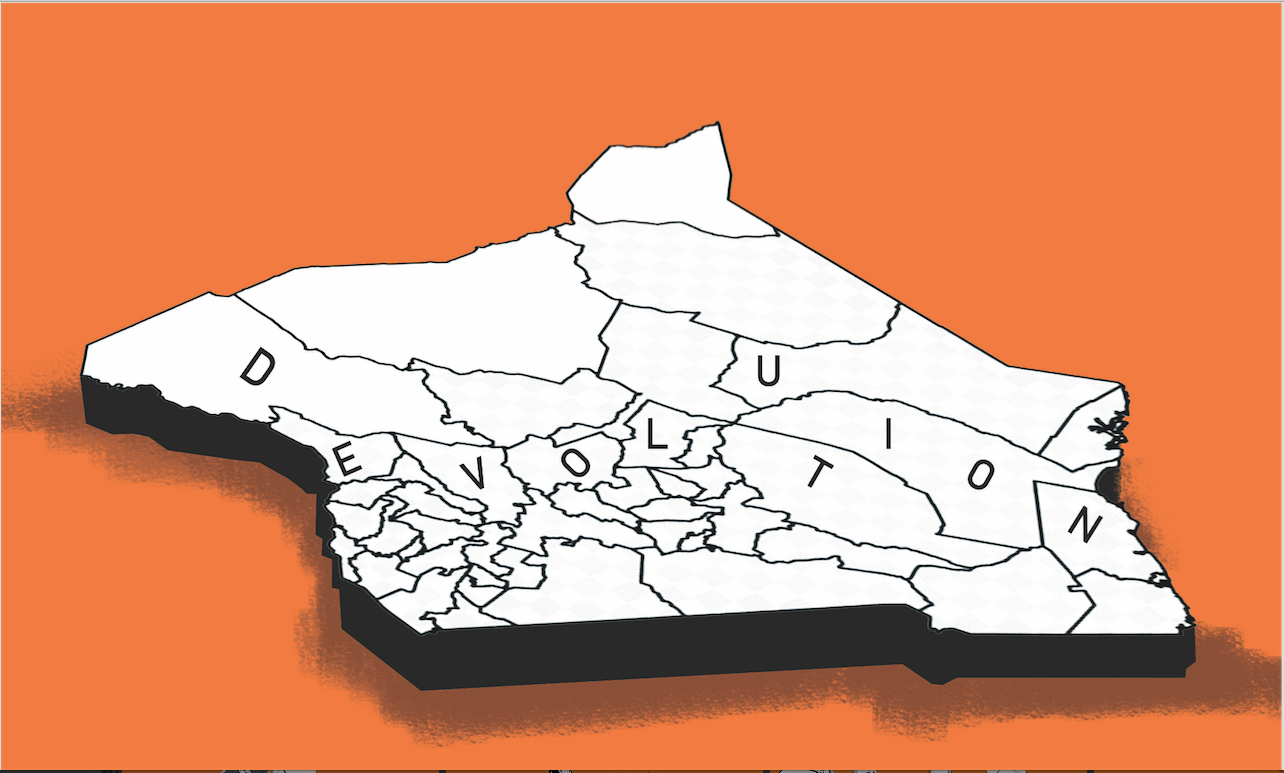
Overlooking the real culprits is a strange political habit we have cultivated since 2013. Devolution was sold to us as power coming home. Forty-seven laboratories of service delivery.
Money would no longer have to travel all the way to Nairobi and back before a dispensary in Kacheliba or a road in Mavoko could be built. The theory was elegant. The implementation and practice have been messy
Yet more than 10 years later, our political attention span has not moved down the ladder. We can quote the national debt to the last billion.
We can argue for hours about the housing levy. We can tell you what the IMF said last Tuesday. Ask most voters in Embakasi or Eldoret to name three projects their county carried out with the Sh10 billion it received last year, and you will get shrugs, then a quick pivot back to "Ruto must..." or "Raila said... ".
That is convenient. Convenient for the governor who has mastered ribbon-cutting but not maintenance. Convenient for the MP whose CDF office is a WhatsApp broadcast group and two bursary forms.
Convenient for the county assembly that passes budgets at midnight and calls it public participation. Because when the national wave is loud enough, local failure is overwhelmed and ignored.
Kenya’s development crisis is not abstract. It is not waiting in a policy paper in Treasury. It is in the six kilometres your child walks to a school with no desks. It is in the mother delivering on the floor of a county hospital because the maternity ward has no nurse.
It is in the farmer in Baringo watching crops fail while the irrigation project in the county plan remains "ongoing" for five years. It is in the youth in Kisumu with a diploma and no job, watching the same tender get recycled to the same three companies.
National government sets the policy and moves the big levers: debt, trade, energy, security. But development is felt at the pace of the county and the constituency. That is where water is drilled.
That is where ECDE teachers are hired. That is where dispensaries are stocked. That is where roads to markets are graded.
The numbers tell us why we cannot afford to keep ignoring this local layer. Counties collectively receive more than Sh400 billion every year. CDF adds another Sh50 billion. That is nearly half a trillion shillings annually meant to directly influence and improve lives.
Yet our outcomes have not moved at the speed of the money. We still have counties where maternal mortality is double the national average. We still have wards where there is not a single public Wi-Fi hotspot, no vocational training centre, and no functional ambulance.
We still have markets that flood every April because drainage was never budgeted, even though the money was there.
This is the dire need: to close the gap between allocation and impact. Between what is voted in the county assembly and what is delivered on the ground. Between the promise of devolution and the reality in our backyards.
Politics abhors a vacuum, and it loves an umbrella. Come 2027, you will see it. Candidates with no scorecard will not run on what they did. They will run on what party they are standing under. "Ni serikali ya watu." "Ni mlima." "Ni ODM imetuma." "Ni Kenya Kwanza tuko nayo."
The wave becomes the security detail. If the presidential candidate is popular in your region, you can ride on his coattails, even if your constituency still has one ambulance and no CT scan. If the governor is aligned to the winning presidential camp, he will sell you access, not results.
"I have the ear of State House," he will say, as if proximity is a project. But access without output is just lobbying for yourself. A photo with the President does not fill a drugs store. A seat at the head table does not tarmac a road.
And this is where the ceiling forms. We keep looking up. We audit State House press releases, we track every CS’s trip abroad, we debate national speeches line by line.
Meanwhile, the county procurement portal gathers dust. The ward development fund is spent with no signboard. The same stalled project is re-launched every budget cycle. We have built a political culture where accountability climbs only in one direction. Downward pressure stops at the governor’s gate.
We need to ask harder questions, and we need to ask them now, before campaigns start laundering reputations with new hats and old slogans.
What did your governor do with the health allocation when mothers in your county were still delivering on the floor? Why are essential drugs still out of stock three months to the end of the financial year? How many kilometres of road did your MP lobby for that were actually completed, not just launched with a plaque and a goat?
Where did the bursary money go, and who got left out? Was there a published list? Which ward project was budgeted, tendered and abandoned, and why did no one in the county assembly ask for a status report?
How many young people got jobs through the county’s internship and apprenticeship programmes, and where are they working today? What happened to the agricultural inputs subsidy that was announced with fanfare? Did it reach the last farmer?
These are not glamorous questions. They will not trend on X. They will not get you retweets. But they are the ones that determine whether your child walks six kilometres to school, whether your mother gets drugs at the county hospital, whether your market has water, whether your boda boda has a place to park without being harassed.
National government sets policy. County and constituency leadership sets pace. And pace is what we live in.
The tragedy is that we already have the tools to judge them. The county budget is public. The county integrated development plan is public.
The quarterly implementation reports are supposed to be public. The CDF report is public. The Auditor-General writes them down every year in red ink. The Controller of Budget tells us how much was spent and on what.
But we do not read them because we have been trained to believe that politics only happens at the top. It does not. Politics happens when the rubbish is not collected for three weeks. It happens when your MCA disappears after elections and only resurfaces with a branded tent.
It happens when a governor builds a stadium but cannot staff the maternity wing. It happens when a public participation meeting has 12 people and a soda, and a Sh2 billion budget is passed.
We have normalised the idea that a governor’s job is to attend national functions, and an MP’s job is to shout the loudest in Parliament. That is not their job. Their job is service delivery. Their job is to turn money into measurable change.
If we are serious about the dire need for development across the country, then 2027 must be different. Not just a change of faces at the top, but a change of standards at the bottom.
Every governor and MP should publish a simple scorecard by December: health facilities staffed and equipped, kilometres of road completed, schools with water and internet, numbers of young people employed through county programmes, bursaries disbursed with names. No jargon.
Just numbers we can verify. County budgets must be broken down to ward level and published on WhatsApp, on notice boards, and on local radio. If Sh50 million was allocated to your ward, you should know what it bought.
We are tired of new buildings with no staff, new roads with no drainage, new markets with no water. Let us reward leaders who maintain what exists, not just those who launch new things. Ten people in a hall is not public participation. Use chiefs’ barazas, use schools, use digital platforms.
And tie the budget to what people actually asked for. The media, civil society and citizens must do the unglamorous work of tracking projects monthly, not just during election season. Celebrate the county that reduced maternal deaths. Question the one that spent Sh200 million on travel.
This is not about hating governors or MPs. Many are trying. But trying is not the standard. Delivery is. And delivery is urgent.
By 2027, some of these people will come back with new slogans and old excuses. They will stand in the shadow of a presidential campaign and hope you do not notice that nothing changed in four years. They will tell you about national conspiracies, about lack of funds, about sabotage. And if we let them, they will.
So this is the work before the work. Audit your backyard before you audit State House. Name the projects. Follow the money.
Attend the public participation that no one attends. Walk into the county offices and ask for the implementation report. Make the governor explain, make the MP account, make the MCA sit in a village meeting and defend his vote.
Otherwise, we will spend another five years shouting at Nairobi, while the real leak is in the tap right outside our door. And the tap will keep leaking.
Kenya does not need another cycle of hope deferred. We need roads that hold up during rain. We need hospitals that have medicine. We need schools that have teachers. We need markets that have lights. We need jobs that start in our towns, not just in press statements.
That work starts in the county. It starts in the constituency. It starts with us refusing to be distracted by the national circus until we have first dealt with the local one.
Because if we do not fix the foundation, no roof, however well-branded, will keep us dry.