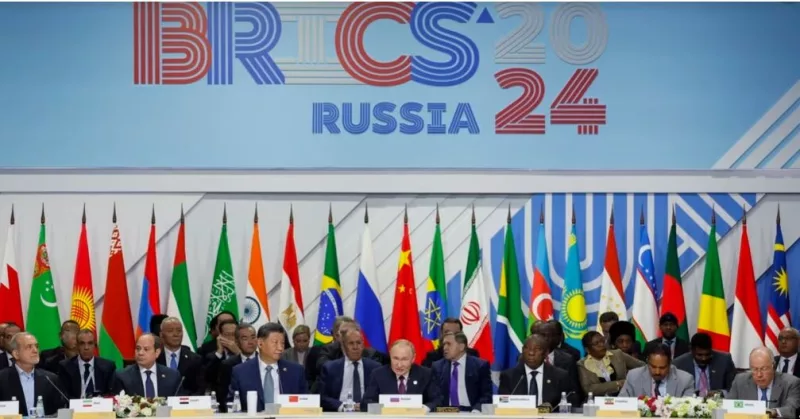
The global balance of influence is changing, and Brics is increasingly at the centre of that transformation.
Brics should therefore be understood not simply as a grouping of countries, but as an expression of the changing character of the international system.
More importantly, it has given practical expression to an increasingly important principle: global governance should reflect contemporary economic realities. Today, emerging economies are major contributors to global growth, trade, investment, technology and innovation.
Their voices deserve a meaningful place in discussions about the future.
This is where Brics has found its particular relevance. It provides a platform through which emerging and developing economies can strengthen cooperation in trade, investment, infrastructure, finance, technology, agriculture, energy and sustainable development.
For countries of the Global South, this represents an opportunity to deepen South-South cooperation and develop partnerships based on shared economic interests.
China occupies an important place in this transformation. As one of the world's largest economies and a major participant in global trade, China's economic strength adds substantial depth to Brics cooperation.
Its experience in industrialisation, infrastructure development, technological advancement and international commerce offers opportunities for knowledge sharing and economic partnership among developing countries.
Africa requires enormous investment to accelerate industrialisation, expand infrastructure, improve energy access, strengthen digital connectivity and create employment for its rapidly growing population.
Brics provides an additional avenue through which these objectives can be pursued.
The participation of South Africa, Egypt and Ethiopia has strengthened Africa's presence within the grouping, while the wider partner framework has expanded opportunities for engagement.
Countries do not have to choose one economic partner over another. They can deepen relationships with Europe and North America while simultaneously expanding engagement with Asia, the Middle East, Latin America and fellow African economies.
That is one of the greatest advantages of an increasingly multipolar global economy: greater choice.
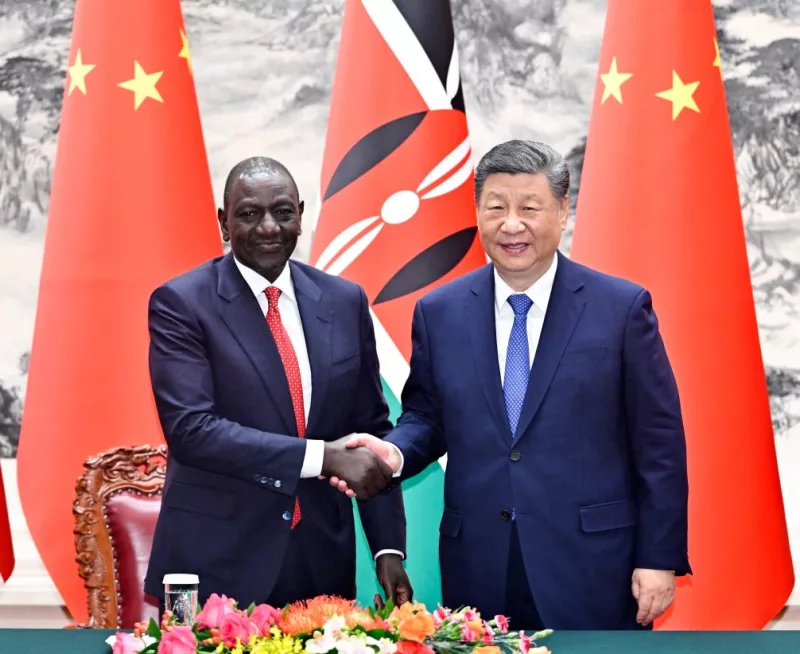
For Kenya, this changing environment presents important possibilities. Its strategic location and position within East Africa give it a strong foundation for deeper South-South economic engagement.
But the opportunity must be matched with strategy. African countries need to identify competitive sectors, strengthen productive capacity, improve trade facilitation and create conditions that attract long-term investment.
Diplomatic relationships become most valuable when they translate into opportunities for businesses, workers and communities.
This wider participation matters because the challenges facing the global economy are shared. Food security, energy transition, digital transformation, infrastructure and sustainable development require cooperation across regions.
Brics offers a platform where countries can combine experience, resources and markets while pursuing their development priorities.
Its growing relevance also creates space for business partnerships and academic cooperation. These relationships make cooperation more tangible by linking governments with entrepreneurs, researchers and investors.
Brics' economic institutions can contribute to this process. The New Development Bank, established by Brics countries, has demonstrated the potential for emerging economies to support infrastructure and sustainable development.
For Africa, infrastructure remains fundamental to economic transformation. Roads, railways, ports, electricity networks and digital systems provide the foundation for trade, manufacturing, regional integration and employment.
Technology will be equally important. Artificial intelligence, advanced manufacturing, renewable energy, biotechnology and digital services are reshaping the global economy.
Developing countries must increasingly participate not only as consumers of technology but also as innovators, producers and partners.
Cooperation among emerging economies can help accelerate this transition through research partnerships, skills development, knowledge exchange and investment in innovation.
This is why the Brics story is ultimately about more than geopolitics. It is about development and the widening of economic opportunity.
A world in which more countries can innovate, manufacture, trade and invest is a world with a broader foundation for prosperity.
A world in which developing economies have greater access to markets, finance, technology and infrastructure is better positioned to achieve inclusive growth.
Brics is therefore contributing to the evolution of a more representative international economic architecture.
Its growing influence reflects the confidence of emerging economies and the increasing importance of the Global South. It also demonstrates that international cooperation can evolve as economic realities change.
Brics has an important role in that process, helping emerging economies participate more actively in shaping the priorities of the international community.
Its emergence is not simply about a new grouping of countries. It is about a changing world.
And for the Global South, that change presents not merely an opportunity to secure a seat at the table, but an opportunity to help shape the future of global cooperation.
The writer is a journalist and communications consultant