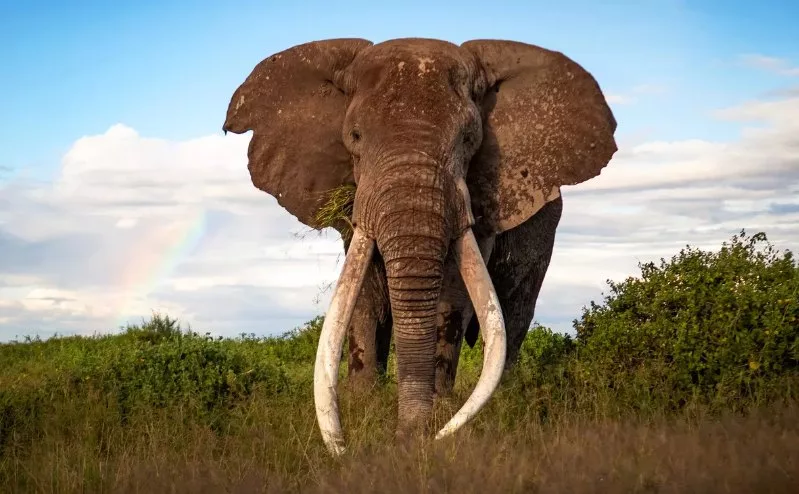
 An elephant
Read Also
Kenya has outlined measures to reduce rising human-wildlife conflict as the country joined the world in marking World Elephant Day in Laikipia county, one of the country’s elephant strongholds.
World Elephant Day is observed on August 12 to raise awareness about elephant protection and conservation.
This year’s theme, “Bringing the world together to help elephants”, called for international unity and collective action to secure the future of elephants.
State Department for Wildlife Conservation Secretary John Chumo presided over the event on behalf of Tourism and Wildlife CS Rebecca Miano.
In a speech read on her behalf, Miano said Laikipia had a unique role in conservation.
The county supports one of Kenya’s largest elephant populations outside national parks and serves as a dispersal area connecting protected areas, community conservancies and private ranches.
She, however, acknowledged the challenges faced by communities living alongside elephants, including crop destruction, property damage, competition for water and loss of human life.
“Living beside these majestic animals can mean crop destruction, property damage, daily uncertainty, competition for water and the tragic loss of human life,” she said.
Miano said expanding settlements and infrastructure were shrinking wildlife corridors and increasing encounters between people and elephants.
She said the government was committed to ensuring communities living alongside wildlife benefit from conservation. She noted that human-wildlife compensation claims had accumulated over the years, creating backlogs and hardship for affected families.
During the 2025-26 financial year, the national government allocated about Sh1.4 billion for compensation.
However, Miano said compensation alone could not replace lives, erase trauma or restore livelihoods destroyed by wildlife.
She said the government was, therefore, strengthening measures to prevent conflicts. These include rapid response teams, strategic electric fencing in hotspots, protection and restoration of wildlife corridors and the development of water infrastructure within wildlife habitats to keep elephants away from farms and settlements.
Other measures include climate-resilient rangeland restoration, support for community conservancies, improved wildlife monitoring and early-warning systems, and conservation education.
A census by the Wildlife Research and Training Institute estimated Kenya’s elephant population at 42,072 in June 2025. The number increased by 5,796 between 2021 and 2025, representing an annual population growth of 2.7 per cent over the past 36 years.
Kenya has the fourth-largest national elephant population, making it a critical stronghold following sharp continental declines in the late 20th century.
Despite the growth in elephant numbers, human-wildlife conflict remains a major challenge. Between 2009 and 2024, 57,006 incidents were reported.
In 2023, 8,272 cases were recorded, the highest in 15 years, before falling slightly to 7,883 in 2024.
Crop destruction was the most common form of conflict, with 32,480 cases, followed by 15,940 incidents of livestock predation.
Between 2022 and 2024, elephants were involved in 17,917 incidents, including 7,556 cases of crop destruction, 149 human injuries and 121 deaths.
Hyenas followed, being linked to more than 3,100 cases, mostly involving livestock predation.
Miano said stronger law enforcement, community partnerships, improved habitat management, benefit sharing and sustainable tourism would remain central to Kenya’s conservation efforts.