Kenya is preparing to draw a new economic map even as it grapples with a question that has followed the country through much of the life of Vision 2030: how much of the promised transformation has actually reached ordinary citizens?
After 18 years of implementing the blueprint, the government says Kenya has achieved 66.1 per cent of its targets, laying the foundation for a more ambitious long-term development plan aimed at taking the country into first-world status.
But the figure also reveals the unfinished business.
Kenya remains a lower-middle-income country, having attained that classification in 2014, yet the original Vision 2030 target was to become a newly industrialised middle-income country by 2030.
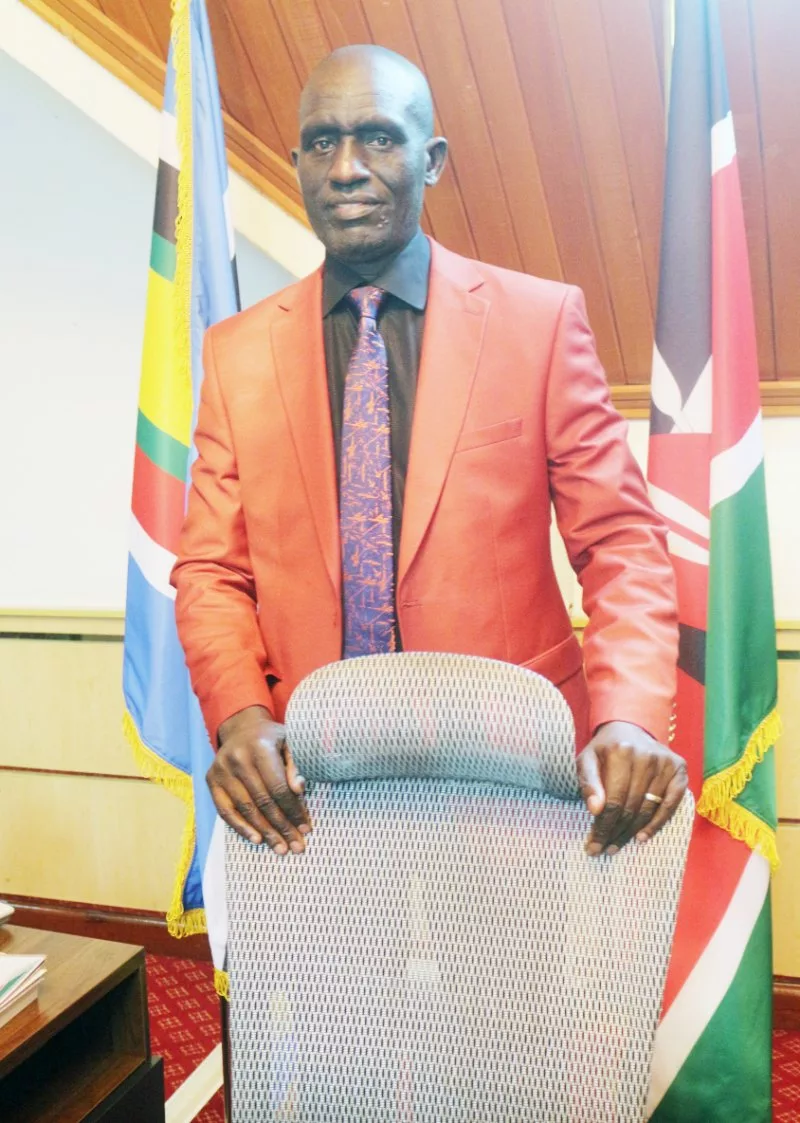
James Maina, acting director general of the Kenya Vision 2030 Delivery Secretariat, says the progress made provides a platform for the next stage of the country's development.
“We have looked at all the flagship projects and the 312 programmes, which gave birth to 878 flagship projects across all pillars. We can say that currently we have a performance of about 66.1 per cent across all the pillars,” he said in an interview.
The numbers, however, tell a more complicated story than a simple success-or-failure narrative.
Vision 2030, inaugurated by President Mwai Kibaki (now deceased) in 2008, was conceived as a transformation project covering virtually every aspect of Kenyan life.
Its economic pillar sought to raise annual economic growth to 10 per cent, while the social pillar focused on health, education and housing.
The political pillar targeted an issue-based, people-centred, result-oriented and accountable democratic system.
The pillars were supported by broader priorities including infrastructure, science and technology, land reforms, human-resource development, security and public-sector reforms.
According to Maina, the political pillar has recorded the strongest performance at 61.6 per cent, driven largely by the promulgation of the 2010 Constitution and implementation of provisions such as devolution.
The social pillar follows at 59.5 per cent, reflecting progress in health, education and housing.
The economic pillar, however, trails at 55.5 per cent.
“The economic pillar has not performed as well, at 55.5 per cent, and that is why some people might say there isn’t much progress under the Kenya Vision 2030,” Maina said.
That gap is significant because economic transformation was at the heart of the original ambition.
A country can build roads, expand institutions and devolve power, but the ultimate test of a development blueprint is whether it creates productive jobs, raises incomes, expands manufacturing and makes households more economically secure.
It is partly this unfinished economic transformation that the government now wants the next long-term plan to address.
Maina says the new vision will focus on increasing productivity, creating wealth and reducing Kenya's dependence on imports by expanding manufacturing.
The timing of the conversation is deliberate.
Kenya is implementing the fourth and final Medium-Term Plan under Vision 2030, which ends in June 2028.
That leaves only two years between the end of the current medium-term plan and the formal expiry of Vision 2030.
The government therefore wants to start preparing early, arguing that a national development plan cannot be designed hurriedly.
“We need to accelerate, even as we move towards the next long-term plan after the end of the vision,” Maina said.
The new process is also taking place under a constitutional framework that did not exist when Vision 2030 was launched.
Public participation is now mandatory for major government projects and programmes, meaning the next blueprint cannot simply be drafted in government offices and presented to citizens as a finished product.
Maina said consultations would have to reach all 47 counties and different sections of society.
“It is important that everybody is carried on board, and the government only comes to facilitate that. [The vision] should be the wish of the people, the aspiration of the people; the people should say what they want to see in the next period, whether it is 30 years or more,” he said.
That could become one of the defining tests of the new vision.
The government is essentially asking Kenyans to think beyond the next few years and imagine the country they want several decades from now.
Yet millions of citizens are making decisions based on much shorter horizons — the price of food this week, whether they can find work, the cost of healthcare, taxes and the security of their families.
This is where the government's long-term narrative faces its biggest challenge.
Critics argue that grand development visions can lose their appeal when people do not feel meaningful economic improvement in their daily lives.
Prof Gitile Naituli of Multimedia University of Kenya says the disconnect between long-term promises and immediate hardship risks undermining the new initiative.
“This explains why grand visions can sometimes produce irritation rather than inspiration,” Naituli said.
“A citizen worried about tomorrow's meal does not necessarily want to hear about Kenya several decades from now. Before selling tomorrow, the government must demonstrate competence today.”
That criticism goes to the heart of the debate surrounding the successor to Vision 2030.
The government argues that the realities of 2026 are fundamentally different from those of 2008 and that Kenya therefore needs a fresh set of ambitions.
Maina agrees that the country cannot simply reproduce the old blueprint.
“We need to continue thinking. What are the new aspirations for the country? And this gives us the need to start the conversation,” he said.
The proposed destination is also markedly more ambitious.
If Vision 2030 sought to make Kenya a newly industrialised middle-income country, the next vision is expected to target what the government describes as first-world status.
For Maina, that ambition must ultimately translate into tangible improvements in people's lives.
“It means that we are free from diseases, or when we are sick we have the facilities to take care of us. It means that we should be able to guarantee that our children go to school and upon completing, they are productively engaged,” he said.
The challenge will be turning such aspirations into measurable outcomes.
Vision 2030 has produced major projects and programmes, but the government's own assessment shows a substantial portion of its targets remains unfinished.
Maina attributes some of the shortfall to inadequate resources.
That raises another difficult question for the next vision: where will the money come from?
The government will have to balance ambitious infrastructure and industrialisation plans with demands for health, education, jobs and social protection, while operating in an environment of limited resources.
The next blueprint therefore risks becoming another catalogue of impressive targets unless it is accompanied by realistic financing, measurable benchmarks and mechanisms for holding institutions accountable.
The experience of Vision 2030 offers both a foundation and a warning.
Its 66.1 per cent reported performance demonstrates that long-term planning can produce substantial change.
But the weaker economic pillar, and Kenya's continued position as a lower-middle-income country, also show how difficult it is to convert national ambition into broad-based prosperity.
The coming national conversation will consequently be about more than choosing projects for the next 30 years.
It will be about defining what kind of Kenya citizens want — and, perhaps more importantly, determining whether the government can convince citizens that the distant promise of a first-world country is connected to the struggles they face today.
For the successor to Vision 2030 to succeed, Kenyans will need to see the future not as another political slogan, but as a credible extension of improvements they can already feel in their homes, businesses and communities.