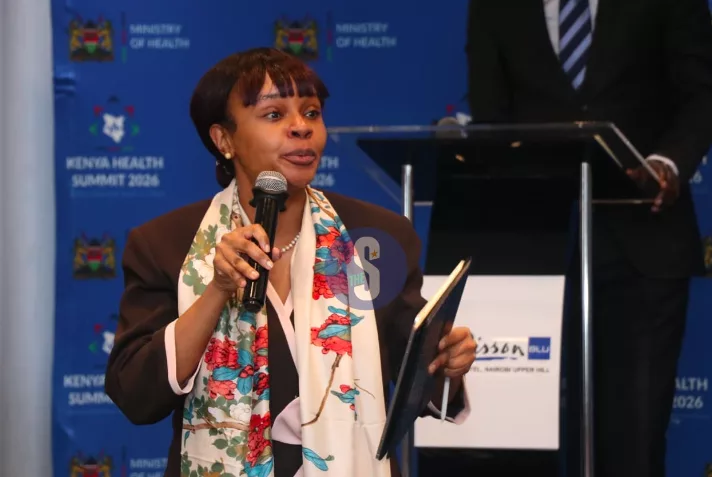
The Social Health Authority has recovered Sh300 million linked to fraud and is pursuing more cases through investigations, administrative action and the courts, CEO Mercy Mwangangi has said.
Mwangangi said the authority had recovered Sh200 million from healthcare providers, while cases involving Sh28 million have been referred to the Director of Public Prosecutions (DPP).
“We have Sh300 million recovery of fraud and we are still recovering,” Mwangangi said on Tuesday during a media town hall meeting in Nairobi.
“Cases under investigations, internal investigations and cases into administration."
Mwangangi said 15 cases have also been taken to court as SHA intensifies its crackdown on fraudulent claims.
“We have 15 cases in court, cases under DPP, cases under providers. It is a continuous process,” she said.
She warned that fraud remains a major challenge to Kenya’s health insurance system, with health facilities, officials and members of the public all capable of contributing to fraudulent claims.
“Global indicators of fraud tell us health insurance fraud is a menace,” Mwangangi said.
She said Kenya could learn from countries such as the United States, which has specialised units dealing with medical fraud.
“We need to go and look at the FBI special unit for medical fraud, just like America,” she said.
Mwangangi said fraud was not limited to health facilities or officials, with some members of the public also exploiting the system.
She cited a case reported by a private health facility involving a civil servant who allegedly used her SHA card to have her sister admitted for treatment.
“We have one private facility telling me that a lady who is a civil servant brought her sister, admitted her using her card, and the sister had to run at night. This is fraud by Kenyans,” she said.
“All of us are accomplices of fraud,” Mwangangi added.
She said the digitisation of SHA services would help strengthen efforts to detect and curb fraudulent claims.
“We struggle with this, but our digitisation has come to support us,” she said.
Mwangangi identified change management as the second major challenge facing SHA as the country transitions to a fully digital health insurance system.
She said the success of any reform depends on whether stakeholders understand the changes and are able to support their implementation.
“One of the things that when you introduce a reform or project you must deal with is if stakeholders understand the reform and that they are able to push forward,” she said.
Mwangangi said SHA has moved to a fully digital claims system, eliminating the use of manual claims documents.
“Right now all our claims are digital. We do not have manual documents and that is an improvement. It means we team ourselves in a highly digital work,” she said.
She said the transition requires continued change management and public education to ensure Kenyans understand how the new system works.
“Change management and educating all Kenyans” are therefore critical to the success of the reforms, she said.
Mwangangi also acknowledged concerns that SHA has not done enough to publicise its services, saying more needs to be done to ensure Kenyans understand the authority, its services and how to access them.