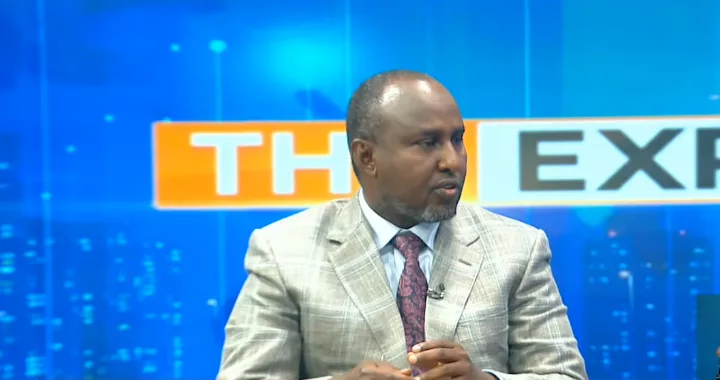
 Minority Leader Junet Mohamed speaks during an interview on Citizen TV on August 11, 2026/ SCREENGRAB
National Assembly Majority Leader Junet Mohamed has urged Kenyans to rely on official data and credible sources rather than what he termed political propaganda as the country enters the political season ahead of the 2027 General Election.
Junet said politicians should provide evidence to support their claims, arguing that Kenyans risk being misled as political debate increasingly becomes centred on unsubstantiated assertions.
Speaking during a Citizen TV interview on Tuesday, Junet said politicians were previously expected to support criticism of the government with evidence, but claimed political discourse had shifted towards making claims without substantiation.
“This is the season that has begun. This is August 10, and the election is next year, August 10. So we are in that season now, 10 months to the election,” he said.
Junet was responding to questions about increasingly heated exchanges between government leaders and former Deputy President Rigathi Gachagua, who has in recent months emerged as a vocal critic of the Kenya Kwanza administration.
He said government-aligned leaders would respond to claims made by the opposition as the country moves closer to the election.
He was challenged on whether such exchanges risk lowering the quality of political debate, particularly when leaders make serious claims about individuals without providing evidence to the public.
Junet said opposition politics should be based on facts and evidence.
“Any time we wanted to criticise or say something, we used to attach evidence and say this is how it is and this is the evidence,” he said.
He said politicians should be prepared to substantiate claims made in public instead of leaving Kenyans to choose between competing narratives.
“Nowadays, you can say anything,” Junet said.
The Majority Leader was also questioned about claims made during the government's response to Gachagua and whether the public could independently verify them.
Junet maintained that evidence existed to support some of the claims made by government leaders, but acknowledged that Kenyans needed access to information beyond political exchanges.
The interview then turned to the broader question of where citizens can obtain reliable information as politicians trade competing accounts of the government's performance over the past four years.
Junet pointed to official government data and publications, saying Kenyans should rely on information produced through established public institutions when assessing the country's economic and development record.
“If you want to know what's happening in the economy, there is the Economic Survey that is done by the Ministry of Finance, for example, every year, and they publish it,” he said.
He said government agencies periodically make information available to the public and that citizens should use such data when assessing claims made by political leaders.
Junet said the political contest would intensify as the country approaches the election but argued that the public should be able to distinguish political messaging from verifiable information.
“What is not available to Kenyans, which is not substantiated, are the lies and propaganda,” he said.