If you have any interest at all in foreign news, then you surely must have seen or read about the roughly 60,000 mostly Moroccan people who, about a week ago, stormed a small city on the upper tip of the African continent, which is legally a part of Spain.
This territory, Ceuta, is geographically attached to Morocco, not Spain. As Google Maps explains, “Ceuta is an autonomous city of Spain on the North African coast, bordered by Morocco.”
The images of desperation shown, both by the would-be illegal immigrants from sub-Saharan Africa and the would-be illegal immigrants who were Moroccans (the great majority), ignited a debate on what is really an old question: what makes people so desperate to enter a country they know very well does not want them?
And I should add that it is images like these – of these would-be economic refugees – which perpetuate the conviction (never very far below the surface in rich nations) that African leaders are somehow just incapable of providing their citizens with economic opportunity.
The odd thing is, though, that Morocco is a much richer country than Kenya. Roughly twice as rich – double our numbers in all the usual measures of economic health like GDP, etc.
Also, Kenya is spoken of as “the gateway to East and Central Africa” largely on account of its location, which makes it a prime hub for goods and services intended for all of East and Central Africa. And Morocco takes pride in being “the gateway to Europe”. Not for illegal migration, but for export-oriented industries.
Morocco occupies a unique place on the African continent, insofar as it is geographically so close to Europe that global manufacturing conglomerates which have factories in Morocco, can get their products into Europe just as quickly as though these goods had actually been manufactured inside Europe.
In other words, it could be said that if Kenya manages to achieve the same levels of national prosperity as what Morocco already has, then we will definitely have something to be proud of.
So, whatever may be the alleged behind-the-scenes geopolitical schemes that opened the door for this attempted mass exodus, we still have to ask: why were all those young Moroccans so desperate to flee from their country in pursuit of a better life in Europe? And willing to do so illegally?
This is something which the Kenyan leadership needs to try and understand.
Right now, it is hard to imagine 60,000 young Kenyans engaged collectively in a desperate effort to cross the border into a neighbouring country where they are not wanted.
However, this may not always be the case. Young Kenyans may not always be willing to wait patiently in long queues with their large brown envelopes, which contain copies of the certificates that confirm their qualifications for the overseas jobs they are waiting to apply for.
A pattern I am sure many have noticed is that what happens in countries more economically advanced than ours – or even just in other developing countries – will sooner or later happen here too.
The iconic “Gen-Z” demonstrations in Kenya just two years ago, viewed from a global perspective, were just one of many such destabilising youth-led demonstrations which were a response to diminishing economic opportunities in the specific countries.
These countries include Sri Lanka (where such demonstrations took place in 2022), Bangladesh (in 2024), Nepal (in 2025), the Philippines (in 2025) – the list goes on and on.
In some cases, the demonstrations led to the overthrow of a government; in others, the demonstrators were appeased by dismissals of cabinet ministers (something which happened in Kenya too); and some crises are still ongoing.
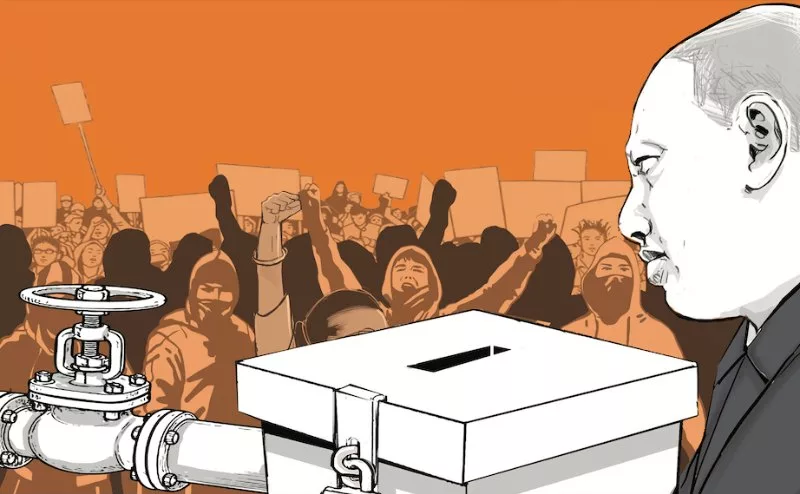
So, we need to be grateful for the safety valve of our regular general elections.
Currently there are loud calls for President William Ruto to be denied re-election in 2027: for him to have the humiliating experience of becoming Kenya’s first-ever one-term president.
This suggests that however fiercely opposed some (eg, the Gen Zs) may be to his administration, there is a general consensus that the right way to act on this is to wait until next year and vote in a new president.