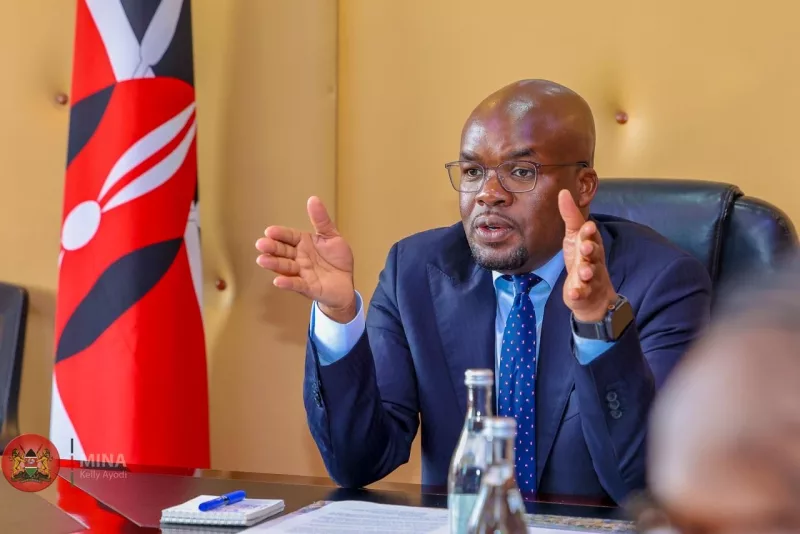
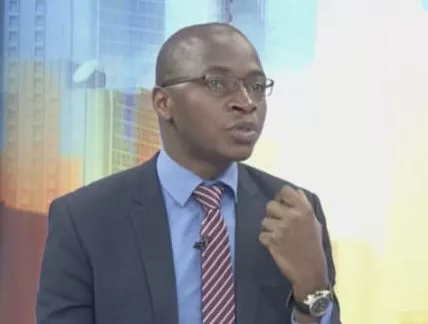
 Maliba Arnold Nyajayi, Executive Director, Open Future Hub (OFH)./SCREENGRAB
Kenya has spent the last 15 years becoming exceptionally good at winning elections and remarkably bad at asking what happens after the votes are counted.
That is the Cambridge Analytica Kenya problem. In 2013, Jubilee understood the power of immediacy. The politics of long-term national planning associated with the Kibaki era and Vision 2030 struggled against a campaign language of speed, prosperity and quick returns. Then came William Ruto’s masterstroke: Hustler versus Dynasty.
A complicated political economy was reduced to a remarkably effective binary. The hustler was ordinary Kenya; the dynasty was privilege. But brilliant political communication is not necessarily brilliant governance. That is the distinction Kenya must recover in 2027.
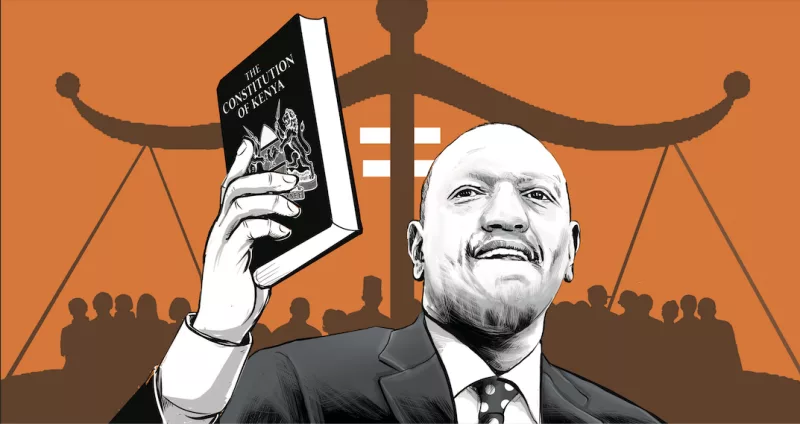
The Constitution gives us the test. Its Preamble commits the republic to protecting the well-being of individuals, families, communities and the nation, while aspiring to human rights, equality, democracy, social justice and the rule of law.
Article 10 establishes patriotism, unity, equity, inclusiveness, integrity, transparency, accountability and sustainable development as values. Article 43 makes the promise concrete: health, housing, sanitation, food, water, social security and education.
This is not campaign poetry.It is the national contract. So the 2027 contest ought to be less about Ruto versus Sifuna as personalities and more about two competing answers to one constitutional question: what kind of Kenya should government produce? The Ruto administration has a governing programme.
BETA identifies agriculture, MSMEs, housing, healthcare and the digital and creative economy as key pillars. The serious question is whether that plan is producing structural transformation.
Kenya’s real GDP growth fell from 5.7 per cent in 2023 to 4.7 per cent in 2024 and 4.6 per cent in 2025, before improving to 5.3 per cent in the first quarter of 2026. In 2024, Kenya created 782,300 jobs, but about 90 per cent were in the informal economy.
The country is generating work without sufficiently generating productivity, security and formal opportunity. That is why the opposition faces an equally serious test.
If Edwin Sifuna is to represent a governing alternative, it cannot be enough to identify what is wrong with Ruto. Opposition is an argument against the present; a presidential bid is an argument for the future.
Kenya does not need Bottom-Up versus Bottom-Up Plus. It needs competing national projects. Where will growth come from? How will debt be managed? What happens to manufacturing? How does agriculture move up the value chain? How are young Kenyans moved from precarious informality into productive employment?
What will government stop doing? The opposition must refuse to compete on UDA’s vocabulary of political soothsaying. Government must equally be denied the luxury of substituting announcements for measurable outcomes.
Kenya’s problem is not a shortage of programmes. It is a shortage of measurable national transformation. We have mastered PR promax. We need policy promax. We have perfected the viral clip.
We need the boring spreadsheet. We know how to manufacture political excitement. The harder task is manufacturing productivity. That is the real lesson of the Cambridge Analytica Kenya problem.
Politics became data-driven, emotionally intelligent and technologically sophisticated. Governance did not advance at the same speed. The 2027 question should therefore be simple: Who has the more credible national project for building the Kenya contemplated by the Constitution?
Kenya does not need another election won by the best political advertisement. It needs an election in which political persuasion submits itself to evidence, delivery and results.
A presidential election is not an audition for the country’s best campaigner. It is an audition for the custodian of the republic.
Maliba Arnold Nyajayi is the Executive Director, Open Future Hub (OFH). X: @MalibaArnold.