Every new mining agreement, every infrastructure allocation, every long-term contract, was examined less for its content than for the suspected private interests behind it.
But Botswana’s leadership kept its eye on institutional continuity and multi-decade resource management. Meanwhile, other countries that perfected the art of motive litigation remained trapped in cycles of accusations and counteraccusations.
Outcomes diverged and motives, real or imagined, explained less than the systems that survived them. The suspicion was not always wrong.
A landlocked cattle economy seated on some of the richest diamond deposits on earth, is precisely the setting in which private capture tends to flourish.
Yet Botswana’s leadership understood that a country cannot govern its strategic resources and infrastructure through a permanent trial of intentions.
That distinction mattered. Botswana did not prosper because its leaders were presumed pure, nor because every decision was beyond criticism.
It prospered because the management of diamond wealth was gradually embedded in institutions, negotiated arrangements and long-range public investment.
The important question became not whether every official’s motives could be certified as virtuous, but whether the system could repeatedly convert a finite mineral resource into enduring public value.
The Pula Fund illustrates this institutional instinct. Established in 1993 and managed by the Bank of Botswana, it placed part of the country’s foreign exchange reserves into long term investments in international bonds and equities.
Its purpose was to preserve the purchasing power of national reserves, and extend the value of diamond earnings beyond the moment in which they were received.
By investing these diamond revenues offshore through the Bank of Botswana, the government successfully absorbed domestic liquidity shocks and cushioned the country against Dutch disease, protecting its economy from hyperinflation and commodity market volatility while securing capital for future generations.
That matters because a resource boom can damage an economy even while making it richer. Economists call this Dutch disease.
Large inflows of foreign currency can strengthen the local currency, and increase domestic prices and investments, making other sectors less competitive. Botswana did not eliminate this danger, but investing part of its reserves abroad helped reduce the pressure.
Its relationship with De Beers followed a similar logic. Botswana did not nationalise the diamond industry overnight or surrender it permanently to a foreign company. It accumulated bargaining power. The government’s original 15 per cent interest in the mining partnership increased to 50 per cent by 1975, creating the company now known as Debswana.
The government later acquired 15 per cent interest in De Beers itself. Over successive negotiations, Botswana secured a larger role in the sale and processing of its diamonds, culminating in the relocation of De Beers’ international rough-diamond sales operations from London to Gaborone without alienating foreign capital or disrupting production.
This was not a single heroic bargain. What Botswana did was to build the capacity to bargain, maintain continuity across political cycles and resist the temptation to treat each revenue windfall as money available for immediate distribution. Roads, schools, health services and administrative capability became part of the national balance sheet.
The test of policy was therefore not whether every official’s motives could be certified as virtuous, but whether the system repeatedly converted mineral income into public assets. Today Botwsana’s nominal GDP stands at roughly $20 billion with a GDP per capita at $8,000.
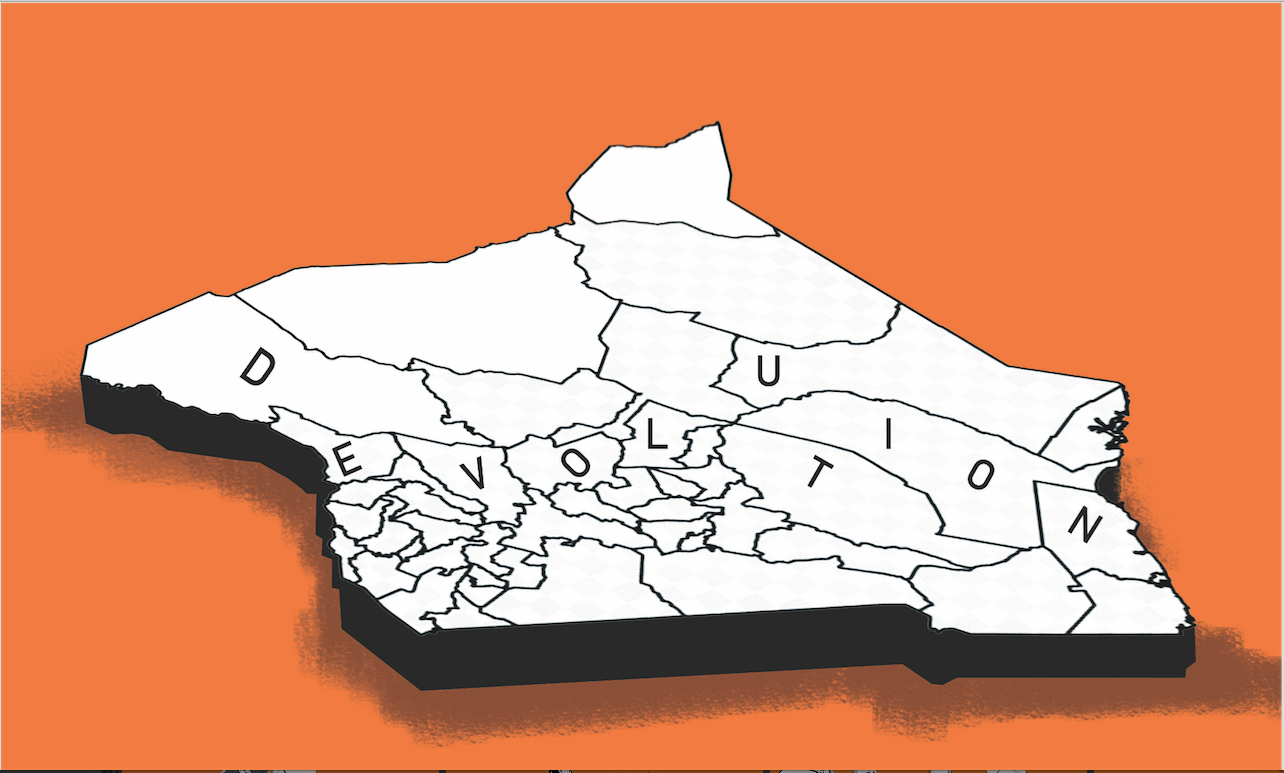
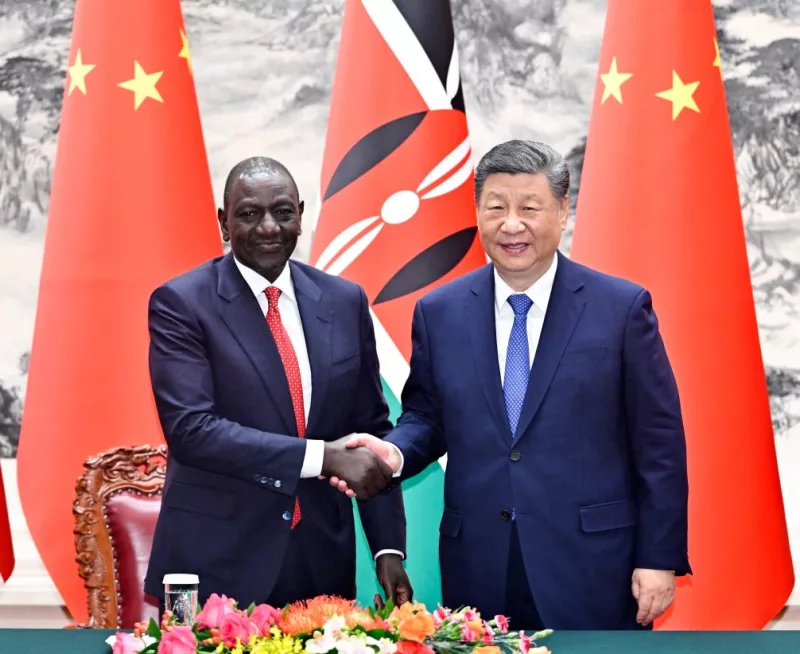
Kenya has perfected the same habit of motive litigation. On July 30, President Ruto invited the country into a national conversation about a development charter that would outlive any single administration. This address however imperfect, attempted to shift the conversation that would design a succession charter for Vision 2030.
However, within hours critics reached for the familiar tools of motive analysis and the dominant response was not engagement with the substance of time horizons, institutional continuity, or the measurable gap with countries that started from similar positions.
It was an immediate inquiry into motive. Why now when he hasn’t even completed Vision 2030? How much will he gain privately? When was the decision made? What triggered it? Which political and commercial interests are being served to recalibrate the national agenda?
These questions are not illegitimate. Power should never be excused from scrutiny merely because it speaks in the language of posterity and prosperity. But the questions are simply incomplete. And when they become the only questions, they become a trap.
Because most of us are binary thinkers, we fail to see that our political culture has elevated motive litigation into a national methodology. We dissect intention with forensic intensity while remaining comparatively casual about institutional design.
A speech, policy or article is rarely evaluated first for the quality of its diagnosis, the incentives it creates, the interests it protects or the safeguards it contains. It is first passed through the identity of its architects. If they are from a different political leaning or community, the idea arrives contaminated. If on the other hand they are trusted, the defects in the idea are overlooked.
This habit feels sophisticated. And it truly is. But it is a sophisticated form of avoidance. It traps Kenyans into remaining permanently engaged in the politics of suspicion without ever having to confront the harder work of deciding how institutions should function when motives are mixed, leaders are fallible and political coalitions change.
Begs two questions. How did we get here? And why does a political culture so skilled at litigating motive remain so weak at constructing institutions that outlast motives?
To understand how we got here, we must look at our history. For decades, the colonial and post-colonial state operated as an instrument of extraction and patrimonial distribution. When institutions are fundamentally extractive, public policy is continually treated as a trojan horse.
The result is a profound mismatch viewed as a personal motive. Under a patronage system, roads are built not because a cost-benefit analysis proved its internal rate of return, but because a politically connected elite needed to deliver a visible dividend to a particular political constituency, or an administrative boundary that could improve service delivery is seen as rearranging political advantage.
To answer the second question, it is because motive litigation is intellectually low-cost, requires no domain expertise and produces high-reward in the short term. It generates immediate political capital, charges political bases and requires no difficult trade-offs.
For instance, to critique a proposed agricultural subsidy programme on its merits requires one to understand input supply chains, global commodity prices, smallholder credit markets and deadweight loss.
Likewise, to critique a national development charter on its merits requires one to analyse macro-prudential targets, institutional safeguards, financing mechanisms and trade policy. Therefore, to allege that somebody intends to steal requires considerably less work and thinking.
Institutional design has the opposite political economy. It demands delayed gratification, is expensive to build, its dull and produces no villain. Indeed, its benefits may become visible only after its architects have left office.
Kenya has become an expert at motive litigation, and under practised at institutional design. The result is a politics that produces continuous drama and interrupted development.
I concede that this is not an argument for naivety. Corruption and state capture are real. Motives matter because public power can be organised for private gain.
Therefore, suspicion has earned its place in Kenya’s public life. What exacerbates this is that motives are inherently unfalsifiable because intent cannot be audited, hence arguments over motive can never be resolved, and like a never-ending loop can be raised repeatedly.
Every denial becomes evidence of concealment, and every explanation can be interpreted as further manipulation.
When suspicion becomes the sole analytical lens, every proposal is inherently contaminated by the identity of its proposers. It therefore makes it nearly impossible for us to build the intergenerational covenants that surpass successive governments because accepting a useful idea is mistaken for trusting the person who introduced it and betraying the political side to which one identifies with.
Yet a national development charter does not require Kenyans to trust President Ruto for the next 30 years. It requires them to construct something that does not depend on trusting him, his successor or the successor after that.
That should be the substance of our national conversation.
Ironically, the greatest beneficiaries of our obsession with motive are corrupt or incompetent leaders. A government that is judged primarily by what its officials are presumed to intend is spared the harder examination of what it has actually designed, delivered and institutionalised.
It can answer evidence of failure with declarations of goodwill, dismiss criticism as a personal attack and convert every policy debate into a quarrel over character.
Motive then displaces the measurable questions of public life such as who bears the cost? Who receives the value? What safeguards exist? What results were achieved? What happens when targets are missed? Can the system correct failure? Would the arrangement remain acceptable if administered by one’s political opponent? These questions do not assume virtue. They make virtue less necessary.
Botswana’s experience is not a fairy tale, and Kenya should not borrow it as one. It did not eliminate mixed motives. It built systems robust enough to deliver results despite them.
Finally, my unsolicited advice is to all Kenyans. Stop treating motive as the master key. Motives are always mixed.
The more useful question is whether the proposed national conversation will create durable constraints and measurable obligations that outlast the administration in power. Until we develop a comparable seriousness about systems that survive their architects, motive litigation will remain our most consistent national product, and our most expensive one. The future is already here.
If men were angels, no government would be necessary - Alexander Hamilton.