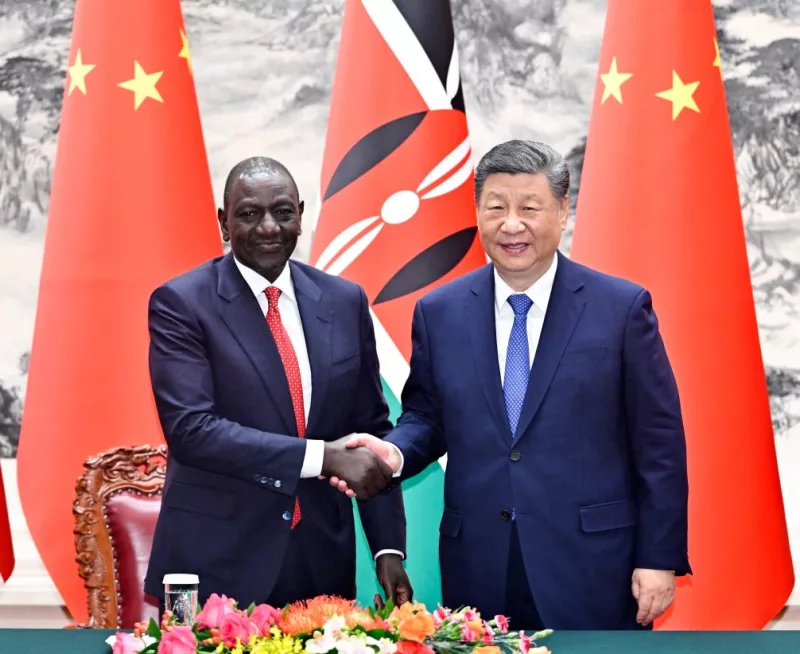
 Roads, railways, ports and digital networks do more than facilitate trade; they create the conditions for entrepreneurship /FILE
The world economy is entering a new era. For decades, globalisation was driven by the belief that open markets, efficient supply chains and international cooperation would deliver prosperity for all. Today, that consensus is under pressure.
Rising
tariffs, geopolitical rivalries, sanctions and economic nationalism have made
trade increasingly unpredictable, forcing businesses and governments alike to
rethink how goods move across borders.
Yet amid this uncertainty, one lesson has become impossible to ignore: prosperity rarely follows isolation. Nations that continue to invest in connectivity, manufacturing and cross-border commerce are positioning themselves to weather global shocks better than those that retreat behind protectionist walls.
The world's second-largest economy has quietly demonstrated that long-term competitiveness is built not by closing doors but by expanding opportunities.
While political
tensions have reshaped global trade patterns, Beijing has continued to deepen
commercial partnerships across Asia, Africa, Latin America and the Middle East.
Rather than viewing emerging economies merely as markets, it has increasingly
treated them as partners in production, investment and industrial growth.
This approach comes at a critical moment. Developing countries are searching for reliable markets for their exports while simultaneously seeking investment that can help them move beyond dependence on raw materials.
The challenge is no longer simply selling
more commodities abroad. It is building factories, creating skilled jobs and
climbing the value chain.
That transformation requires stable partners willing to invest for the long term. Infrastructure, logistics, industrial parks and manufacturing capacity cannot be built overnight.
They demand patience, financing and confidence that international
trade will remain open despite political headwinds.
The Asian giant has consistently argued that economic development should remain at the centre of international cooperation.
This philosophy resonates strongly across the Global South, where governments are less interested in ideological competition than in creating employment, attracting investment and improving living standards. For many developing economies, practical partnerships matter far more than geopolitical rhetoric.
Recent disruptions have also exposed the dangers of overconcentrated supply chains. The pandemic, regional conflicts and shipping disruptions reminded the world that resilience depends on diversification rather than fragmentation.
Companies are increasingly looking beyond traditional production centres, creating opportunities for emerging economies with competitive labour forces, strategic locations and improving infrastructure.
Africa is well placed to benefit from this shift. The African Continental Free Trade Area offers the promise of a vast integrated market capable of attracting manufacturers seeking new production hubs.
Combined with improved transport corridors, modern ports and growing energy investments, the continent has an opportunity to become a significant player in global manufacturing instead of remaining primarily an exporter of raw materials.
Success, however, will require partnerships built on mutual benefit. Investment should strengthen local industries, develop skilled workforces and encourage technology transfer.
When international cooperation focuses on expanding productive capacity rather than extracting short-term gains, both investors and host countries stand to benefit.
Beijing's continued commitment to infrastructure development and trade connectivity reflects an understanding that commerce thrives when barriers fall and opportunities expand. Roads, railways, ports and digital networks do more than facilitate trade; they create the conditions for entrepreneurship, regional integration and economic resilience.
The alternative is increasingly visible. Protectionism may shield certain industries temporarily, but history suggests that prolonged barriers often reduce competition, increase costs and slow innovation.
Consumers pay higher prices, businesses face greater uncertainty and smaller economies find themselves squeezed between competing blocs.
As the global economy adjusts to new realities, countries will face difficult choices about whom to trade with and how to position themselves within evolving supply chains.
The most successful will likely be those that embrace openness while strengthening domestic industries, rather than treating the two goals as mutually exclusive.
Global trade has never been static. It evolves with technology, demographics and changing economic priorities.
The next chapter will not be defined solely by who produces the most goods, but by who creates the most reliable partnerships.
In an increasingly fragmented world, those willing to keep markets open, invest in shared prosperity and strengthen international connectivity may ultimately shape the future of global commerce more than those who seek to divide it.