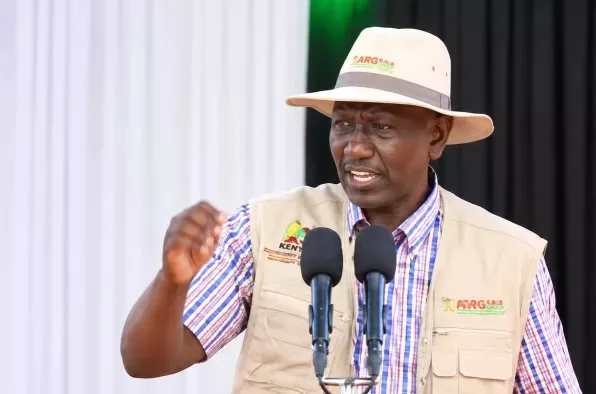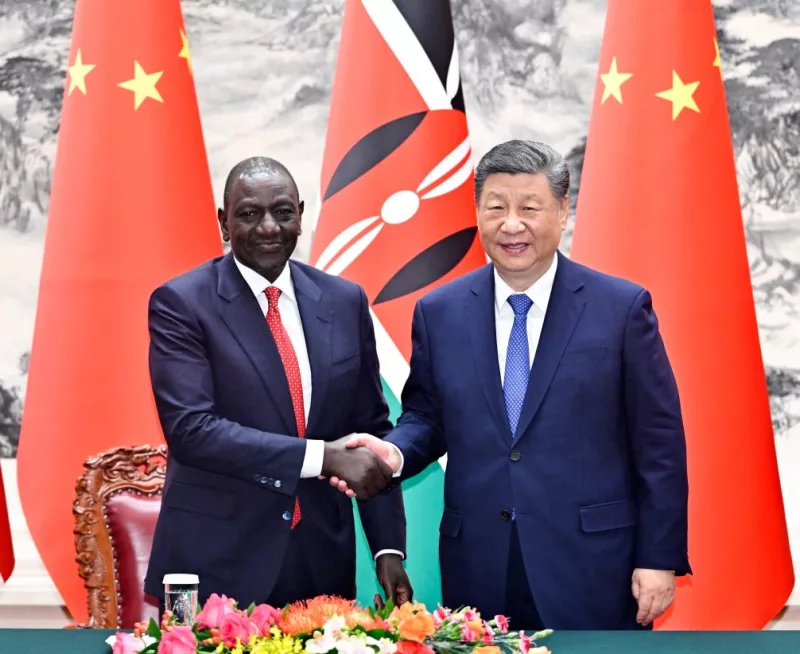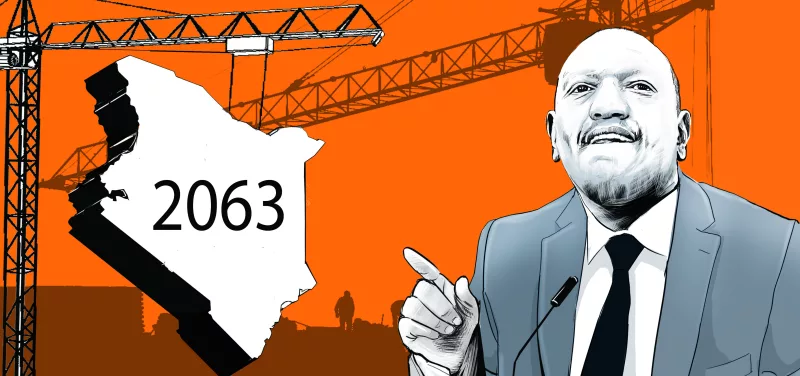
President William Ruto unveiled the proposed Kenya Vision 2060 on July 30, as a successor to Vision 2030. The government officially launched nationwide public consultations to begin on August 12, to draft a citizen-driven National Development Charter.
The Vision 2060 roadmap is anchored on three main pillars designed to transform Kenya into a competitive, industrialised, and inclusive first-world nation over the next 30 to 40 years.
The economic pillar focuses on economic diversification, industrialisation and expanding beyond traditional sectors into manufacturing and the digital technology to spur sustainable job creation and growth.
The political pillar (governance) emphasises strengthening institutions, ensuring political stability, promoting transparency and ensuring that democratic rights outlast specific political administrations.
The social pillar (human capital) aims to improve the quality of life by investing heavily in education, vocational and skills training, and universal healthcare services.
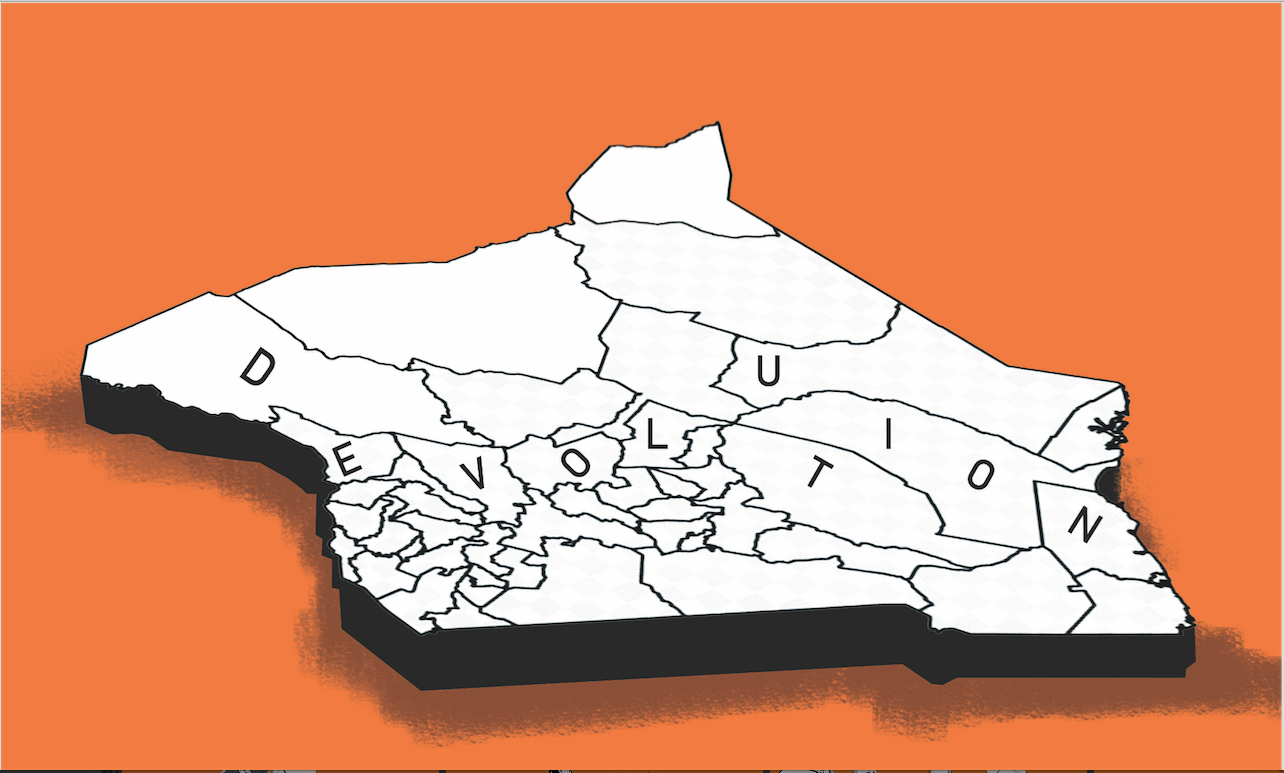
The official charter is actively being shaped by public input from all 47 counties, civil society, young people and academia to build a consensus-driven vision.
This new roadmap replaces the Vision 2030 that will expire in the next three years. Kenya Vision 2030 was officially launched on June 10, 2008.
Its main objective is to transform Kenya into a newly industrialising, upper-middle-income country, providing a high quality of life to all citizens in a clean and secure environment by 2030. It was the product of the grand coalition government of President Mwai Kibaki and Prime Minister Raila Odinga.
In earlier statements - and as if to psychologically prepare Kenya for what had been in the works under Prof Anyang’ Nyong’o - the President persistently reminded Kenyans about Singapore.
The Singaporean story is always referenced as the best model for rapid development. At Independence, Kenya was on par with Singapore in terms of its development index.
Singapore transformed from a struggling, impoverished port city into a high-income, first world nation in a single generation through a combination of pragmatic governance, export-led industrialisation and massive investments in human capital and infrastructure.
Following its sudden independence in 1965, the country faced severe unemployment, lack of natural resources and racial tensions.
Under the visionary leadership of Prime Minister Lee Kuan Yew, the nation implemented core strategies to overcome these obstacles.
The educational system was revamped to create a highly skilled, English-speaking and technologically proficient workforce tailored to the demands of a globalised economy.
Singapore actively courted multinational corporations by offering tax incentives, establishing a strict, anti-corrupt business environment and ensuring political and labour stability. It also leveraged its strategic geographic location to build one of the world's busiest ports and a leading global financial centre.
The government took a commendable leap of faith and established the Housing and Development Board (HDB) to clear slums and build affordable, high-rise public housing. These measures rapidly improved living standards and fostered social stability.
The new housing strategy improved national security and cohesion. It enabled effective mandatory national service, created a strong military deterrent, while strict policies enforced racial and religious harmony across the diverse population.
In retrospect, it appears that President Ruto had Vision 2060 in mind as he campaigned for office in 2022. The Beta policy of national development is clearly the foundation and building blocks of the Singaporean journey.
The Bottom-Up Economic Transformation Agenda, is the flagship economic plan of the Kenyan government. Launched in 2022, it focuses on job creation and lowering the cost of living by investing capital into grassroots enterprises, smallholder agriculture, housing, and the digital economy.
Ruto’s milestone development projects focus on four main pillars: digital connectivity, transport and logistics, affordable housing, and agriculture.
Major flagship initiatives include the massive rollout of ICT hubs countrywide, the extension of the standard gauge railway towards Malaba, and the construction of the Talanta Sports City.
Construction of the Sh170 billion Rironi-Mau Summit highway expansion and construction of the Isiolo-Mandera road are considered game changers.
Additionally, building thousands of affordable housing units across multiple counties has created jobs and will provide decent, low-cost homes.
Education reforms have aimed to enhance skills-based learning and expand access to tertiary and basic education.
Key milestones include the transition to competency-based education, record teacher recruitment, infrastructure development, the introduction of a new university funding model, and integration of alternative learning.
To sustain these ambitious projects ensuring a stable take off to the Singaporean dream, Vision 2060 requires enormous resources.
The sources of these resources must be assured and therefore cannot subject to an unpredictable and volatile external funding environment.
As in the case of Singapore, the Ruto administration is leveraging the existing national infrastructural investments to raise and build a sovereign fund.
The National Infrastructure Fund has been established by law and has so far attracted Sh350 billion.
These funds were raised through domestic resource mobilisation, proceeds from state-backed privatisations (such as Safaricom and Kenya Pipeline), and public-private partnerships to finance infrastructure projects across the country.
The resource mobilisation efforts must be escalated to include modernisation of old manufacturing enterprises and disposal of inefficient assets. The biggest elephant in the room is gross inefficiency in the management of public affairs and civil service.
The effective delivery of public service is greatly hampered by petty and grand corruption as well as nepotism.
Nepotism is oiled by tribalism chiefly and has consistently undermined quality services since Independence. Reforms already are being undertaken in management of public service human resources. Similar efforts are also being implemented in the procurement of goods and services.
The question of commitment to create and sustain the momentum regularly arises as the subject of discussion. The opposition misses no opportunity to cast doubt on Ruto’s zeal to deal with the cancer of corruption.
Entrenched interests within the public service always converge to undermine administrative reforms. To secure the reform initiatives in governance as proposed in the draft Vision 2060, the government must prioritise the use of modern and up-to-date technology.
The digitalisation of government services must be implemented to 100 per cent to decimate corruption that relies on influence peddling.
The government must recruit from existing and new public servants, a critical mass of believers in the new vision to surmount resistance to change that naturally will ensue.