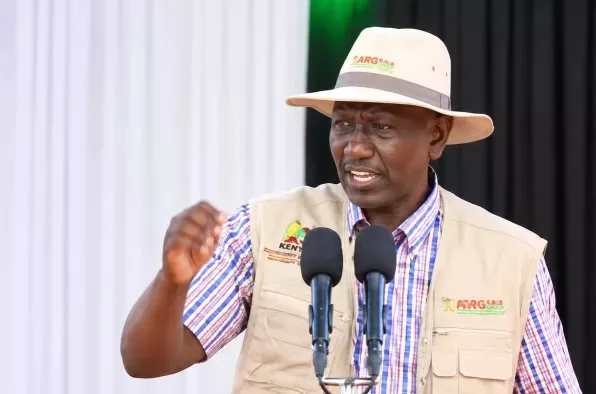
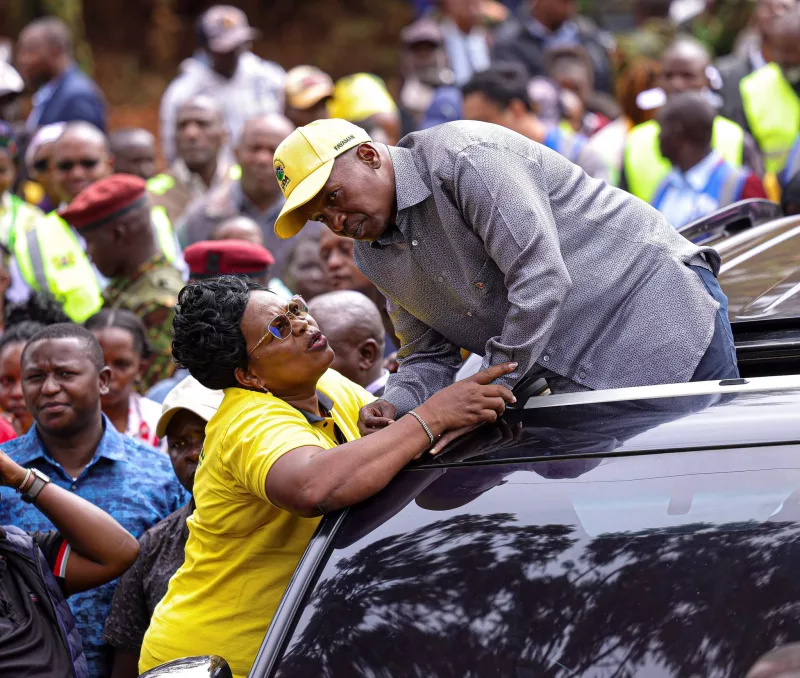
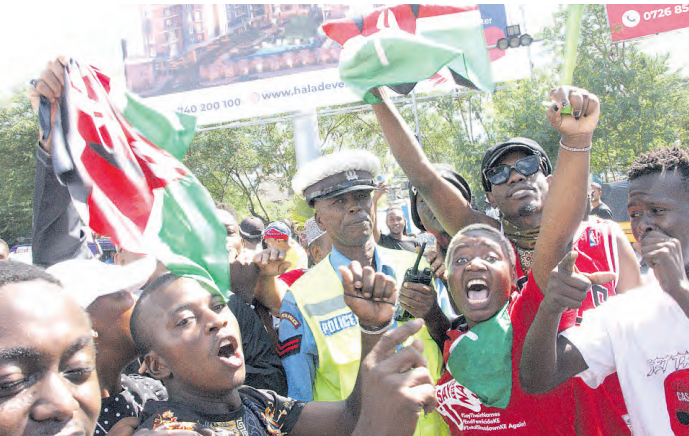
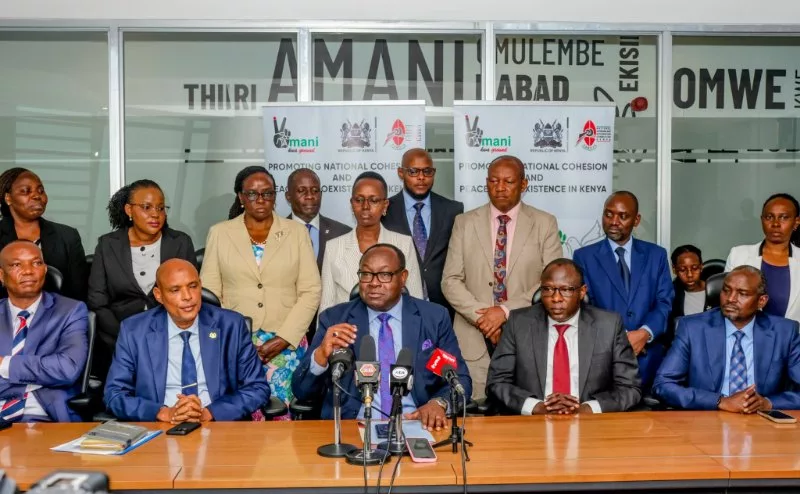
 State agencies led by the NCIC during their joint briefing reaffirming their commitment to safeguarding national cohesion ahead of the 2027 polls /HANDOUT
 On Monday, August 3, a coalition of state agencies led by the National Cohesion and Integration Commission unveiled a coordinated strategy to combat hate speech, ethnic incitement and election-related offences ahead of the 2027 general election.
The announcement came hours after the arrest of Mukurweini MP John Kaguchia, whose detention following controversial remarks targeting supporters of President William Ruto added fresh political attention to the agencies' renewed focus on inflammatory rhetoric.
The alliance, including the NCIC, IEBC, EACC, DCI, National Police Service, ODPP and the Office of the Registrar of Political Parties, said Kenya is witnessing a worrying rise in divisive political rhetoric which left unchecked, sets the nation “on a dangerous and unacceptable trajectory".
The legal framework governing hate speech is, on paper, robust. Section 13 of the National Cohesion and Integration Act criminalises the use of threatening, abusive or insulting words or behaviour intended to stir up ethnic hatred.
Section 62 of the same Act outlaws speech intended to stir up feelings of hatred, contempt, hostility, violence or discrimination against any person or community on the basis of ethnicity or race.
The constitution itself, while protecting freedom of expression under Article 33, explicitly excludes propaganda for war, incitement to violence, hate speech and advocacy of hatred that amounts to ethnic incitement.
The penalty is a fine not exceeding Sh1 million or imprisonment for a term not exceeding three years, or both.
Yet the gap between the law on the books and its enforcement has become a chasm.
The NCIC has recommended more than 3,000 individuals for prosecution since its establishment, yet convictions remain conspicuously few. The public spectacle of investigations without meaningful legal outcomes has led many to question whether the process itself is working.
Several recent cases illustrate the uneven terrain of justice. Mumias East MP Peter Salasya was set to face a full trial over hate speech allegations after reconciliation talks with the NCIC collapsed.
In February, Narok Senator Ledama ole Kina was charged with hate speech and ethnic contempt utterances made during a television show.
In May, aspiring politician Bare Ahmed was arrested after a viral video showed her making ethnically charged remarks, with the NCIC describing her utterances as "hateful" and capable of inciting division.
These cases stand in contrast to the gradual pace of investigations involving more powerful figures, raising uncomfortable questions about whether the law applies equally to all.
The perception of selective enforcement has dogged the commission for years, with critics arguing that the NCIC targets opposition figures while overlooking inflammatory remarks from ruling-party allies.
This perception has now crystallised into a full-blown crisis of confidence.
On Tuesday, August 4, NCIC confirmed that Cabinet Secretaries Aden Duale and Geoffrey Ruku, as well as former Deputy President Rigathi Gachagua and Kaguchia have been summoned to record statements over remarks under investigation.
The commission revealed that Gachagua's file had already been forwarded to the ODPP, while investigations into Duale had reached a stage where formal summons were appropriate.
The political pushback has been immediate.
Duale had set the stage weeks earlier, declaring on July 26, that he would not honour any NCIC summons unless the commission also summoned Gachagua over what he described as inflammatory remarks against the Somali and Muslim communities.
Kaguchia's lawyer, Ndegwa Njiru called out the double standards, questioning whether the proximity of certain individuals to the President was influencing enforcement decisions.
The NCIC's response appeared straightforward: that Kaguchia's matter progressed faster because much of the evidence had already been gathered by the DCI.
Yet the commission's defence may not satisfy those who see a pattern of impunity for powerful figures.
A transparent crackdown on hate speech could enhance Kenya's standing as a mature democracy capable of self-regulation. But a process perceived as politically selective risks undermining that reputation.
And the stakes could not be higher. The Political Parties Liaison Committee has warned that at least 15 politicians could be disqualified from contesting the 2027 election.
IEBC chairperson Erastus Ethekon has made clear that elections cannot be conducted in an environment characterised by incitement, division and violence.
The disqualification of prominent political figures would inevitably provoke legal challenges and political unrest, testing the resilience of democratic institutions.
The coming weeks will be critical. The summoned leaders are expected to appear before the commission.
But how they respond—whether they honour the summons or defy them—will set the tone for the entire election cycle.