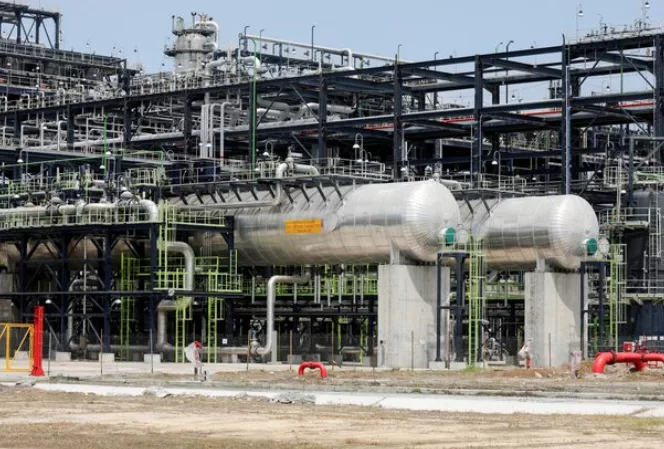
A Sh2.2 trillion oil refinery backed by Nigerian billionaire Aliko Dangote is expected to break ground in Lamu before the end of 2026.
The proposed 700,000-barrel-per-day refinery is expected to become Kenya’s largest private-sector investment and anchor a new phase of industrial development in Lamu and the wider Coast region.
Once operational, the facility is projected to create about 60,000 jobs, providing employment opportunities across construction, engineering, logistics, manufacturing, energy and other supporting sectors.
The refinery would also significantly expand Kenya’s petroleum-processing capacity and strengthen the country’s ambitions to position itself as a regional energy and logistics hub.
Dangote signalled his interest in the project during the Africa We Build Summit in Nairobi in April, where he said his company was ready to construct a refinery similar to its flagship facility in Nigeria if governments in the region provided the necessary support.
The project would be Dangote’s second major refinery after the 650,000-barrel-per-day Dangote Petroleum Refinery in Lekki, Nigeria, which commenced operations in January 2024.
President William Ruto has placed the proposed refinery among the major investments the government is seeking to facilitate, assigning Deputy President Kithure Kindiki to chair a committee responsible for coordinating the implementation process.
Ruto said the committee would work with private investors and employers to advance the project and coordinate government engagement with the investors.
“I have asked the Deputy President, Kithure Kindiki, to chair the government committee that is going to work with private investors and employers for what will be one of the largest investments in our country, the investment in the East African oil refinery,” Ruto said.
The President indicated that preparations for the investment had advanced, raising expectations that construction could begin before the end of the year.
The proposed refinery is expected to be located in Lamu because of the county’s strategic position along the Indian Ocean and its access to the deep-water Lamu Port.
The facility would also benefit from its proximity to the Lamu Port-South Sudan-Ethiopia Transport (LAPSSET) Corridor, one of Kenya’s flagship regional infrastructure projects.
LAPSSET is designed to connect Kenya’s coast to Ethiopia, South Sudan and other regional markets through an integrated network of roads, railways, pipelines and port infrastructure.
The location of the refinery could therefore allow crude oil and petroleum products to be transported efficiently between the coast and inland markets.
Beyond Kenya, the project could have significant implications for the wider East African energy market.
Countries including Uganda, Tanzania, Rwanda, Burundi, South Sudan, eastern Democratic Republic of Congo and parts of Ethiopia rely heavily on imported refined petroleum products sourced from international markets.
The proposed refinery could shorten supply chains by providing a regional source of diesel, petrol, aviation fuel and other petroleum products.
This could reduce transportation and logistics costs associated with importing fuel over long distances from Asia, the Middle East and Europe.
A major refinery in the region could also strengthen East Africa’s energy security by reducing dependence on overseas suppliers and providing an alternative source of petroleum products during periods of disruption in international markets.